
Daniel Atlin
Executive Advisor on Leadership in Complex Organizations & Host of Messy with Daniel Atlin
Daniel Atlin Key Topics
What interviews with 25 university leaders across the Commonwealth revealed about how decisions really get made
After interviewing 25 senior university leaders across the Commonwealth, Daniel saw the same pattern again and again: major decisions were rarely driven by logic alone. They were shaped by culture, competing agendas, legacy systems, and the constant pressure to move forward without full clarity. That makes this a valuable conversation for audiences who want to understand leadership as it actually happens inside complex institutions, not as it looks on paper.
Why healthcare charities and public agencies need a different conversation about leadership
A lot of leadership advice assumes clear authority, fast execution, and aligned incentives - exactly what many mission-based systems do not have. Daniel is now intentionally extending his work beyond higher ed into healthcare, charities, nonprofits, and government agencies because the same underlying tensions keep showing up across them: layered stakeholders, moral pressure, slow systems, and leaders trying to move people without brute force. That makes this a strong cross-sector topic for shows focused on public service and institutional leadership, especially where the audience is tired of advice built for corporate environments.
Why obvious solutions still stall inside established institutions
From the outside, many institutional decisions look obvious, yet inside the system even sensible change can grind to a halt. Daniel can unpack why strong business cases so often fail to translate into action in universities and other established organizations where consensus, politics, identity, and history all shape what is possible. Having worked across government, cooperatives, consulting, and post-secondary leadership, he shows why institutional inertia is rarely about laziness and more often about the hidden human dynamics beneath formal structure.
Why leadership in mission driven organizations feels harder than anyone admits
In universities, healthcare systems, charities, and public institutions, leaders are expected to move people, protect purpose, and deliver change inside structures that were never built for speed. Daniel names the part most people feel but rarely articulate: the work is messy not because leaders are failing, but because these organizations are full of competing values, limited authority, and constant ambiguity. His perspective comes from decades inside slow-moving institutions and from studying how senior leaders actually navigate that pressure when there is no clean roadmap.
What university leaders taught me about making decisions when nothing is clear
Daniel interviewed more than 25 senior university leaders across the Commonwealth after COVID, including people at the top of major institutions, and found striking common ground in how they were coping with uncertainty. What emerged was not a tidy leadership playbook but a real-world picture of leaders trying to make sense of overload, contradiction, and constant pressure while still moving forward. This conversation gives higher ed and institutional audiences something far more useful than theory alone: a pattern-level view of how experienced leaders actually function when the job is much less glamorous and far more complex than advertised.
Retirement is a terrible plan for people who still have something to build
Daniel speaks about this stage of life with real energy because he is living it as an expansion, not a wind-down. After leaving large institutions, he describes being happier in his work and more aligned with what he actually wants to contribute, which makes him a strong voice for audiences thinking about purpose after traditional career success. The value in this conversation is not abstract inspiration but a lived example of what it looks like to turn accumulated experience into teaching, coaching, speaking, and deeper impact instead of quietly stepping aside.
Reinvention gets easier when you stop treating your career like a straight line
Daniel’s own path moved from a family record store through government, cooperatives, consulting, and university leadership before he built this next chapter as a consultant, coach, teacher, and podcast host. That gives him a grounded way to talk about reinvention not as a branding exercise, but as something people are often forced into by disruption, identity shifts, or the realization that the old role no longer fits. For career, midlife, and reinvention podcasts, this opens up a conversation about building a more meaningful next act from experience that once looked disconnected.
The personal mess leaders ignore is usually the thing running the show
Daniel’s framework is compelling because it does not treat leadership as purely organizational; it connects institutional complexity with the personal histories leaders bring into the room. He speaks candidly about identity, not fitting in, impostor syndrome, and the “family ghosts” that shape how people interpret power, belonging, and authority, which gives this topic unusual depth for leadership and personal growth shows. Instead of separating the person from the role, he explores how better leadership starts when people understand the private patterns shaping their public decisions.
Latest episodes
Ep 224, Messy: Making Sense of the Mess of Leadership
Conflict Managed
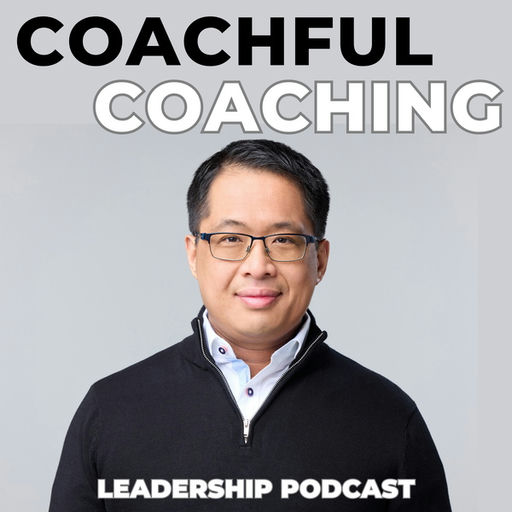
How to Lead When You Don't Have Control (Lessons from 25 University Presidents) with Daniel Atlin
Coachful Coaching Leadership Podcast
The Presence Advantage: How Mindful Leaders Build Communities That Thrive | Daniel Atlin
Leadership Circle Podcast
Key topics
Why obvious solutions still stall inside established institutions
From the outside, many institutional decisions look obvious, yet inside the system even sensible change can grind to a halt. Daniel can unpack why strong business cases so often fail to translate into action in universities and other established organizations where consensus, politics, identity, and history all shape what is possible. Having worked across government, cooperatives, consulting, and post-secondary leadership, he shows why institutional inertia is rarely about laziness and more often about the hidden human dynamics beneath formal structure.
Retirement is a terrible plan for people who still have something to build
Daniel speaks about this stage of life with real energy because he is living it as an expansion, not a wind-down. After leaving large institutions, he describes being happier in his work and more aligned with what he actually wants to contribute, which makes him a strong voice for audiences thinking about purpose after traditional career success. The value in this conversation is not abstract inspiration but a lived example of what it looks like to turn accumulated experience into teaching, coaching, speaking, and deeper impact instead of quietly stepping aside.
Reinvention gets easier when you stop treating your career like a straight line
Daniel’s own path moved from a family record store through government, cooperatives, consulting, and university leadership before he built this next chapter as a consultant, coach, teacher, and podcast host. That gives him a grounded way to talk about reinvention not as a branding exercise, but as something people are often forced into by disruption, identity shifts, or the realization that the old role no longer fits. For career, midlife, and reinvention podcasts, this opens up a conversation about building a more meaningful next act from experience that once looked disconnected.
View all topics →
Latest episodes
Ep 224, Messy: Making Sense of the Mess of Leadership
Conflict Managed
How to Lead When You Don't Have Control (Lessons from 25 University Presidents) with Daniel Atlin
Coachful Coaching Leadership Podcast
The Presence Advantage: How Mindful Leaders Build Communities That Thrive | Daniel Atlin
Leadership Circle Podcast
Key topics
Why obvious solutions still stall inside established institutions
From the outside, many institutional decisions look obvious, yet inside the system even sensible change can grind to a halt. Daniel can unpack why strong business cases so often fail to translate into action in universities and other established organizations where consensus, politics, identity, and history all shape what is possible. Having worked across government, cooperatives, consulting, and post-secondary leadership, he shows why institutional inertia is rarely about laziness and more often about the hidden human dynamics beneath formal structure.
Retirement is a terrible plan for people who still have something to build
Daniel speaks about this stage of life with real energy because he is living it as an expansion, not a wind-down. After leaving large institutions, he describes being happier in his work and more aligned with what he actually wants to contribute, which makes him a strong voice for audiences thinking about purpose after traditional career success. The value in this conversation is not abstract inspiration but a lived example of what it looks like to turn accumulated experience into teaching, coaching, speaking, and deeper impact instead of quietly stepping aside.
Reinvention gets easier when you stop treating your career like a straight line
Daniel’s own path moved from a family record store through government, cooperatives, consulting, and university leadership before he built this next chapter as a consultant, coach, teacher, and podcast host. That gives him a grounded way to talk about reinvention not as a branding exercise, but as something people are often forced into by disruption, identity shifts, or the realization that the old role no longer fits. For career, midlife, and reinvention podcasts, this opens up a conversation about building a more meaningful next act from experience that once looked disconnected.
View all topics →