
Alan Moore media

About Alan Moore
AI Operations & Governance Expert | SaaS Entrepreneur | Co-Founder & CEO
Alan Moore is an AI operations and governance expert, SaaS entrepreneur and business leader helping organisations navigate the realities of the AI era. Drawing on decades of experience across corporate leadership, consulting, digital transformation and entrepreneurship, Alan brings a refreshingly practical perspective to one of the biggest challenges facing businesses today: how to turn AI ambition into real-world results without losing control of the people, processes and systems that make organisations work.
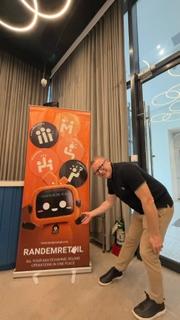
As Co-Founder and CEO of RANDEMRETAIL, an AI-native commerce orchestration platform, Alan has helped build technology that connects inventory, orders and fulfilment across stores, warehouses and digital channels. He is also Co-Founder and CEO of TraphicLights.ai, an AI operating and governance platform designed to help organisations move beyond AI experimentation towards controlled, accountable and scalable operations.
Having experienced AI transformation first-hand within his own business, Alan understands that adopting AI is about far more than introducing new technology. It requires organisations to rethink how work gets done, how people and AI agents interact, how decisions are governed and how accountability is maintained. Through TraphicLights.ai, he is addressing the operational challenges that emerge when AI agents begin taking actions across business systems, including unexpected costs, security risks, rogue agent behaviour and the need for effective human oversight.
Alan challenges the prevailing narrative that AI will simply automate everything and make businesses more efficient. Instead, he asks the questions many organisations are overlooking: How do you govern what AI actually does? How do you prevent costs from spiralling? How do you maintain critical thinking when employees increasingly rely on AI? And how do you redesign roles, leadership and organisational culture when humans and AI agents must work together?
His perspective is grounded in a career spanning financial services, telecommunications, consulting and enterprise transformation, including experience with Accenture and senior sales and service leadership within the Deutsche Telekom group. Having moved from a highly regulated corporate environment into entrepreneurship, Alan has helped build a successful SaaS business through more than a decade of change, adaptation and bootstrapped growth.
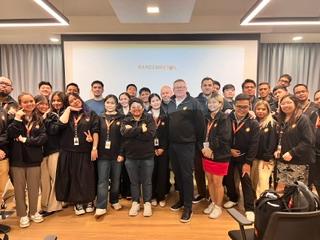
Beyond technology, Alan has a compelling personal story of resilience. Having left school at 16, he built an international career through determination, continuous learning and an ability to understand people from all backgrounds. Today, he also volunteers in education and mentoring, supporting young people from disadvantaged backgrounds to recognise their potential and explore opportunities they may never have considered possible.
Episode angles ready to record
Controlling AI Operating Costs: What a $2,000 token bill reveals about monitoring usage, exceptions and human review.
Alan Moore draws on years in call-centre operations and transformation, including Accenture and T-Mobile, to explain a client case where a $2,000 month was traced to three contacts creating 98% of…
Continuous AI Transformation: Why AI programs need ongoing governance of agents, processes, models and costs after launch.
Alan Moore brings SaaS-building experience and corporate transformation work at Accenture and T-Mobile to argue that AI changes the consulting model after launch. Most consulting still works toward…
AI Agent Oversight: What a three-month delay in spotting an agent's access to health data shows about monitoring AI at work.
Alan Moore put out a press release on the Australian Medicare incident, where it took three months for anyone to learn that an AI agent had accessed Medicare data. Most organisations assume their AI…
Redesigning Roles for AI: How an honest conversation about junior roles turned job fear into capacity for a third product.
As co-founder and CEO, Alan Moore took RANDEMRETAIL through an AI program that opened with something most leaders avoid telling engineers: junior developer roles, in the old sense, no longer exist.…