
November 13, 2026
Mental Reprogramming: How Hussein Rifai Rebuilt After Losing Everything
In this episode
Dr Hussein Rifai and Jessica Schultz talk about resilience, cultural adaptation, loss, and how he rebuilt after major personal and professional setbacks.
- Migration to Australia with little money and no local network forced him to find a new path in an unfamiliar culture.
- Losing a child after years of IVF became a defining personal tragedy and a test of emotional endurance.
- The Global Financial Crisis wiped out most of the wealth he had built, creating a major professional setback.
- Living in multiple countries taught him to respect cultural differences and look for what people share.
- Reading and lifelong learning are central to his decision making and daily routine.
Transcript
Automatic captions of the conversation. They can contain errors and do not name who is speaking.
It's re-invention something you choose or something life forces up on you when ground keeps shifting beneath your feet. For my guest today, it's been both. Dr. Hussein Rifai was raised in Jordan by a judge and an award-winning poet, and built a career spanning 85 countries and companies like Potter Gamble, Johnson & Johnson and Ernst & Young. But his story extends far beyond business. Across four decades, Hussein has experienced extraordinary success and devastating setbacks, migration and cultural reinvention, financial loss and family tragedy, and more, of course.
I'm Jessica Schultz, this is Resilient Voices, and today we're talking to an entrepreneur, investor and chairman about what it really takes to keep beginning again. Welcome to the podcast. I'm so happy to have you here today, Hussein. Thank you so much, Jessica. I'm delighted to be here. Yes, your introduction was very apt. Life throws you all this curveball, and I think at the end of the day, the person who knows how to stand up after a fall is the person that continues a rather happier life than the person who lets the fall keep them down.
Yeah. Absolutely. I totally agree with that. So tell me, what is the first moment that comes to mind when you think about resilience in your life? I've had a very colorful life of ups and downs. And some of it you can definitely characterize as resilience, both on a personal level and that. And some of it is resilience in the context of you making a change that you know in the long term is going to be a better change. And you have to be resilient and you have to be able to, I suppose, take the risk and move through that.
So there is a top of resilience that can post upon you. And I'll give you a couple of examples, one in personal life and one in business. And there is a resilience that selectively, you have to drive a change in your life to do that. So by way of an example, coming to Australia when I first migrated here, I knew absolutely nobody. And I came in here, I wouldn't say, you know, as a lot of people say with $100 in my pocket. No, I had a little bit more than that, but it certainly wasn't the money in my pocket wasn't going to carry me more than a few months.
So the resilience was really to try to find my way and cut my way through a path where I didn't know the culture, I didn't know the place. There is a different type of resilience both at a personal and a professional level, when life forces on you a big disaster or a setback. In my case, for example, the biggest setback in my personal life was losing a child after six years of IVF, and it was literally the day that she was supposed to be born. This is a sort of a tragedy that resilience, you got to wake up in the morning and get over and keep going, but you never, never forget that.
I mean, this was a better part of 26, 27 years ago. There is many days that will go by that I don't think of that. So that's a personal sort of a tragedy that's imposed upon you, and you've got to find a way for you to mentally be strong enough to get over it, and to get over enormous amount of pain, that goes through every part of your body, every part of your soul. The other type of resilience, I suppose, is when life throws at you a curveball or a disaster from a professional perspective. I was the fortunate or unfortunate person to actually suffer through that during the GFC.
You know, when the GFC happened, I was in my 40s, and I've worked all my life to gather a small fortune and buy houses and have investments in everything else. And then, you know, Lehman Brothers and Bear Steins decided to collapse, and GFC decided to collapse, and practically take all but very little of my life work with them within weeks. So there's different types of resilience and there's different types of way that you would adjust and adapt to that. Jessica? Yeah, yeah, no, I fully understand that, and I really appreciate for how you're sharing that very, I mean, obviously, personal stories that have had a huge impact of you in your life on both, I mean, a personal and professional level.
But if we start with, because I know that we can talk about resilience, it's about bouncing back to something. But I was thinking also, it's when you don't have that life to bounce back to, or that identity, how you sort of rebuild that when, because I'm thinking especially with, I'm not sure with your personal, obviously, you had looking forward to become a father, and then you all of a sudden had to face the tough realization that you were not going to be a father to this unborn child. It's actually, the story is a little bit more traumatic than that.
Yeah. Okay. Lots of couples, they experience like loss of a baby, or the woman carry, and then she would lose a baby. The problem that we had is my wife couldn't have children, and we tried IVF for about a part of five to six years, I think it was. And if anybody experience IVF, IVF is a daily, especially once they start giving the hormones for the lady and everything else, is a daily up and down. So it comes your whole life, starts rotating just around this. Every trip to the supermarket becomes painful because you're looking at babies.
Every time you visit friends, every time you do that, it's painful. So when you finally get the news that she's finally pregnant, the amount of high that you get on is part of the delta, the amount of high. Significantly better than young happy couple who had fun and tried a few times, and out of a sudden, she's pregnant. So when you're up on that high, it was a little bit more of just looking forward to it. The nursery was ready, I was traveling the world with my job, and every airport I went to, I found a little stuffed toy, I think to hang on the wall, another thing gets for the nursery and everything else.
So when in the last minute, that happens, the drop, the mental and psychological drop is actually of a bigger height. Look, I'm not unique of it, and there's a lot of people that would have a lot worse stories in my life. So I don't want to come across as, I'm the only victim in the world, but it is a joy. No, but still, I mean, it doesn't remove your experience and your pain and your suffering, and so I fully understand that it was awful. I don't know if according to a lot of your listeners, what I've said, I handled it the right way or not, but it was right for me at the time.
I refused anybody else, friends or family to come, and I actually went and I got her cremated with my own two hands, and the only person there was my wife. And then that's when the resilience starts. So I think the thing that's common, whether you are in a personal disaster or in a business disaster, is the first rehabilitation that you've got to do, which is perhaps the most difficult, is the mental one. Because you very quickly lose purpose and lose motivation for living and lose a lot of raison d'etat, you know, why am I here, why am I suffering through that?
So the first resilience that you've got to do is you actually got to say, there must be a better day tomorrow, and I must be able to achieve what I want to achieve. I want it to be a better day. So badly, this can't be the end. This is a very bad. But it wasn't the end, and I had to keep on going. They're both gorgeous, they're both very successful, and I have a very, very strong and tight relationship with them, with more than my friends and more my colleagues and other family members. And I think a big part why this relationship is so close is because of what I experienced with Donna, with my first child.
And you have to be very careful that you don't come over overwhelming to them and overprotect them and that they can't know it. That you're punishing them for the sins of what life cost you. So that's a balance there. But it does really makes you appreciate the more I wanting to be closer with them. Yeah, no, I fully appreciate that it comes when you finally then have children and congratulations to becoming a father and really, yeah, life has its way. Sometimes you don't really understand or can grasp why that happened to your third child, but that you have two beautiful children today that get all the love that you have to give.
I mean, I get all the love, but I have to beg and gravel and bribe for them to have dinner with me right now. Because they're both 26 and they're both dating and working. And my daughter is doing her second and third degree and my son just got an unbelievably global job and everything else. So I'm back to, you know, bribing with, you know, can I buy you any dinner you want anywhere so I can see you like gravelly and, you know, I've got a really nice meal if you want to come and pick it up. Just come and give me a quick kiss.
Yeah. Yeah, but that is the pleasure. I mean, that's our job as parents, isn't it? That we're, I mean, to bring beautiful, independent human beings to this world and just, and eventually you're not longer on the front line. You're sort of in behind being there and always supporting them and sharing them. But you may not spend so much physical time with them because they've got their lives to build and, but yeah, I understand. I must say, my daughter more than my son, I get the school, if I get busy for a week, I go to school and she goes, hey, remember you have a daughter, don't you?
What are you guys cooking tonight? And I'm going to go, okay, well, mom is not cooking something nice. She goes cooking NASA. I'll come in and have a quick meal. And she'll come in with her jammies, because she lives in an apartment literally about 200 meters away from us. And she'll come in and have dinner and go back in her jams. Whereas my son is a little bit more busier and he travels for this job. Well, that sounds beautiful that you have one a bit closer nearby, geographically at least. But tell me, so compare then the story of trying for a very long time to have a family, a child, and then, like you said, you were like, everything was around that.
And then when you fell, it was a high, long fall or tall fall. But compare that to when your business, you built money, you've built your wealth for a long time as well. You lost a livelihood, then did you not? It is, you can never compare money to kids. No. So, how precious is the kids to you, we'll never compare to the money. Of course. But the other thing around the money is, it is really, I mean, every generation sort of say, they say, we've had it harder and all of that sort of thing. But the reality is, every generation is difficult to make money, in their own circumstances and everything.
So, when you spend a better part of 10, 15 years or more, over 20 years of your life, working very, very hard, paying bills, in my case, supporting my family, my mom and my family back in Jordan, doing all of that and building a bit at a time, and then at the end of it for no fault of your own. I mean, you can argue that it's fault that you're invested with certain firms, but at that time, everybody thought they were one of the safest in the world, and that collapses. It is very, very painful. I mean, the first thing that comes to mind is, can I still pay bills?
Can I still continue the lifestyle? But the other major difference is that, when something on a personal level happens, you had no basis of comparison. You were never a father than you expected, and then do that, whereas when, from a financial perspective, you were not wealthy, and then you build wealth. So when you drop down, you go back to where you were, where at the personal one, you were not well. But again, the thing, comment again, is the next morning, is you've got to wake up, take a shower, put your suit on, put your clothes on, whatever your work clothes are.
You know, in those days where I wear a suit, now I don't wear a suit once every three months. And sort of say, tomorrow is another day, I've got to start building that house brick by brick again. And it is more difficult. The thing that you have gained, that is, as you build, especially in business, right? So as you, you're a person, you're a way of wealth, you've gained knowledge, you've gained contacts, you've gained that. So in that way, you probably have a bit more, you're a bit more resilient, and you can cope with the disaster a little bit better than the personal disaster.
Again, very first step is mentally for you to be able to wake up and say, shit, okay, I've got to start again, sort of thing. But it's still easier than, say, the personal disaster. So, yeah, and I happened, look, I made fortunes and lost fortunes more than once. I've just recently written an article about, there's a saying in Arabic, and I'm sure some of your audience might have an Arabic background, they understand it's called, Ittaqee sharraman ahsan ta ilay. Which means, be careful of the evil that will be bestowed upon you from the people that you helped.
Ah. So, they are the worst people that betray you. It's when a stranger betrays you, you're prepared for it, because you don't know them, you don't necessarily trust them. Your guard is always up a little bit, but the people that you actually help, and the people that you put your guard down, and again, that applies to business and personal. You put your guard down and you learn into what I call your inner circle, their betrayal is significantly more painful and leaves a lot bigger effect on your life than, say, strangers are acting in an adversary's hands, because you know, you expect most people are nice, but you're going to get some people who are not so nice sort of thing.
But when you think that because of help, Tom or Dick or Harry or somebody so much, that I don't, you know, it's not the word that they owe me, but at least they won't hurt me. And they're the ones that use what you help them with as a stepping stone for them to hurt you, or to slap you in the back. That also takes a certain amount of resilience for you to go back to trusting people. Yeah, absolutely, because we, I mean, actions and it leaves traces, doesn't it? So if you've been hurt before and betrayed, obviously you will have, you'll be more cautious.
Trust is a precious thing. And especially like you're saying, if you allow someone to come into you in a circle, you're invested in a different way, because then you care for that person in one way or the other. But as I understand it, then, you do have some betrayals in your business life. Business and personal life. Okay. So, I mean, it's in several occasions. One of the occasions, for example, is a person who was let go of a very large multinational and he had practically all the people around him. His sister-in-law and his sister passed away of cancer.
His wife had cancer. And he was just let go because of his attitude and lack of teamwork. And I had met him prior before in a social event and he reached that. And I thought, he seems like a nice guy. I don't know why is that there. I brought him into the organization. I brought him into the investment bank. And then slowly but surely, and he became more and more and more resentful to the fact that I had a better life than him. He started taking the help and I was trying to help him and have his back, and trying to resent him.
So, well, you know, I don't need this and I don't need that. And the more I backed away, the more resentful he became because do that. And, you know, you start hearing around the corporate world, you start hearing, you know, so-and-so said this or so-and-so said that and all of this. And I'm not so, I'm not, I don't have the personality nor the aptitude for rumors and gossip. I'm not that sort of person. I get too focused. So I usually ignore that. But many times it's to my detriment. And, you know, this guy's caused a big issue of my life.
And, you know, again, it caused me to lose money. Thankfully, not like the first time where the GFC happened, but caused me to lose money and caused me to do that. Having said that, would I do it differently? Probably, the answer is not. Because if I had to build up a column of people that I helped or helped me and continue to have a gratitude towards each other and the people who were like this guy, my list of the good experiences in my life will be tens of times more than those sort of people. Sometimes, we talk a lot about corporate culture, but sometimes the very corporate culture that encourages this person who I call the loud politician.
So a lot of organization, you get two different types of people, the loud politician and a quiet performer. And the organization that reward the loud politician, sooner or later, it catches up with them. Because the quiet performer will lead, and the loud politician is very good at waving their hands and putting charge over there, but they're not good at delivering. I'll tell you a funny story about that. And this one goes back probably three decades. When I was working with one of the big accounting firms, one of the big four accounting firms, we had three senior American partners brought into Australia to manage the practice.
And this one gentleman who, a nice enough guy, but he was not very good at bringing in business. But because he was so politically apt, he was just the politician. He was a Catholic boy, and he would drive 40 minutes across Sydney on Sunday morning, and he would take his time, let alone say, he can go to the same Southern Baptist Church that one of the American guys was going to every Sunday morning. Okay. And at work, everyone knew that the guy is really nice, but he's not performing at all. Like he never brought in a dollar's worth of business.
Clients didn't particularly thought highly of him because he wasn't very smart, but he was the ultimate politician. But imagine waking up your family at 7 o'clock in the morning, or whatever it was time on Sunday, getting up three kids and your wife and driving 40 minutes to go to church. That's not even, I mean, I'm not religious. I don't go to any church or mosque. Other church, that's not even your denomination. Just so that you can be next to the partner. And eventually, he got promoted. But then the practice changed and the guy struggled for some of his career because, you know, you had to deliver results, not just church attendants sort of thing.
So things like that, when you find a lot of times those politicians, they will do anything to gain place. But then when the results, when you can actually have a try to get quantifiable results to do that, and those corporations tend to end up suffering at the end, in my view. You have to understand the whole concept of that. So you need more of the performer, the quiet performance, to have a solid organization and a different organizational culture. Absolutely. Yeah. And I think to a great extent, and I've worked in a lot of places around the world, right?
And I'll give you a couple of examples. I think to a great extent, the very rapid uprise of China was driven by the rewarding of the quiet performers. Right? Yeah. And I think part of the decline in some of the Western countries, the US and certainly Australia and some of the other ones, is you don't have the STEM guys, you don't have the engineers anymore, you don't have those, which just goes, they tend to be, quote unquote, boring, but they actually deliver results. I'm not an engineer, I'm an engineer myself. So I'm not, this is not, yes, engineer.
But they actually deliver performance, whereas you get a lot of the slick looking, you know, a lot of the kids are heading to suffer a finance and all of that, because they think that's where the money is and that's where the reward is. That really doesn't generate at the end of the day, the profit, the profit after from that. Well, the example that I wanted to do where you can actually see a culture move from a very high performing culture to a very high political culture in the corporate world, is Japan. If you think of Japan in the 70s and the 80s, or even earlier, in the 60s, when they came out of the Second World War, and the theaters of the world, and they introduced the quality management, and Deming was there, and total quality management, and camp bands, and all of that really perform a sort of best philosophies and everything else.
Japan was doing amazing, was the second largest, and for the difference in the population, if you take it per capita, probably was even the number one for that. And then as it became more and more corporatized, and they became a lot more of the politicians in the corporate do that, Japan is still one of the greatest countries and one of my favorite countries in the world, but Japan from a business perspective, fell behind where its global standing, fell behind in its speed of innovation, in its go-to-market, all of that.
Compared to China, right? China has taken 800 million people or 700 million people out of poverty in 20 years. Love or hate them, you got to tip your hat for that sort of achievement. And that's because of discipline and because the drive is towards a performer, not the politician. And I think that ties into, I mean, the resilience as adaptation as well. Talking about China, I think, how it's performed, but that they are successful in doing that and creating the quiet performers. Yeah. So leadership becomes a function of meritocracy, as a function of flash and presentations and all of that sort of thing.
I'll give you an example. I think it was Tim Cook from Apple Computer. I've heard him one time say something that's very, very interesting. He said, everybody thinks that we manufacture the iPhone in chart because of money, because of price. He says, absolutely wrong. He says, if I advertise today in the Silicon Valley, which is the most technical part of the United States, going from Oakland and Berkeley, California to San Jose and Santa Cruz, and all of that Bay Area, and if I advertise today for a tool engineer, I'll be lucky to fill in a couple of conference rooms.
If I advertise in Shanghai for a tools engineer, I will probably fill a football stadium. Because there's a lot more of the kids that are being encouraged to study those products and scientists and sciences and everything else, rather than encourage to study, you know, finance or study anything that just makes money. Part of it. And that is also a little bit of a feeling of, you know, being part of a community as opposed to just wanting to be the individual and make money for myself at an endless amount. Yeah, no, and it's also, I think that competition in this case also brings out something.
So they were sleeping on their books because they were studying all, they were just really so focused because they knew that it was a matter of life and death, more or less, because if they didn't make it, someone else was going to take their spot, they were going to lose it. So I guess also the amount of them, the competition brings something also that may not always be so nice, but it will bring something to a society. What are your thoughts on that? Competition, because of the volume of population, is important, but it has to be within the right cultural context.
Because if you take places like Brazil, they don't have that same type of culture. I mean, they're hard workers and everything else, but you don't have the leadership, the discipline that you would get with the Chinese. If you take India, India and China 25 years ago started from the same place. Today, China is heads and shoulders ahead of India. Because the Chinese culture is much more disciplined in its nature than the Indian culture. That drives a lot more towards sciences, towards innovation, towards all of that sort of thing.
Obviously, I'm generalizing. When you're talking about one and a half billion people, I'm grossly generalizing. This doesn't go with every one of the one and a half billion. But if you look at results and you backtrack from there, it does show the Chinese as being a much more disciplined nations than the Indians are. Yeah. It's very much a cultural aspect as well. With cultures, because you've been living in, you've been traveling to many different countries. I've been about seven countries in my life. I was born in Palestine, West Bank.
I grew up in Jordan. I lived for a small stint with my parents in Kuwait. My dad was a judge over there in my younger years. Then I grew up the rest of my childhood in Amman, Jordan. Then I lived in California, in the States. Then I lived in Saudi Arabia. I lived in Canada. When I say I lived, every one of those means nine months or more. Some were nine months, some were about, as opposed to a fleeting visit, for example. I lived there, and I died in Germany and in Australia. I also did some stints back in Dubai, or about Etaman.
I spent about a year in Japan. So I was one of those lucky people who had the opportunity to live and experience a lot of culture in much more depth than just a visitor coming in and coming out, looking at the temples and the churches and having a couple of meals and playing back out. Resilience and adaptation, living and moving like you've been doing. What has that given you? I know this is going to sound like a cliche, but it does give you the opportunity to understand other cultures at a people level. Every single one of those culture, mom and dad want to provide a decent living for their kids, want to have a bit of fun, want to be able to put decent food on the table, and raise their kids and have that, generally speak.
Or if you're a single, you want to be able to live a dignified life, and you live your life happy in all of that. What that means, that means you have good food, you have good public facilities, schoolings, good health care, all of that. All of those countries, the people there have that in common. Every culture tries to achieve that in their own unique, different way. And it is so much easier, if you don't want to use your brains and you don't want to use critical thinking, to just criticize and say, my way is better and you are all wrong.
When the reality of them is, there isn't a single one of them that is perfect. And there isn't a single one of them that's 100 percent bad. So every one of them is good and bad. If you can open your mind and respect people and accept them who they are and learn from them, I think you become a better person from their travel. One of the things until my kids, like I said, are 26 years old, every single one of their 26 years, they would have at least traveled to one country and in many cases two or three times to different countries.
It is absolutely critical for humanity, for us as a human race, to be able to see other cultures and other place and respect them, so that we as human race can actually, at some point, hopefully, reach peace and progress together, rather than keep killing each other. You see that living in a different country, learning from a different culture brings a different perspective on life and how you meet the world, and with your actions and your meetings with people. Well, you grow differently. As a person, you grow differently.
Mentally, you grow differently. You start seeing things differently. You assess things differently. And you're never going to agree with everything they do, but they also don't agree with everything you do. But you grow differently. If you learn one small thing from everybody, out of the sudden, do that. You know, one of the great things about this modern era, which was much more difficult when I was in my early 20s, is relatively speaking, air travel is a lot easier and cheaper, and it's much better from a technology perspective.
You know, in Sydney right now, you can go 15 hours in the Middle East, in Turkey or in Dubai or in Bahrain or somewhere like that, right? When I first came to Australia, it was three stops along the way. So it is easier for people to travel and see other ones. The important point when you travel is for you to try to understand the local culture. My head hurts when I see people that fly in from the US and they make a beeline from McDonald's. They fly in from Jordan and they go in straight to an Arabic food place over here.
Why? Why do you come? If you only want to have the view, hey, look, it's on the internet. You can download all the pictures of the bridge, of the Harbour Bridge and the Opera House. The whole idea is to experience it, to go to places where the Aussies go and eat some of their food. Experience some of that and have a chat, have a look and experience some of that culture. I think not only you learn more, but you also get more joy out of that. Yeah. No, I totally agree with that. I live in Portugal nowadays and sometimes I get the question, so is there a big Swedish community in Lisbon?
I say, I have no idea, because I didn't move to Portugal to meet people from my home, the country where I was born. There is a very, very big Swedish community in Stockholm. Yeah. Where do you go? There's Italian everywhere you're looking, bro. Okay. That's the whole idea. I think I mentioned to you, Jessica, I write different articles. One of the articles I've read about a month and a half ago is about what I call immigrants for passports and immigrants to stay. Yeah. There was a lot of kids around my age, 66 years old, who when I first migrated here, they came here for the sole purpose of the passport.
As soon as they got the passport, because it's a lot easier, passport transfer on, they went back and lived in Jordan. One of those people that tried to convince me to do that is my very first wife. I think I mentioned my lovely wife, Amanda. She's my fourth wife. My first wife was a lovely lady. She's a Palestinian Jordanian. I share with her a lot of the culture and all of that, obviously, we come from that. She came to Australia. She couldn't cope living in Australia and she comes from a very well-off and wealthy family.
And one of the reasons why we broke up because she sort of said, well, as soon as we get the passport, we'll go back and my family, you can work in the family business. And my uncle's got this and my other uncle's got that and my cousin's got this. And there's plenty of money go around and mom could buy us an apartment. This is when I was in my early 20s. And uncle can buy, he has a flat in Cannes. We can go and spend the summers there. And one of her uncles had a car dealership. Can you get a car from there? But that's not why I came to Australia.
I came to Australia to be an Australian and to build my life here as an Australian. And she wanted to come in, get an Australian passport and go back to Jordan. So we went our own ways because of that. And there's a lot of people that do that. Is they don't go to the other country. They just want to stay in their country and go and walk in other streets or about. A lot of immigrants do that. Yeah, absolutely. It happens everywhere. You said that this would betrayal. You're a very value driven person. You got your, you stand strong, what's important to you and your director is straight and you have led yourself through a lot of adversaries and you've adapted.
Would you do the same again when you got that person that sort of stabbed your back or just sort of wanted something from you and then got over resentful? Because that comes from a place that your identity, who you show up as in the world, correct? It does. Look, everybody's got to be in the world and it doesn't matter why, how you got that, but you have to have a moral code that you got through life. Whether you take it from a religion, whether you take it from an upbringing, whatever it calls, you have to have a moral code.
And if you don't have that moral code, it doesn't matter where you got it from, you will find the reason or a loophole, why you shouldn't, why you should act in an immoral or unethical manner, right? You know, most religious people, you find them, they pray in the mosque or in the church or in a synagogue and they, you know, follow all the rituals and they fast and they this and that, but then they're happy to steal extra, you know, extra bit of money from an orphan or from a widow and they wouldn't have any problems with that.
So, you have to have that. Sometimes it is culture instilled. Let me give you an example. So, I was the eldest son of my dad. My dad was a very high moral value guy. He was a judge and he was very much a judge. But it didn't matter how much, how senior he became in a country like Georgia, you still were a government employee and you had a fixed income, and he never took a $1 worth of bribe or anything else. So, we grew up upper middle class, but there was never extra money to go around. But I was the eldest. It was always drilled in my head that anything ever happens to your dad, it's you because your dad is not going to leave a fortune for my mom and my sister and my brother.
Well, I have two siblings and we are one year apart. One year to my sister, one year from my sister to my mom. When my dad died, he was 59 years old, of a heart attack. A very highly stressful job and in those days, the cardiology wasn't as good and all of that. I would work in Saudi Arabia at that time. He died in 1987 and until 2013 when my mind passed away, I would send the money back home or I would support my brother and I would support my sister early in her marriage, even after she had her first child, before I even put food on my table.
I would never do anything to make them feel whether I do or don't have money. Their money went off the top. One of the most interesting betrayals is that the day my mom died, there was one piece of land that was left and it was meant to be a safety thing in case something happens. What I discovered that day is my mom, my sister, and my brother had actually sold the asset behind my back and split the money. This is after, from 1987, 2013, what are we talking about here? Over 30 years. That you were providing money and they go behind your back.
Yeah. So again, I was forced by the culture. You know, the other culture, all of that. As soon as the father dies, the eldest son becomes responsible. And, you know, the easiest thing was for me to say, hey, look, I'm building up my life. I'm sorry. But I couldn't do that, obviously. You know, that's again the sort of question that you asked. Would I ever do that again? I would do that again in the heart. Right. It's not the sort of thing I would never go back and say, no, I'd rather see my mom out in the street or I'd rather say that she can't press well or she can't eat well and so on and so forth.
So again, and to be very honest with you, I don't think I'm unique. I know a lot of families where one of the siblings or things like that, they're too greedy and they put their hand in the pocket of the other one. There's a lot of families where there's a lot of fights or on inheritance of the state, whether it's a little bit or a lot. A lot of times that falls on the head of the most loyal and moral one of the siblings or one of the families or thing. One of my best friends, actually, is my best friend in life, another Jordanian, exactly the same thing.
One of the five brothers, one of the brothers lost a fortune, a big fortune that the father left. They all had to rebuild their lives from scratch because he literally gambled it away when his dad died. It happens with a lot of families, but it's always your moral code and your moral compass that has to be guiding you through that. At the end of the day, you are the one that's going to face yourself in the mirror every day. You go to bed with yourself every day and you have to be happy with the actions and what you bring out into the world.
So even if other people are doing things to you, and still be standing in that like, this is how I do things, this is how I want to show up, this is my identity. I'm loyal, I'm following through and I will do what's right. Because that will obviously in the end, will make you feel good about yourself. Isn't that why you said that you will do the same again? Because that's who you are? Yeah, it's exactly that. And look, have I not done all of that, right? Maybe, I mean, we're not living a bad life, myself and my wife and my kids.
We live in a tough part of Sydney, we drive beautiful cars, we go on fleas on one or two holidays. So if I haven't done all of that, I might have been a little bit wealthier, I might have had a little bit of house. I wouldn't want to change my car, I love my car. Well, I might have had a better car. I mean, we would have stayed in a suite. I don't know what. We might have had a more comfortable life. But we're not missing anything right now. I'm 66, my wife is 57. We're living a very happy life. We have four amazing kids to our mind, to our earth.
I might have had few extra million dollars, and we would have been a little bit better off than maybe that, but how much would it have actually changed my life? This is waking up in the morning and having the guilt in my mind, I'm saying, Jesus, my diabetic mom, she couldn't get her medicine that day because my Mercedes was E-class, not S-class. Yeah. Really? Not a thought I can process in my head. Does that make sense? Yeah. It makes sense because when you say it like that, the choice is quite easy. Yeah. I mean, we eat great food.
We travel regularly. We have friends, our very close circle friends. We don't have hundreds and hundreds of friends. I think as you grow older in life, you don't have the big crowds. You just meet a few people that you enjoy your time with. And we live a very good life, very happy life. I don't compete with Elon very often. I don't want to. What's the purpose? I mean, what is the meaning of that? Yeah. I'm not really sure what I can do if I had a trillion dollars more than I would do if I had one billion dollars. You can only be in so many places at one time, so many airplanes and so many cars.
Yeah. That's just me. There are a lot of people who would agree with you in that, because there are some things in lives that money cannot buy. Yeah. Well, it's actually, you can see the negative effect of it. Because if you take a few people and you give them a lot of money, the total sum is zero. That money has to come from somewhere. So that money comes out of the rest of population. Out of a sudden, people who are not as skilled in gaining money in a certain system, they become homeless, they become on the streets, they've come to that, then the place that you live in becomes a dump.
And if it becomes a dump, how's that making you any happier? Yeah. Because at the end of the day, that money is a number on your bank account. So it doesn't make me any happier. I never wake up in the morning and go, oh, let me check account number 725. Oh, there's an extra 20 grand in there. You never do that. But you can step outside and find a poverty stricken person over there, or they need to eat, so they break into your house just to get enough money to buy formula for their baby or something like that. That would make my life more miserable than if I had the extra 20 grand in my bank account of 200,000 or 2 million, or whatever that amount is, it's not worth it.
Yeah, no, completely. So this, we're going through a lot of setbacks in life. It's obviously made you stronger and made you wiser. So would you say resilience is for you, is not just to brush yourself off when you fall up and jump back up, but is that, what is resilience? It's reprogramming your mindset. That's the single most important thing. Yeah. So reprogramming your mind to sort of say, tomorrow is going to be better, resetting your goals or objectives on life, and re-motivating yourself to move forward. So the first part about it is really the mental reprogramming.
And different people handle it very differently, right? You know, I'm a sort of person that get inside myself, I talk to myself, and I convince myself on what need to do. I don't meditate. I'm not that sort of person. Thoughts run through my head all the time. I can't quiet it down enough to do it as some meditation is supposed to be. But I do make a conscious effort of reprogramming myself. And that's why even, you know, even setbacks at work or until today, people around me and, you know, especially my wife, who is a lovely person, but she's a she's from the right brains for a person.
She's a creative person, whereas she gets much more emotional and negatively impacted by setbacks that happen to me than I do. Because I've developed this skill of reprogramming my brain, whereas she is very, very emotional and she is very much a clucky. She wants to look after everybody. So she gets overly distressed about things that happen to me, then say things that happen to her. So your ability to reprogram your brains and focus away from the negativity, that doesn't mean that you forget the negativity because you can't learn.
But you have to reprogram it to move forward and turn it again, it's another cliche, turn the negativity into a lesson and move from there. So resilience for me is a mental pre-programming to the positive. Yeah, thank you for sharing that. And I think that also, in addition to that, what you said, you have a period of time when you're going through the hardest, when you're struck by the challenge or the moment that's really heartbreaking, that you also need a time to just sort of reset and allow yourself to be in that sort of container of handling the situation.
Like you said, you did when you lost your child, that you had your process of closing off and grieving. And then after that, you can start to actually think about, okay, so if tomorrow is just to wake up, what do I do after that? Is that? Look, I think you're right. Now, I think the bigger the problem, the bigger the disaster is, the more time you need to reprogram your brains. Yeah. Yeah. If somebody cons you out of $2,000, it really feels bad, but probably in a couple of days, you move on in life, right? And then you go to the other extreme, and when you lose a child, it gives a lot more mental power and determination.
The other issue is that this is my style. There's other styles in there. There's people that need people around them to help improve that. There's absolutely no shame in that, and you should put your hand up in doing this. There is no set template and that's of resilience. Every single person Hussein is different than Jessica, different than Tom, different than Mary, different than everybody else. Everybody has their mental ability and how they cope with it very differently than the other person. Yeah. So to that end, you really, I mean, I don't wish bad on anybody, but we all experience some bad days in our life.
And slowly but surely, you have to teach yourself how to reprogram your brains and point it in the right direction and learn from the negativity that's behind you, whether it's by yourself or whether you get the support system around you to do that. No, absolutely. It will be different from person to person. That's also my experience talking to people about resilience on this podcast and in my work in general, but that obviously we have different ways of needing to process things that has happened to us and what we choose to focus on, but the common factor is obviously is that you choose to focus on learning from your experiences, moving on, that will grow that resilience because I find it, it's resilience is also wisdom.
When you take what happened to you and turn that into something. So like you say, it's more about mental reprogramming and adaptation. And rather than just pushing through and just put those hard experiences in a box somewhere and you never open them again until eventually that will open for you. Because if you don't process things, it will come back. You might end up in a spiral of getting more, more and more and more. That reprogramming takes you not just stops the spiral, but spins it backwards and you start going up into the positive zone.
Yeah. Yeah, no, exactly. So we talked a bit about leadership. What would you say is your strongest leadership skill? I think my strongest leadership skill is more being a coach and being more of a teacher. I'm not a micromanager, right? I am the sort of person where I'm much more comfortable strategy than details. So, but having said that, if I need to get into details, I will get into details, right? But my comfort zone is that. So when I work with people, I need to understand first, where is their comfort zone around that level of detail, right?
So that they're not being placed, as many of your audience would know, a Peter Principal means they've been promoted above their level of competence. They, the leadership style that I prefer is to actually give them feedback and teach them and get them to do it, rather than I've seen a lot of people who come out of a Peter Principal, come out, you know, they're a good engineer, become an engineering manager. They get frustrated with Jessica and this, or say, oh, you step aside, I'll just do it. Or somebody else sort of says, well, you know, that's crap.
Take it and come back when you're done with it, sort of thing. It is more of like, okay, I don't really like to get into the detail, Jessica, but let's sit down and talk about what you've done. Why don't you do this? What's the logic? What's the critical? If I can get people to think, then I'm a good leader. I've had people that worked for me 20, 25 years ago, you know, and they still reach out and get in touch and every now and then I get advice. Yeah, and that's a completely different role. You're more of a mentor when you do that.
So it's like you teach people to fish instead of giving them the fish, if you want to use one of those cliches that we're hanging around out there. Yeah. I'm the sort of person that I do not like paralysis by analysis. You also have to at a certain point, I can listen to five people from my team, everybody's got a point of view. By the end of the day, I will have to be brave enough to make a decision. If you continue analyzing beyond that, I'm better making 10 decisions and getting three wrong and seven right, than not making any role because that means I've gotten 10 wrong.
And the more you do that, the better the percentage becomes of good decisions that you make. Yeah. And I think that's a great takeaway from this conversation as well. And in your life and how you live your life is that you're been brave, you haven't been stopped by the setbacks and you keep on making decisions. And sometimes it takes you one path and then you keep on making decisions. And eventually, obviously, like you say, you become better at making decisions and life gets easier in that way, because you know that a decision is better than no decision.
Which is a good segue for me to talk about my addiction in life. Yeah. I am absolutely addicted to knowledge. Yeah. And I think it helps you make decisions a lot more. I love reading, but that doesn't mean that everybody loves reading, because people get input into their brains in a variety of different ways. And a long, long time ago, I went to a two-day workshop, which was very, very sort of intense. And they say to you, if you want to see what is your preferred way of communicating and getting input, you can ask yourself this question.
I am, after half a day's work, I am going home. Describe the way, describe your arrival at home. So people that like reading and have a visual thing, they will sort of say, I can see the street, I can see the house, I can see the plane. People that have audio and they prefer audio, they sort of say, oh, I can hear the music while I'm driving and I'm coming home and I do that. The other ones, they are more feeling sort of things. And they can sort of say, I'm feeling really positive now that I'm coming to home and I can smell this and I can feel that.
And that gives you an idea. Doesn't mean that you exclude the other two modes, but what is the most comfortable mode for you to accept data in? For me, I love reading. I don't watch movies. I'm uncultured in that perspective. I love music, but I love reading. So I wake up five o'clock in the morning, I don't do any work until eight, I'm in bed, I have my iPad next to me, I would read two or three hours, everything from politics to science, everything. And I'm a boring nerd, so I don't stay up partying until three in the morning.
I go to bed about 10, and I do two more hours of reading by 12. So I am very much addicted to knowledge. Once you get that knowledge, it helps you immensely in your decision making. Yeah. It gives you the... If you do that. Yeah. No, absolutely. I couldn't agree more. And we can find different ways of obviously acknowledging knowledge, but without knowledge, it's harder, of course. So, and that's just, we're really coming to an end to this discussion. I'm sure that we can talk considerably longer about your life and your knowledge and your experiences here, but I'm afraid we're running out of time.
So, what is just one thing that you want to send out to the listeners that helped you to become? Always have moral code and always invest in yourself. Yeah. That's a beautiful takeaway from this conversation. So, with that, thank you so much, Hussein, for being here today and thank you for everyone that's listening. Stay resilient, stay full and I will see you next time.
About Dr Hussein Rifai
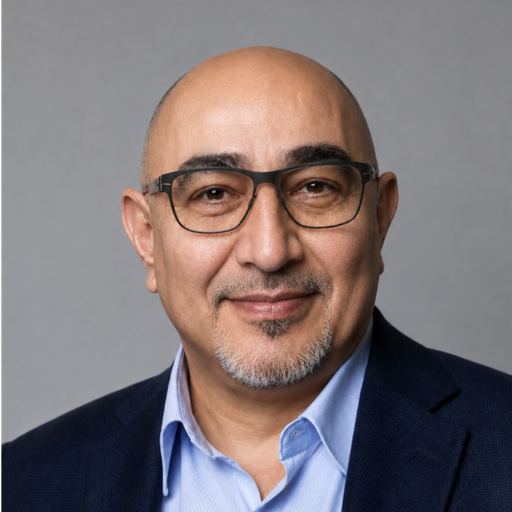
Global Business Leader, Investor & Author of The Chaos Theorem
40+ Years in global business leadership85 Countries worked or conducted business inStanford Supply Chain Management qualificationSPC Turnaround leader
Dr. Hussein Rifai is an Australian entrepreneur, investor, chairman, author and lifelong student of people whose extraordinary journey has taken him across more than 85 countries, multiple industries and some of the most challenging boardrooms in the world.
Born in Nablus and raised in Jordan by a respected judge and an award-winning poet, Hussein grew up at the intersection of discipline and imagination - two influences that would shape a life defined by curiosity, reinvention and a willingness to challenge convention. His career has taken him from engineering and senior roles with global organisations including Procter & Gamble, Johnson & Johnson and Ernst & Young, to entrepreneurship, private equity, investment banking and corporate leadership.
He later founded investment businesses, advised companies and governments internationally, and became widely known in Australia for helping lead the turnaround of SPC, one of the country's oldest and most recognised food companies. His leadership has also placed him at the centre of difficult public conversations, from workplace decisions during the COVID-19 pandemic to going undercover to help expose the exploitation of migrant workers and modern slavery within food supply chains.
But Hussein's story extends far beyond business.
More from Dr Hussein Rifai
All episodes → Living the Dream with CurveballNavigating Life's Spectrum: Hussein Rifai's Global Journey of Resilience and ConnectionOct 2026Play episode →
 Real Things LivingNavigating Life's Chaos & Constant Change with Dr. Hussein RifaiOct 2026Play episode →
 Invest in YouDr. Hussein Rifai on Navigating Cultural Nuances and The Chaos Theorem in Global Deal-MakingOct 2026Play episode →
 Cultural Differences & Cultural Diversity in International BusinessCultural Differences and the Levant with Dr. Hussein RifaiOct 2026Play episode →