
October 2, 2026
Leanne Sheargold’s Story • Quantum Healing and the Body’s Hidden Memory
I feel like, because I'm speaking up, but also the fact that I have boys, so it's not being carried down my line of children as well. It sort of ended with me there as well.
In this episode
Leanne Sheargold and Jan Broberg talk about childhood sexual abuse, a stroke that reshaped her life, and the trauma healing work she now does.
- A stroke at 28 left her relearning how to walk, dress herself, and write.
- Childhood sexual abuse surfaced later, after decades of marriage, motherhood, and teaching.
- Domestic abuse went unrecognized for years because it was not physical.
- Meditation, Reiki, and body-based healing became part of her recovery and practice.
- Boundaries with family helped her protect her mental health and break a pattern in her family line.
Chapters
Written from the transcript. Pick a chapter to play the episode from that point.
Transcript
Automatic captions of the conversation. They can contain errors and do not name who is speaking.
Hi, I'm Jan Broberg, your host and fellow survivor. Welcome to Trauma Interrupted. On this show, we name the wounds that trauma and abuse leave behind. We do the work it takes to heal, and together, we find the way forward. I'm so glad you're here. Let's get to work. At 28, Leanne Sheargold had a stroke in the middle of a grocery store, while raising three sons under the age of five. She lost the use of her right side. She had to relearn how to dress herself, hold a pen, walk without shuffling. It took over a year for her to recover.
Then, 24 years later, at 52 years old, the real reason surfaced. Buried underneath decades of marriage, motherhood, and a career as a teacher was childhood sexual abuse. Memories so severe, her body had locked them away since before she had language for them. She believes the stroke was her body, literally trying to release a secret it could no longer hold. Leanne Sheargold is a quantum healing practitioner and the founder of Pure Gold Holistic and Wellbeing in Australia. In this conversation, we trace her path from burnout to a healing practice built on connecting with the body, the nervous system, and stored generational trauma.
We also talk about the domestic abuse she didn't recognize as abuse for over 20 years because it was never physical, and the moment she finally left, and what it means to actually become a chain breaker, the first in her family line to speak the truth out loud. This is a conversation about memory, the body, and the long non-linear road back to yourself. Welcome to Trauma Interrupted. Let's get to work. Well, Leanne, it is a pleasure having you here, and we've done a pretty good job on an introduction. But honestly, I've never known.
I mean, I understand intuitive trauma healing because people are intuitive and being a practitioner of trauma and healing and being a healer as you are. But quantum healing practitioner, that is your specialty, and I know very little about that. So I really am excited about hearing about the Healing Center in Australia, where you are, that you run. Give me the snapshot of how you ended up. Did you have this gift already or did you study this? How did you end up becoming a quantum healing practitioner? Quantum healing, that's amazing.
Yeah, thank you for having me. So yeah, I've been a school teacher, primary school teacher for about 25 years, which I don't do anymore. And so probably I might have been about 15 years into that, and I was just completely burnt out by the end of the year. And I was already on antidepressants, but at the end of the year, I was emotionally drained. And I was just like, Leanne, nothing's got to change here. You can't keep going like this. You're totally burnt out. And so I began just by accident, Hay House Publishing, if they had a meditation summit for 48 hours and all different people.
So I started listening to that and noticed the changes in myself. So that sort of started my journey of meditation. And then when I started meditating by myself, my spirit guides, some of my little fairies from a child came back. And then I've always been interested in doing Reiki and all of the healing and speaking with guides and all of that sort of thing. So just sort of as something for fun because my job was so serious. When did my Reiki certificate? One and two. And then I was just practicing on myself, just thinking it was something fun and light and easy.
And then one night I had a few friends over and we had all drank too much. And they're like, come on, you know, do this thing on us. And so yeah, I did a healing, not the best choice when you had a few wines. So yeah, I did that and they were all amazed at the differences they could feel in their body. I was amazed at what I was picking up from them as well. What I could tell them, you know, like they were friends, but you know, they're more deeper parts of themselves that I was tuning into. And so that really then started where I started healing other people as well.
So where I lived initially in Broken Hill was very isolated, like the nearest town is three hours away. So I did a lot of Zoom healings as well, but I had to heal myself. So every day when I would meditate or even twice a day, I would meditate, but then I'd ask my body, what did it need to release or what did it want to clear or what emotions wanted to be released. So as I started healing my own body and my spirit guides that came in also helped me and guide me with what organs in my body or what emotions were stuck or what trauma I had in my womb, wanted to come out.
So as I started learning from my guides, I then started receiving people or clients with the same, whatever I removed in my, so when I cleared my womb space, a lot of women then started coming to me with womb issues or fertility or painful periods or whatever it may be. And because I work with, my spirit guides are all galactical. I don't like the word alien, but mine are all Arcturian and I've worked with them for a long time now. And so that's where the quantum healing in because their energy and their frequency of how high they are.
When I started to get a lot more serious, I suppose about offering my healings, I was no longer using any of the Reiki symbols. That was more like a foundation sort of thing. Whereas, once I moved into clearing my own body and working with the galactical energy, it was just totally so different from where the Reiki side of things started from. Wow. That's so amazing. You've survived quite a lot of trauma, but in particular, you did have a stroke at 28 years old, and you were raising your three young children. We don't have to go into the gory details about that, but what did those first days feel like?
I mean, I'm assuming an experience like that would change your life in some way. Yeah, it was. I had the stroke on the Friday morning, and on the Monday, I was supposed to start at university to start my teaching degree. But then when I had the stroke, I was going to pick up my son from the bus stop, and I ducked into the local shop to get some bread and milk, and that's when the stroke happened, which I didn't realize what was happening. I just clung on to the shelving, because everything was spinning. I thought I was going to pass out, and so I was holding on to that.
Yeah. Then when that passed, the panic set in because I didn't know how long I'd been holding on to the shelf, that my son, who was only in kindergarten, so he's only five, was at the bus stop waiting for me. So I went out and got in my car, and then when I went to drive, I realized I couldn't see out of my right eye. But I still was like, I've got to go and get my son. Luckily, where I parked, there was no cars around me. So I just went straightforward and realized, no, this is dangerous. So I went back into the shop, and then they called an ambulance and everything else.
I gave them my friend's number who lived near the bus stop, and she went up and got my son, and then I gave them my ex-husband's work number, and they rang him. Then after that, I was still conscious, but it was like this wave would come over me, and I would go off with the fairies, and then I'd come back, and I don't know, I'd be looking around thinking, I'm going home soon. There's no one around me. I was in hospital and my husband is like, no, you're not going home, and then the wave would come over. So that kept happening for about the first 48 hours.
So my life did change so dramatically because after the stroke, I could walk, sort of. I was very, very slow. It was more like shuffling of my feet. I was very unsteady. I couldn't hold a pen. I was right-handed, so all my right side was affected. I couldn't shower, couldn't brush my hair, couldn't brush my teeth, couldn't dress myself, nothing like that. So I was in hospital for about two weeks, and they wouldn't let me go home until my house had a couple of stairs. So I had to practice every day going up and down six stairs.
Until I could do that independently by myself, I wasn't allowed to go home. So that's what I did every day. In between, I had so many brain scans and it was just every day, there was so many testing being done. At the time, they blamed the pill, but then a year later, I had another mini stroke, so that they've never been able to find a reason. I actually think it's because of all the trauma from my childhood. I feel like having the stroke was my body just couldn't hold it in. It was a secret anymore and that was like a little valve going to release some of the stress.
So it took me a year to recover. As you can imagine, all my sons were under the age of five. So it was like I was a child as well. My mom came and lived with me for a couple of weeks when I came home and then my mom said, I've got to go back down to my husband and back to my house. She's like, your mother, like Glenn's mom was coming to stay. I said to my mom at the time, can we please just make sure this week by the time you leave, that I can at least put my undies on because there was no way in hell I wanted my mother-in-law helping me to get at least my undies on.
So yes, by the end of the week, I could get my undies on. They're all twisted, but it didn't matter. They were on. It just took time to learn how to dress myself and then writing. I had a lot of therapy that came to the house to help me with all of that. So a year later, I actually went back to uni and I had a person, because I still couldn't write properly, I had a person that would come with me and they'd take notes and that sort of thing as well. Okay. So what I'm wondering is, during that time, had you already remembered the childhood abuse?
Because I know it was in, you had said that those memories came later. Was it during that time or after? No. So I was 28 when I had the stroke and I was 52 when the memories came back. Wow. Very distinct time periods in your life. That's so interesting. When abuse does start to surface and it comes from that, something implicit like you think, looking back, I was having the strokes, but it might have been because of the pressure of this secret that had been so repressed, you didn't even have the memories. When those memories become explicit and they start to surface, so many people often will either not believe you or, I don't know, it's almost hard for you to believe your memories sometimes, and you doubt yourself, but what was that like for you to have that, that huge amount of life before your past reopened to you, that you could remember, and you're still healing your body?
How did you hold both of those things? I'm assuming that would be a lot. Yeah, it was a lot. I think I actually feel quite blessed that my memories did hold out till I was 52. Yeah. Because of how horrific the memories were, by it being blocked, it allowed me to get married, to have children, to have a teaching degree, to go and do, to start all this connection with my spirit guides. Whereas now, I've done lots of reading about, if you do remember your traumas, it seems like especially from childhood and how horrible it all was, it could have created a totally different life than the one I've had.
So I am glad that I was able to have the life that I've had, but I do wish that perhaps the memories came a bit earlier, rather than in my 50s. But obviously, my body is quite strong, well, that's what I've been told by a lot of psychiatrists, for it to hold that memory out, all those memories out for that long. So because you are a quantum healer and a healing practitioner in general, I mean, not necessarily all things are pointing at the quantum thing. But when I think about the body and you have strokes and you have autoimmune diseases that pop up in your later life and all the things that I have a pretty strong feeling that most of that, much of that has been trauma stored in the body and the nervous system.
Then when it comes forward, all that you can look back and see the patterns that your body knows, that you don't know, it hasn't become a memory that you have yet. So what did it look like when you actually remember what was the day-to-day? Because this happened before you even had any language for what was happening to you. If I recall what you had said. Yeah, that's right. So when I was 52, I was still working as a teacher. I was working in a Catholic school. How it started was my mobile phone was playing up and my husband was at home, so he thought he'd be helpful and he went and found my old phone and plugged it in to charge it, because I thought my new phone was dying or about to give up.
But while he was at home and did that, he then for whatever reason decided to go through my phone. So he read all the e-mails, all the messages, everything from everybody that was on the phone. Not that I had anything to hide at all, but I was completely shocked. When I got home from work that afternoon, that was what I walked in the door to, was him asking me a million questions about, who is this person and who is that person? What does that comment mean? In your friends group, your friends, which are girls, you're saying all these different, is that about me?
But he went on for hours. He just did not stop. Even though I repeatedly asked him to please stop, can I just go to the toilet? Can I just catch my breath? Or can I just get a cup of tea and sit down for a minute? He just went for hours and hours and hours. Then I actually went to leave, and so I grabbed my handbag, but then there was a tug of war over my handbag. He was trying to rip it away and I was trying to leave. Then at one point, he was trying to push me out the front door. It was winter, it was really, really dark.
I somehow rather, I had got out of my school clothes and was just wearing casual gear. Again, he was trying to shove me out the front door without my handbag, without shoes, without everything. So I was clinging on to the door frame to not be dragged out. I had never seen him like this before, never. It was like, yeah, trying to survive, but also just in shock about how he was. So he took my phone off me, wouldn't let me have that, wouldn't let me have my handbag, took the car keys. Yeah, and just the constant. It didn't matter where I went.
If I went and had a shower and he was still questioning me, didn't matter where I went. I went into the bathroom and shut the door and he was still there. I don't know, he just went on for hours and hours and hours. I knew that there was something in my mind, like my guides were talking to me in my mind and they were telling me, look, for me to calm down, just they're like, go and sit down and pretend you're okay. Sit down, calm down, stop arguing back, stop whatever you're doing that's antagonizing him, which I hate that I'm saying that.
I really hate that. But my guides were like, calm down and he will give you your phone back. Wait for him to give you your phone back. Then I already planned I was going to bring my son who was in the next suburb or message him who was in the next suburb. So my son works, he flies in and out, he works for BHB. So that was the day he landed. Eventually, he did give me my phone back. I texted James to come over and he just came in the house straight away. He's like, where's mom? Come on, we're going and I'll never forget, like he said to Glenn, my husband.
He's like, I will always protect my mother over you. I was like, wow. For him to stand up and say that to his father was pretty big. So yeah, so I left. But three times I left and three times or two times I went back. Then on the third time is when I actually left. You've been married for quite a long time. Yeah, we've been married for 33 years. We've been together for 38. I was 15 when I met my husband and he was 19. So we grew up together and knew a lot about each other. So I just couldn't understand why my personal memories were affecting him.
He was like a completely different person. It just didn't make sense. It was hard enough having these memories, but also our marriage was just breaking apart. It was so volatile and walking on eggshells. I hated the weekends because I had to then spend all the two days fully with him. Whereas, I don't know how I really coped with going to school because my brain was so messed up. Yeah, but I think going to school was actually my escape from being at home, being around him. Because I had to leave for work like seven in the morning, I wouldn't get home till about six o'clock at night.
So I'd stay there as long as I could. So it was quite challenging. At the time, I was sp***ful, I was on watch. I had someone with me all the time, one of my sons or my husband or someone. It was a couple of times near me was like a mental health emergency where you can just go there, doesn't matter what time of the day or the night it is. I went there a few times as well. Then I finally started treatment with a lady doing EMDR. But it was like anyone that I was trying to get into that had good qualifications had like a big long waiting list, like four to six months waiting list.
I just couldn't wait that long. I was in such a bad state. So I did try a few different counselors, but I think my, what was happening with me triggered them. And then they would tell me about their story and I'm like, oh my god, this is not helping. So it was quite tricky to find the right support. So basically you have been in a marriage that is, there's a lot of control. Sounds like pretty much domestic violence to me, even though violence doesn't always show up as being, you know, we say that word and people assume it's being, you know, hit or beaten or something like that.
And that's really not what we're talking about. We're talking about emotional violence. We're talking about financial violence. We're talking about controlling, you know, those are all types of violence in a domestic situation. And if he's, you know, worried about every little thing in your phone, I mean, all of a sudden, you don't have the freedom, you know, to really, I mean, wow, I don't know. That's, I mean, I'm sure that you can point out some good, you know, times and you have your children and there's things about these relationships that we cherish, even though we have to unplug from the person.
And then it leaves us in a whole different situation of various problems, you know. So that's a lot of rebuilding after 33 years to rebuild your life, you know. Yeah. I think also the thing with Glenn was, like a friend asked me, do you know about the cycle of abuse? And I'm like, oh yeah, like I've heard of it. But then when I actually went and read what it involves, I was so shocked because I would say out of that 33 years of marriage, probably for about 20 years, was some resemblance of the cycle of abuse. Like it was definitely for at least 20 years, probably even 30 years, there was definitely the verbal abuse and mental abuse, even sexual abuse.
There was so much going on, but at the time, I didn't recognize it. And I was an educated woman. But I think to me, like what you said, because he wasn't actually physically hitting me, I didn't recognize it as anything. And that's a hard thing for me to hear, is that how long it was there. But it was so slow. It just sort of changed what was normal to me, because it was so slow how it came in. I didn't realize that what was actually going on until that year when I did remember, it was like he was 100 percent in the domestic violence, and a whole range of that was actually going on.
So even the physical, I remember before the physical, like after that first night and I went back, I still didn't see that as physical because I'm like, oh, it was just a handbag, or I was just holding onto the doorframe. He didn't actually punch me or hit me. So even then and another time he had me pinned against the wall and his face was like screaming in my face with spit going over my face. And even then I'm like, well, he didn't hit me, he didn't punch me. So it's interesting. And I kept thinking to myself at one stage, I was like, Leanne, what has to happen for you to leave?
Like how bad does it have to get? Right. And I'm like, when we were fighting over the handbag probably for the third time on that particular night, I'm just like, what are you doing? Just give him the handbag. Just, it doesn't matter. If he wants it so badly, give it to him. Yeah. But so it's interesting the places you go to in your mind. It's like survival brain, isn't it? It's like the brain is trying to protect us from reality or something. And honestly, until we really learn, which is why we do this podcast for other people, to hear these stories, to learn something from them, is that we don't know if this is the only marriage that you've had, and whether your parents had a good marriage or they didn't, this is the one that you have, and you know that you're supposed to stay with this person no matter what kind of thing, you know, until death do us part, and you don't even realize that these things that are happening have names that are these are not okay things.
I mean, it's just like a 13-year-old who's been being abused her whole life by her grandfather. And then in health class, doubt that what's happening isn't right, it isn't okay. And on one level, she maybe knows because she doesn't like it. On the other level, grandpa is the only person that paid attention to me and said he loved me. Do you know what I mean? It's like, it's very confusing until somebody kind of draws a line in the sand. Says, no, this is not you. And especially what's happening to you as an abused child was pre-language, and then it was so bad that it was repressed until you were 52.
So, you know, if you've got this domestic abuse and you had mentioned, there was a lot of financial control that went along with that. And now you're finally on the third time that you leave over this period of time, then that's it and you're done. So, how did you move forward? Because you call yourself a chain breaker, okay? What does that mean for you, you know, on an ordinary Monday, well, maybe Tuesday for you, where you are, Monday where I am and Tuesday where you are, what does that mean, being a chain breaker?
How did you move forward and what does that mean to our listeners? Well, for me, that means, so my mother stayed with my father and they had, well, my father wasn't abusive, but he was very controlling, very domineering. His opinion was it and no one ever questioned. So me leaving Glenn broke that chain of staying with your husband. Also, I know like on a different side, a spiritual side, I've had many past lives with Glenn and this is the first lifetime that I've ever left or my other previous lives. I've always stayed.
But also, there's also sexual abuse in my mother's line. So I'm the first one though that's actually come out and spoke about it. And also, I'm in the process of reporting it to the police. Whereas my mother's family line don't want to speak about, like they will say yes, there was sexual abuse, but that's it. They won't, even my own mother won't talk to me about it, tell me anything about it. She just shuts down and won't go there. Yeah, so there is that really strong female line of where there's sexual abuse happening.
Sometimes it's been like as a child, but then it's been other sort of things as well. So I feel like, because I'm speaking up, but also the fact that I have boys, so it's not being carried down my line of children as well. It sort of ended with me there as well. Before we move off that subject, you do have boys, but I mean, the statistics in the United States are that it's one in three girls, one in five boys will experience sexual abuse and assault by their 18th birthday. It's a huge number of children. So what are you doing with your boys to make sure?
I mean, yes, the female line, you broke that chain. What do you do to teach your boys or to assure not only their safety, but how they treat the women in their lives or the men or their partners? How do you do that? You have a lot of experience. Talking about quantum, he's so interesting to me. This is really great. So my sons all knew, there are only children when they knew about what was going on. When I was in my 30s, I did have a very brief memory that something had happened when I was with my brother. I had no memory of what it was, and I tried to deny it for so long, but I knew that something had happened.
When I spoke up and said to my parents that I'll remember, because I used to wet the bed all the time, and I was petrified of the dark as a child. So this particular night, my mom actually put me into my brother's bed for some reason, which she'd never done before, although I can remember. At that time, my memory ended where I woke up feeling like he was touching my vagina, and I woke up. That was all the memory. But then I was like, Hang on Leanne, you were only 10. Did that really happen or did that not happen? But then as I got older, I sort of felt more so that it had happened.
And then when I brought it up to my parents, they were like, Oh, don't be stupid. That never happened. But then I stopped speaking with my brother from that point on. And so my sons knew from youngish ages, why, that I didn't speak with my brother. Hi, I'm Mikayla and I'm part of the team at the Jan Broberg Foundation. And I want to tell you about something we built called the Survivor Circle. So the Survivor Circle is a free online community for anyone who has been through trauma or abuse. And it's somewhere you can actually exhale with no pressure, no judgment, it's just people who get it.
When you join, you'll meet our community mascot, Dottie and Spotty, and you'll get a warm welcome, a walkthrough of our guidelines and find your shared ground for sharing. We host circle meetings regularly, round robin and speaker style, and you can share whenever you feel ready. There's also the TIME. Program, which stands for Trauma Interrupted, Mitigated and Expressed. So it's a peer-led, 12-phase recovery framework, plus workshops, guests, and of course, first looks at everything coming from the podcast and JBF.
So this program was built because too many survivors are out there carrying something heavy with nowhere safe to put it down, and I know that feeling personally because I am a survivor. I may not be ready to share my full story yet, but honestly, that's exactly why the Survivor Circle matters so much to me. Because I don't have to have the words yet. I just have to show up. If any of this sounds like you, please come. Not when you're ready, not when you have the words. Because you've carried this long enough, and you don't have to carry it alone anymore.
Please join us free at circle.janbrobergfoundation.org. Just tap the link in the show notes. I really hope to see you there. So they were aware of it. And then definitely when I was 52, they knew a whole lot more. Not the details, but they knew that my dad was involved, and my brother was involved, and the cousin was involved. Yes. So I think me speaking about it then and making them quite aware. And as they did get older, they're like, why do we not see him? Or why do we not see them? Why do we not see much of my parents as well?
So they were told about that from young ages. I think also we were very cautious about where they went, like if they stayed overnight. Yeah. Other than that, I don't think we've done that much. Yeah. But open communication, telling them the reasons why and being honest about that. I think young people, sometimes we don't give them enough credit for what they can understand. I don't think there's just some secrets that people want to keep from their children. I think I'm not so sure that's a good idea. I really admire that you did talk to them and tell them, even as young boys.
Then when I was 52, I said to the boys about that I had memories of my father and my brother. They then cut my family out of their lives as well. I think my youngest son, Josh, he's got two daughters. He's very protective of where they're going, what they're doing, who's around them. I remember one particular time he had a business event to go to and the friend was coming over to look after the girls, but she wanted to bring a boyfriend. Josh is like, no, sorry, we don't know your boyfriend and we don't want him around our girls.
We know you and we trust you, but he can't come. I was really proud of him because she was quite a good friend. But for him to say that to her, I asked him later and he said, I explained briefly about why he didn't want the boyfriend coming. She was fine. So I think it's just really made all three of my sons more aware about choosing where their kids can go or who's babysitting them or making choices about what happens to them. Even like going to the park, I think they are always as well a lot more watchful about being close by with where they're playing and that sort of thing as well.
That's great. So if there was something that say that we have a listener right now and that person is still just surviving, haven't let themselves really start healing just yet or haven't sought out, how do you heal from childhood trauma? I am having memories or I am having difficulties at work or in my relationships, and I think it's connected to this, but I don't know what to do and if you had one thing that you would want that person to hear from you, what is it? I would go and buy the book, The Body Keeps the Score, and read it.
At the beginning, it's quite technical. I skipped the first two or three chapters, but reading that book, there are so many signs and symptoms from my childhood that should have stood out, that should have got people's attentions. It really explained what was going on because in my body, I was disassociating all the time. I'd go back to being my whatever age I was at that time, and I would get stuck at that age, the hours. A lot of things that were happening in my body that I couldn't understand what was going on, it explained all of that.
Even now, I still refer back to it because it's got such good details and such good explanations. It is a bit hard to read like at the beginning, but I would say go and buy that book and read it, it'll really help you to understand. Or if you want to message me or book a quantum healing with me, I can also help you to connect to your body and help you to start communicating and finding out. Because at first you're in denial, you don't want to believe these memories. But when you go a bit deeper into your heart, you know it's true, but it's so shocking that you don't want to admit that it's the truth.
Because then you might have to take action or make better choices or get help or whatever it may be. Yeah, that's so good. Bessel van der Kolk who wrote that book, The Body Keeps the Score was wrote it a long time ago, really when much about psychotherapy was just coming into light and a lot of people not really listening. Really thinking, oh yeah, those crazy psychiatrists or whatever, they work for crazy people. Yet that book has held the test of time. The Body Keeps the Score. It's one of the best things that I've ever read and re-read because it is hard to read because there's a lot of science and technical language in it.
But then there are also these amazing examples of him and his early work and where he worked and working with women at, I think it was a mental institution, but then also working with men at a prison. There's just certain things that all of a sudden you just, it opens your eyes and you go, well, my body knew before I knew. When that's the case, when your body is responding because of trauma, it's having its own life and you and your mental are a separate thing. When it finally catches, it's pretty stunning and pretty shocking to people to remember things.
Then for other people, please just believe them, please believe us. Let's book a quantum healing session with you. Because that is generating all trauma that we talk about all the time. I don't tend to know anything, but I tend to believe that we definitely, this ball of energy that I am has existed for eternity on each side, and it will need to exist. So, for it to just be floating around, when this lifetime and this particular moment in time is so short, no, there's multiple life, there's multiple experiences with this, with this, with me.
I've had some interesting deja vu moments, and I'm like, where did that come from? Because that hasn't happened in this particular lifetime, but I have had some things like that, and I've done some deep meditation work with our community director. She is a meditation expert, and she does all kinds of various kinds of healing, and she runs our community because she wants people to have these options. Yes, there's therapy, yes, there's EMDR therapy can be a good experience. Some people have a terrible experience. A few times I've heard that same with ketamine and spravato, and usually good experiences, and these are new things.
These kinds of things are not things that were available to me when I was in my 20s and 30s. It really didn't start to happen until I was in my 40s, after I was starting to tell my story, and that for me was very healing. But then all these modalities and these practitioners and healers and therapists and scientists and doctors, they were farther and farther apart, and now they're coming closer and closer together going, oh, yes, childhood trauma, it's a real problem and it affects the life of a person in so many ways and aspects.
We got to actually deal with that, get to the source, which is that. So if your understanding of trauma and how it changed, your understanding of that as you were on your own healing journey and evolved, what would you say has been the best part of that evolution? Like from not knowing to knowing, from it being in your body to having a stroke, all the things that you have gone through, that evolution, your healing journey evolved. It started one way and is continuing sort of water, right? Yeah, for sure. When I was going through it, remembering all these memories, I just felt like I was losing everybody.
My parents, I cut out of my life and I was just so close to my mom, we would speak every day. So it was so, so hard to not have a relationship with her. Then my marriage fell apart and then I lost friends. It just, I was like, one time I was yelling at the sky like, who the bloody else have I got left in my life to lose? Like, who else are you going to take? Come on, take them. Get rid of them. Now, take as many people as you like. I don't care. So yeah, that was a great big loss. And it was very painful. It was very lonely.
But now I can see, you know, I do truly believe that everything I've been through in my life has really created the woman that I am now. You know, so I know how to heal my own body. I love working with women with trauma because how I take them into their body, it's nice and gentle and it's soft. And it's like asking your body, what trauma memory are you ready to release? So it's very much guided by that woman's body. And I feel so lucky that women trust me, that I get to go on the journey with them. I get to hold space and sometimes hold their hands while they're in that process of releasing.
But I'm also there after the healing. They want to reach out. So I've written the book and I'm doing all these public speaking. I've opened my own shop, my quantum healing is getting very popular. So if I had to stay with my husband or ex-husband, my life would have been very much different. There's no way he would allow me to do what I'm doing now. I'd still be teaching in a school. So I just feel like my life is my own now. I have freedom in every sense of the word and this is where I'm expanding and connecting with other women that have gone through trauma.
I love the quantum healing because it's another holistic approach to help women with trauma, but it's gentle. It's gentle on their body. It's like what their body wants to release. I did EMDR and it saved my life. It's why I'm here, but it was so bloody hard. The memories that I went into, like I did intensive for three months, which meant I was over in Chiang Mai. I did five days a week for three months EMDR. When you are going back into memories and then your body is reliving it, all the sensations, all the words, it's very, very full on.
So I understand why it's hard for people, because it takes you back into that memory and you feel everything again, and you hear more, you're more aware of what's actually happening because your body is giving you all the extra sensory things that you're not aware of at that time, or at that age, as a five-year-old, you're really not aware of what else is going on around you. Right. So the quantum is really, it's a nice, gentle, easy on your body, and your body guides what it wants to release, what it's ready to release.
Rather than with EMDR, I wrote out a list of 30 different things, and it's like, which one do you want to start with? So it was more like, it wasn't gentle, it wasn't what did my body want to release. It's like, all right, Leanne, let's go. So it was a lot harder, but saying that, it has saved my life. It's why I have a normal life now, because I know all of my memories from beginning to end, I've processed them all. But to every woman out there that's doing EMDR or has tried EMDR, good on you, yay for you, because you've been brave enough to give it a go.
Whether you've stuck with it to the end or whether it was too much. There's so many women and men that start counseling and quit, because it's too bloody hard. So good on you for having a go at the EMDR. Yeah, and for any other. But I just feel the quantum is such a gentler, softer way of remembering the trauma and then clearing it and releasing it out of your body. It's not forced, it's just like your body is talking. It's letting go nice and gently and softly as well, which helps your body to, because as we know when you're releasing the trauma or memory comes up, your whole body then has to go through that process, which does take a few days or a week or maybe more as well.
Yeah. It's about then being nice to yourself and gentle. We're so good at giving other women advice, but we need to put the advice back to ourselves. How to be nice to ourselves, how to be gentle with ourselves, how to be kind. How to really like ourselves and love ourselves again. I think somebody is like, how do you do that if you never feel that? I'm like, I read this little book in our book club on our online community, my sister, she found it and she was doing this book club review and we read this and it was a real short book, but it was like, how to love yourself today and for the rest of your life or something like that.
There were little exercises in there and we were promised, if you will do this exercise, you will have a breakthrough in how you feel about yourself. You will, and it was true, it happened. I'll just never forget when you're looking in a mirror and you are saying, whether they're qualities about yourself that you love or that, I just love you, I love you. Repeating things for a number of times and I really tried to follow some of those things that were in the book and I had these huge breakthroughs to where I could just see myself and I'm like, man, you're amazing.
And I really, it came back, that kind of like what got robbed because you were just, before you could even have language and words, you're already being abused, you never got the love language. I did have that and it came back to me that I was worthy just as I was. I didn't have to earn anything, that I was, you know, probable and I loved myself. And that one thing has changed my life after trauma. And so doing things like that, even with a small group of friends that you meet in an online community, something like that, you all can kind of just be there and witness these sorts of changes that can happen if we do the work.
So even though traditional therapy, I'm sure, like you said, EMDR saved your life. I have had traditional therapy, it has definitely saved my life and gotten me in and out of a couple of marriages that were not right for me, unhealthy, because I needed somebody else to be able to say, I'm just going to talk to you as if you were my daughter and tell you, you should go. It's okay. You're not a failure, but this is unsafe and you should go. I needed to hear that. So is there one practical, small little step that somebody could take away today that would help them start acting with themselves?
Well, I really highly recommend grounding. So what I love to do is go outside on the grass, usually barefoot, and I'll just stand on the grass for a couple of minutes or a minute. I always visualize roots from my soles of my feet going down into the core of the Earth. If I do have time, I also will ground my lower chakras, so like my root chakra, and then I'll see the sun pouring into the top of my head. So it's like filling me up with joy and passion and happiness, that bright yellow vibrant sun as well. So I'm grounding my energy below, but I'm also receiving from above as well.
So I like to do that every day. And some days, if I'm in a hurry, it might be as I'm walking to my car that I ground myself. Other days, if it's a nice sunny day, I might go and have a cup of tea outside and ground my energy and just listen to the birds. But I think grounding is such a great thing to do because it really helps you be present in your body. It helps you to feel strong and sturdy rather than like a piece of paper getting blown away, you're actually present and then you're supported into the core of the earth.
I think that's a really good thing. I just love the energy from the sun because it's such a high vibration. It brings in joy and happiness, but it also feels good. We all feel good when we've got the sunlight on our face. It's a great thing to do every day. It's quick and easy. Quick and easy and really does set you in the present, which is a big problem for trauma survivors. Is that we're either anxious about the future or we're torn up and depressed about the past. And when you get in the present and realize, okay, but everything right in this present moment is okay.
It's good. I used to just be barefoot just on my front porch on the cement just to feel whether it was cold or it was hot. You know, depending on how the day was going. I'd stand there with those bare feet. And I still, I'm a very big believer about going outside. And another friend of mine who has been on the show, her name is Arcie Gray, and she has this thing about if you start to feel the overwhelm, the anxiousness, the panic attacks, whatever the depression, whatever it is that's coming that you're like, oh no, what am I going to do?
She's like, whatever it is that you are doing physically, do the opposite. If you're sitting, stand. If you're standing, sit. If you're looking down, look up. She would talk about her eyes, roll your eye back of your head so that you can reconnect with your brain. It was interesting and I thought, it's so simple that people don't do it. That we disregard some simple things about grounding. I really love that you brought that up. I know that I want to make sure that everybody knows how this gentle work of the quantum trauma healing and the sessions that you do, they are available.
You can do it over the Internet. We have this amazing thing. But I want to know about that, that that gentle work with the body and the nervous system to release stored trauma and the subconscious blocks. The things that are not conscious, they're subconscious. That's what you're doing and not even just for this generation, but through these lifetimes of your own and your ancestry, maybe. So what about that? How do they get in touch with you? Then I want you to talk a little bit more about your book that you are self-publishing and that it's coming out too.
Yes. So if you go to my Facebook or Instagram page, Leanne Sheargold, you'll be able to find the links. They are my website and all that is there as well. If you want to book a Quantum Healing session with me, you'll just need to go to my business page, which is called Pure Gold, Holistic and Wellbeing, and the links are there as well. Or even if you want to send me a message or ask some questions about the Quantum, I'm more than happy to speak to people and I can help you see how it could fit into your life if it is what you're looking for and what you're needing and don't forget, it's Aussie dollars, so it's going to be cheaper for you Americans as well.
Yeah, but I'd love to just, anyone that wants to even have a chat or if you're questioning or not sure if you've got trauma or anything else, feel free, please, to reach out. I would love to speak with you all. Okay. That's wonderful. There's no issue. She's a real person that can have a real conversation and I really have enjoyed getting to know you and your story and what you're doing to really. I just feel like if the whole world could just have one big gigantic sigh and release a lot of stuff. I feel like even the leaders of our nations and all of it, it's like, what kind of trauma are you carrying around that's really getting in the way of peace within ourselves and with our neighbors and our friends and our world at large.
I just want that so badly for people, to have it first and foremost for themselves, to have that release and that peace that can come. I know that you're one shining example of someone who literally took back a lot of things that you didn't even know had happened or were missing. I mean, it's really interesting. You had to go through all these trials and these marriage and a stroke, and then to also go know that there was all this trauma from childhood, and to then come through it and say, yes, healing is possible.
Yes, you can feel better. Yes, I really do have the life I love. Now, when you get to that point, is there any chance that you ever invite anybody back into your life on your terms, like your mother? Oh, no. Fair enough question. Yeah. Look, my mom and my dad, I would love to have my mom as part of my life, except for I know that she's sticking with what my father has said, which is kids being kids. She will never, she won't go against him because that would then mean she'd have to change her life and whatever else.
So yes, I do miss her a lot. But I'm choosing for my own well-being, not to have that conversation because some days it's still really hard when I think of her or if I see a photo of her, I'll cry because I miss her. So I'm making a choice for my own well-being, not to reach out to my mom because I cannot trust what she will say or won't say. I don't want to open a door to me being back in a bad mental health state. One of my sons lives near her and does see her occasionally, and he lets me know how she's going health-wise or whatever else, which is great.
I love that answer. That's good. It shows that we can draw strong boundaries and we can look out for our own mental health first, and all of these other relationships that we think we have to repair or blah, blah, blah. We can say no. I love that you have said no. I would not because it wasn't just kids being kids, and I'm not going to go back to that story that is untrue because it's not good for me. It's not good for my mental health. I love that answer, okay? Yeah. Mayo, I'm not sure. I recently spoke briefly with my ex-partner, and it was a good closure for both of us.
Moving forward, we're both wanting to be able to go to family events and be there and be civil to each other, and not be excluded or not for it to be awkward. So I'm glad that we've got to that stage where we can both say hello, be pleasant to each other and not make things awkward. So the whole family can come together because for a fair few years, we've all been splintered where we were very close. So yeah, I'm looking forward to what the future will bring with the family gatherings and Christmas and Easters and all of that sort of thing.
So that's growth too. That is growth. That's amazing. Okay. Well, with all of that wonderful conversation and advice and here's a grounding exercise, I just want to say thank you for being you and for being willing to open up and share with us what not only has worked for you, but is something that you are passionate about in helping others. That's really a big reason why the podcast started, is just wanting to tell other people's stories and how they're going from what we call the wound, the wound and then what's the work?
What's the work to heal the wound? Then what's the way forward? What are we doing next? You just fit all of that conversation so beautifully for us today and for everybody that's listening. Check out the Leanne that I'm looking at right now because she's an amazing person and I really appreciate you being here. Thank you. It's been lovely speaking with you and thank you again for inviting me. Yes, absolutely. So we'll sign off here. Hey, everyone. My name is Austin Tanner and I'm Jan Sun and the executive producer of this podcast.
On behalf of our whole team, we want to thank you for listening to our show today. These conversations are not always easy and we don't take it lightly that you stayed with us all the way through. Everything you heard today can be found in our show notes. You'll find links to our website, janbrobergfoundation.org, our newsletter, and how to join our free online community, the Survivor Circle. This is where the work continues between episodes and we hope to see you there. Thank you so much for listening today and for being part of our Survivor-led movement.
Until next time, over and out onto.
About Leanne Sheargold
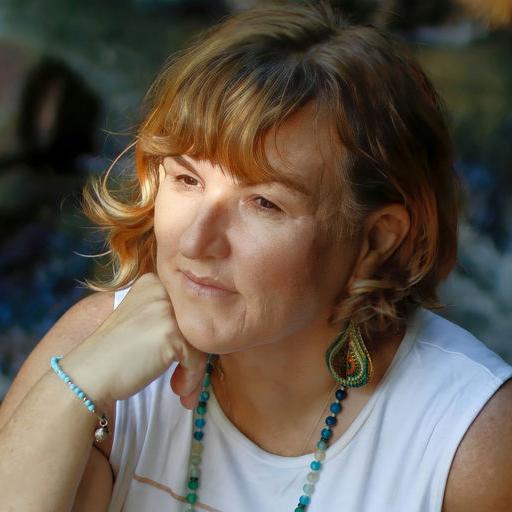
Trauma Recovery & Spiritual Healing Practitioner | Quantum Energy Healer | Author
2023 Pure Gold Holistic & Wellbeing began3 Certified massage modalities28 Age when she survived a stroke while parenting 3 sons under 5Co-runs Australian healing shop
Leanne Sheargold is an author, intuitive trauma healer, and quantum healing practitioner who supports women and men recovering from childhood abuse, domestic violence, complex trauma, and life-shattering health events.
Her journey into healing began with a personal health crisis and decades of significant life challenges. At 28, Leanne experienced a stroke while raising three sons under five. Later, in her early 50s, she began recovering repressed memories of childhood abuse while navigating the breakdown of her marriage. Seeking intensive treatment overseas led her into a period of focused recovery and community support, ultimately inspiring her to facilitate healing circles and develop her own healing practice.
Today, Leanne combines her lived experience with spiritual and energy-based healing practices to help people reconnect with themselves, explore long-held patterns, and move towards greater emotional and spiritual wellbeing. Leanne co-runs a healing shop in Australia, where she supports clients through quantum healing, energy work, spiritual practices, aromatherapy products, and meditation. She co-runs a healing shop in Australia, where she supports clients through quantum healing, energy work, spiritual practices, aromatherapy products, and meditation, both in person and remotely.
Now a published author, Leanne brings her insights and experience to a wider audience through her writing, podcast conversations, and healing work.
More from Leanne Sheargold
All episodes → Real Life RewrittenStroke at 28. Buried Memories at 52. Then She Rebuilt Her Life | Leanne SheargoldNov 2026Play episode →
 Anxiety Simplified - Beyond Traditional PsychologyEpisode # 329 Quantum Healing Trauma - Reconnect what is disconnectedNov 2026Play episode →
 Mature AllureHealing After 40: Trauma, Boundaries & People-Pleasing with Leanne SheargoldOct 2026Play episode →
 Open-Minded HealingYour Nervous System Remembers What Your Mind Forgets: Clearing Stuck Energy From TraumaAug 2026Play episode →
 She Talks Confidence PodcastHow to Break Free from People Pleasing & Reclaim Your Confidence | Quantum Healing InsightsJul 2026Play episode →