
June 9, 2026
The Fears that Sabotage Relationships - Last First Date

In this episode
Dr. Maria-Elena Lukeides joins Last First Date Radio to talk about the fears that sabotage relationships and how old childhood scripts shape adult dating and connection.
- Three key fear categories can get in the way of living your best life and having healthy relationships.
- Old childhood scripts can drive adult decisions, even when they were formed at age four or five.
- External validation in love can leave people feeling unworthy, especially when relationships move from falling in love into maintenance.
- Dating can function as a learning lab for vulnerability, authenticity, and noticing how someone treats other people.
Transcript
ShowHide
Automatic captions of the conversation. They can contain errors and do not name who is speaking.
Every time I found that, I went outside of myself to, to find that external validation, I ended up feeling like I, you know, fell flat on my face again. And it's, it's a similar journey for a lot of our patients, The strategies that they've employed that maybe kept them safe when they were still in those very dark places with those dark people. Once they're out of that this, those, those methods don't work. They don't actually bring them that, that safeness and liberation. And so they need to trust and have faith in something within themselves that that keeps seeking this potential to rejoin this field of love, to come into this space of feeling.
This is episode #716 with Doctor Maria Elena Lukides. We are talking today about the fears that sabotage relationships. We talked about three key categories of fears that in the way of living our best life, how we sabotage relationships when we live with old scripts from our childhood that we haven't changed. We're making decisions based on who we were when we were four or five years old. So you not going to want to miss this conversation. I am Sandy Weiner, I am the host of the Last First Date Radio where we believe it is never too late to go on your last first date.
I am a certified dating relationship coach for people over 40, and for the past 13 years, I have been bringing you weekly expert advice and authentic conversations about love, connection, and healthy relationships. If you'd like to learn more about my private and group coaching programs, my courses on every aspect of dating and relationships, and my three books, go to lastfirstdate.com. And before I bring up my guest, I'd love to have you join my Facebook group. It's called your last first date. It's for women over 40 who are looking to have a positive place of support on their road to the last first date.
And now for my guest, Doctor Maria Alina Lukides is based in Sydney, Australia. She is a clinical psychologist, she teaches meditation, and she is a pioneer in psychedelic assisted therapy in Australia. She has nearly 30 years of experience in mental health and she integrates clinical psychology, neuroscience, mindfulness and psychedelic therapy to explore trauma, healing and human connection. Welcome to the show. Hi, Sandy, Thank you for having me. I would love to hear a little bit about of your own experience with relationships, fears, anything that held you back in your own life.
Wow, what a deep question to jump straight into. I love that, and I love how you do this all the time, Sandy. There's nowhere to hide, which is fantastic. And so thank you for that personal question, because I think a lot of the times as a professional, we very rarely get to talk about our personal journey. And the reality is that the thing that makes us human to human in a room with someone, especially for those of your guests who do work with clients, the fact that we're in this human journey together and all of us will have these experiences of feeling outside of the field of love at some point in their lives.
And the way that I love to describe fear is anything that takes us out of this field of love. So anything that threatens us, the field of love, which is a field of safeness, a field of complete satiate, a field of, you know, feeling that my needs are all met, that there is nothing to fear. It is a state of fearlessness, a state that I am taken care of, if you will. And outside of that field of love is this human existential crisis that we all face at times, which manifests as different fears. So my own personal journey through love or I guess you know, in terms of how I've navigated this field, I definitely have found that every time I have tried to seek love in a way that is external to me as a source of validation of who I am and my worthiness, I've always fallen flat on my face.
And it's a unique experience to be someone who has repetitively experienced disappointment in relationships. I'm still single and I've had really beautiful relationships in my lifetime in terms of romantic love. And I keep finding that this place in romantic relationships that we tend to seek that is going to feel our fears. It's going to quieten our fears. It's like, you know, when we I felt for me, the younger I was, the more I felt, oh, like if I can find someone to love me who values me, who respects me, then somehow this inner world or this fear of unlovability of not being good enough, of something not quite being worthy within me would be healed.
And when you're doing that early phase love, you know that beautiful falling in love, It's definitely how it feels. And then, you know, as you come out of that period of just falling and you start to create what I call the maintenance phase of a relationship. Once you leave that initiatory phase of the relationship and you enter the maintenance phase of the relationship, I found that a lot of those fees resurfaced in other ways, especially in the way that, you know, sometimes that relationship started to evolve or that it actually still was a part of me.
That fee was not something that I got rid of, so to speak, or was soothed by that loving relationship. So my fears in particular I think are super common. I run these amazing meditation slash self love groups all the time. And one of the things I like to do is at some point in the course we come to that part of the course where we kind of teach how so many of us carry this. A version of us that's deep within us that we are scared of other people seeing this version of us that we have been trying to perfect change. It's like we've got this little bonsai tree that we're constantly curating and twisting and, you know, trying to manipulate to become this acceptable tree on the outside, but on the inside we still feel like that original tree.
And so I ask everybody, who amongst you have ever felt that feeling of impostor syndrome? And I love this moment because everybody puts their hands up and, and you're smiling along saying, you know, it's something that resonates. And whether it's in the workplace or whether it's in relationship or whether it's in, you know, other aspects of friendship and, and, and all the ways in which we are able to build relationships and connections of love, which are all of our connections, really, I think there is this constant clash between this inner self that we fear is unacceptable.
This inner self that we fear is unpalatable for human consumption and this version of ourselves that someone engages with in the outside world, you know, outside of us, you know, we, we get to be this person. And so this fear is always kept within that, oh, like one day, what if I drop my mask? What if I stop trying? What if I revert back to that original, that original tree, if you like that metaphor, the original tree without the twists and turns. What if this tree grows out and becomes this normal tree and not this carefully curated bonsai tree?
Will I still be acceptable? So my pathway for about 10 to 15 years has been letting myself grow in whichever which way that feels natural and spontaneous, and really allowing through this experience of experiment to just be myself and be in the world where I'm actually practicing. What I feel like is true self love is a self love where I am no longer acting as if who I am spontaneously naturally, without this curation, without this effort, without this, you know, sense of I'm a character playing a role in the world.
And to a large extent, I'm not suggesting that I was fake before, but there was a sense of consciousness around. Oh, you need to be like this in order for people to like you. Be careful. Watch your, you know, dot your IS, cross your TS, mind your PS and QS and trusting that as I am in my naturalness is good enough. Not for everybody, but good enough. And what I have found in this terms of this journey you asked me about through love and through my fears, is that only once I was able to live as if my fees were truly irrational, that somewhere within me, just like everybody else, I was enough.
I was worthy. That I was meant to live this journey within this body, within this personality, within this, whatever the constraints were. And the liberation for me has been to come and find that I am enough and that I do feel this innate sense of lovability, worthiness. And that doesn't mean everything always works out, but it means that no longer am I my first critic. No longer am I my first, you know, judgmental tone within me when something does go wrong in relationships where it's, you know, kind of got always brought back to sea.
You know, this is you. This is your story. This is how you are and what's also opened up. And I think what's been revolutionary as I've done this increasingly in my life and, and really felt that shift within is that I'm also able to accept people where they're at and how they are. And in relationships, for example, I don't even go through the rigmarole of trying to work on changing them to suit me. And it's like, I just am like, oh, I think we've come to an impasse because as much as I would love to continue with you, we seem to not be compatible in these spaces.
And so you deserve to be with someone who doesn't need to curate you like the bonsai tree either. And I don't want to be curated like a bonsai tree. And so I'm just going to allow us to find the space to grow in the direction and in the shape that feels most natural. Thank you for sharing so vulnerably with your unbonsai tree esque self. I love the metaphors. I and I can so relate. As you can see on my face as I was smiling in recognition of so much of what you shared. As you were talking, I was having this image of how we are born without all this garbage and without, without all these, these ridiculous masks that we, they're not ridiculous.
They're, they're to keep us safe. They're to keep us from what we think is going to hurt us. And so we want to be liked and we want to fit in. And that's how we develop all these sabotaging, self sabotaging behaviors that work for us when we're young, but then don't work for us anymore as we become adults. And so it's almost like I see this trajectory that we start out as this beautiful clean soul and we then put mask after mask after mask after adapting and strategies to try to fit in. And then we reach a peak where we're like, I can't do this anymore.
And then the rest of our life is spent taking those masks off and saying, OK, I'm going to take a little step towards this fear and I'm going to take a little foot in a toe and put it in that pool of water and try being this part of me and see what happens. And it took me 50 years to to get to this. And now I'm 20 years later and I'm like, oh, this is I don't need to prove anything anymore. And I don't want to be with people who are not aligned. And I'd rather be single than in a bad relationship. And it's not because I'm judging, it's because it's not a good fit.
And you have that self-awareness and that self trust, which I think is really at the core of self esteem. Well, I would say maybe self love is self-confidence and for me, self esteem is something that can be incongruous with self love. It was me self esteem and I know you meant it in that more self assured, self confident ability to stand in your truth. I, I want to point something because I see it so relevant in, in therapy when I, when I work long term with people and self esteem is how I esteem myself on certain variables.
And so I can have low self esteem in some aspects of my life and yet still have a great degree of self love because the two are not actually the same thing. So in fact, the more self love I have, the more able I am to more accurately know where I esteem highly and where I esteem less highly. So I have, for example, very low self esteem when it comes to sports. I don't. I'm not a great sports player and I drop the ball. I run the wrong way on the soccer field. I'm not someone who will get picked for a team in any, you know, in any iteration of my life so far.
However, I can esteem myself poorly on that construct and yet still have a high degree of self love because the two are no longer relevant. That makes sense. Yeah. And I think it's important for us to be able to say, oh, OK, because for me, a lot of patients will come to me and say, but I'm not good at this. I'm not good at that. And I'm like, well, sometimes that's just, you know, not an accurate reflection of yourself. But we don't have to like ourselves fully. Like that bonsai tree that I allowed to grow out and be the tree that it needs to be isn't because I believe that that tree is amazing or it's a nine out of 10 tree.
And now I'm in fact, I think self esteem is conditional on meeting certain criteria. And so it actually is the opposite of real love because it says as long as I think highly of myself, that I rate highly on these certain variables, can I love myself? And in fact, it's like, even if I'm not great, I don't have to be the best at this, or I can fall down and not be great at certain things, struggle, make mistakes, have acted poorly in certain situations, and still love myself. And in some ways, this then means that self love does not necessarily mean approval.
It doesn't necessarily mean that you believe that you're the best in terms of comparison and self esteem because it's all about comparison is like the thief of love it. It still pits you into this space where you still need to be holding yourself accountable to some standard, irrespective of whether that standard is yours or somebody else's. It's a quality like you said, like babies, newborns. Like if I go into the hospital and I don't know what it's like in the US that I know in Australia when we were younger, they don't do this anymore.
But when we were younger, there would be a room that had a glass, you know, where you could look into the room from the outside and they'd have all the little cribs and, you know, all the newborn babies that you would go and see it. I remember when we were young and we'd visit someone who just had a baby, We'd first go to this nursery room and look out from the outside through the glass and have a look at these babies. And I often say, if you you know this sense that some, some of us are worthy or better than others, and I'm like, OK, well, that should then hold true for these newborns.
Which one would you let or would you deem should live a life of rejection, humiliation, exclusion? Which one of those newborns in that room would you place with parents who may abuse and hit? Which one of those children in that room would you say deserves more than others gifts and talents that will allow them to have a pathway in life that's going to make things easier for them? It's an impossible task because they're all worthy. We're going to say there is no criteria on that day of birth that separates one from the other.
Yeah, and I would even say that even your life circumstance doesn't necessarily have a script for the rest of your life. And we see so many people who grow up in very difficult circumstances. Most of my clients have had really awful upbringing and they are wanting to rise above it and they're willing to do some inner work to get there. And it it's possible, it is so possible for so many of us to change the script that we think we have. We think this is the way it is. And it's one of the reasons I wrote the book Choice Points and Dating, because I believe in choice.
I believe that we have so many choices, so many more than we think. But when you were talking before, I was thinking of how our schooling, our education system gives this message that you have to be good at everything. And that's a, it's a horrible message to me. That's why I love college so much more because you get to choose and you get to say, well, you know what? I really don't like math, but I really love the sciences and I really love the arts. But I didn't get a chance to shine in my school because they didn't really focus on the arts.
And that was my experience was I, I never had the art expression, the drama, the, the, the dance, the music, the things that I love that made me come alive. I got to do all of that after I got out of high school. And so that message that we have to be great at everything and we have to be witty, and we have to be beautiful, and we have to be rich and have our own homes and all of these things that society tells us, that's success. When in reality, to me, success, and I'm imagining you might feel the same way, that success is really an inner job.
It's so much of how we take what we're given and we make the best of who we are in the right ways and in terms of our values, in terms of living aligned with our purpose, our values, our goals. And not let other people decide how we should live our life and who we are. You can elaborate on that if you like. Yeah, like when you were describing the the clients you work with, especially that sense of choice points where especially for those that have been where the bonsai has been manipulated and they've been twisted and couldn't tortured from early on through outside circumstances.
This thirst and desire for freedom, this thirst and desire to be fully yourself. This thirst and desire to be unencumbered by the expectations of those around you when they are dimming. Your innate sense of worthiness or lovability or your right to be in the world is expressed almost like an innate human need. You know, this need that we have to resume or find again. It's almost like it's a finding again of some type of greater truth within us, which is that we are potentially as probably where I get a bit spiritual coming from a space of innate lovability.
It's almost like we because otherwise why would a child that comes from these, you know, and we've worked with these patients for years, for decades from the most adverse backgrounds. So much trauma, so much pain by those that were supposed to love them and so deeply wounded deeply, you know, uncared for people. I don't want to call them patients because it's not their fault. They're not the sick ones, right? You know, and they carry the scars of those who are sick, but they're not the sick ones. And so in those moments, I always think what makes them not want to give up?
Like what? There must be some innate remembering, some internal sense that there is a place or a field of love that we can return back into. Some experience of feeling good enough, lovable, worthy to start to seek people to work with, to start to seek and do that amazing journey that many of these people that we work with our clients do this amazing work to reflect on the inner landscape of how they feel on their hearts and their minds and the beliefs that sometimes they they come with and the strategies that they've been adopting and using in order to try and feel safe, find safety and find love and heal.
But those same, like I said to you at the beginning, every time I found that I went outside of myself to, to find that external validation, I ended up feeling like I fell flat on my face again. And it's, it's a similar journey for a lot of our patients, the strategies that they've employed that maybe kept them safe when they were still in those very dark places with those dark people, once they're out of that this, those, those methods don't work. They don't actually bring them that, that safeness and liberation. And so they need to trust and have faith in something within themselves that that keep seeking this potential to rejoin this field of love, to come into this space of feeling that they are, you know, within that field of love.
So that's so much of what you said is so true and how much courage and faith it takes for us who who may not be coming from those backgrounds, but especially I think we need to really honour the journey of others who have been through that type of very adverse childhood background. I love the expression field of love. It's a beautiful expression. And I do believe that these people who do seek out support, they're often the only one in the family who has that sense of hope and resilience. I love working with people like that because you get to see the growth that with the right tools and the right work, these people blossom into that beautiful tree that you spoke about.
Let's take a quick break to hear from our sponsors. This episode is brought to you by Amazon Music Unlimited. You can listen to over 70 million songs and thousands of playlists and stations. Plus, you can now stream your favorite podcasts like Last First Date Radio. You can listen to any song, anytime, anywhere, on any of your devices. Get Amazon Music Unlimited for free for 30 days. Just head on over to get Amazon music.com/last First Date to learn more and claim this offer. Let's say there's a person out there who's listening, Who is struggling, who has a lot of fears and strategies that are still not working.
Can you give us some strategies or some maybe a first step in working through some of these fears that they have? Well, yeah, I I really draw from a lot of the self compassion work. Where it sounds very similar to internal family systems. If, if people have heard, I know that's one of the therapy dejours at the moment where it's, it's having quite a, you know, good place in the sun right now. But I've, I'm actually writing a book called No Parts Left Behind. And for me, it's through this ability to turn within towards the fear and ask the fear, what is it that you are trying to help me with?
What are you protecting me from? Because often our fees will reveal to us the shadow things that we are compensating for the real places that have been labeled as unlovable within us. So if we, and I kind of feel that there's, I always can say that we have, we don't actually have many fees. We only have potentially one of three and if you're lucky, all of them. But they all arise from our evolutionary goal, if you will. We either fear death or illness and sickness. So this sense of weakness, like I don't think I'll cope.
So this fear of weakness, this fear of physical or emotional vulnerability, and that's related to our evolutionary task, which is to not die and to stay alive. So some people have this innate insecurity around how strong or feeble they are. So they have this core belief of feebleness and a lot of the things that they fear are around not feeling strong enough to survive. So when a physical illness or a really stressful period comes comes up, they tend to fear that they're not going to cope or that's too much for me, I can't do a lot of stress.
And so it can also be not always that health anxiety, it can manifest also as a anxiety over adverse negative feelings. And the difficulty with that is that a lot of what allows us to live a fulfilled life comes at the tail end of having passed through a very challenging and difficult emotional period, whether that's, you know, doing something that feels very hard, you know, going through stress, being able to cope with a high degree of uncertainty. And so I would invite people with that to kind of look at, you know, where did this belief of mine?
So there's a fear of not coping. There's a fear of not surviving. Where does this sense of weakness come from? And how might I work with that and look at the conditions or the circumstances and the age at which I might have experienced something? And that led me to make this conclusion that somewhere, somehow, I'm not strong enough or I'm not, you know, resilient enough to be able to cope with things and to start to look at that, the fallibility of that belief, of that core belief that is leading to this fear response.
The second type of fees have to do with our survivability. So we're supposed to be able to physically survive, but then we also have to have a skill set to be able to go out into the world to know which berries to eat and which berries not to eat. We need to be able to, you know, be able to do things with, you know, pelts and to make clothing and to build shelters. And that requires skill and knowledge set. So the second type of fees that most of us carry relate to and the way this is translated in the modern world is intellect, skill, intellect.
So this is where at work, for example, a lot of imposter syndrome comes in. This fear that I'm stupid, I'm not as smart as other people, I'm not as good at things. It takes me a long time to get things. I'm going to make mistakes. So this fear of failure, fear of criticism, fear of which is related to to our ability to earn money to make sure that we're safe from a financial point of view, from a resource point of view, being able to get employed, stay employed, thrive at work is also going to then lead to a whole bunch of fees and insecurities we have about our ability to feel safe and to feel that we can survive.
And again here that introspection of this fee is there to prevent my perceived lack of ability in costing me something that's really important to me. So again, coming in and exploring, when did I discover this belief? Is it still valid? How did I, you know, was it did it come up for me as a 7 year old? And should I be using a 7 year olds emotional understanding and intellect to still be making assertions or to be making grand conclusions about who I am as a person? And the third lot of fees are about our ability to connect with others or what I would call our innate love ability.
Am IA good enough person? Am IA nice enough person? Am I socially desirable? Am I physically and sexually desirable to others? So all of these have to do with our early relationships, as we, you know, now know from attachment theory, and they continue to evolve through our social connections, through our social relationships, and then of course, our romantic relationships, relationships, because humans did not evolve and we didn't, we didn't achieve everything that we've achieved on this planet just because of intellect.
It was through cooperation that we achieved it. So being liked and being able to work with others and having others like you enough to want to work with you was at the core of what allowed us to become Uber successful on this planet. So a lot of our fears and insecurities are around social exclusion, social rejection, undesirability being somehow not that good according to other people's opinions. And again, it's about coming into that space of OK, so where did this belief come up? How old is it? Why do I have it? Would it be a fair assumption to be making?
Do I apply the same rules or criteria for likability that I applied to myself? Do I apply that to others? And if so, is there some wriggle room there? And so I think I'm kind of simplistically, you know, trying to answer that question. But what's really interesting in all of these things is that the fear just alerts us to almost faulty aspects of symbolically trying to make sense of a world where we did feel weak and vulnerable and potentially, you know, life threatened. You know, like, you know, sick or not coping and fearing our weakness and vulnerability or they are related to points in our lives where inevitably we would have failed at something, gotten something wrong, not being able to learn something as quickly as our peers or who hasn't amongst us experienced some form of rejection socially, emotionally, even from our parents.
You know, even loving parents will reject or make their children feel emotionally rejected at least a dozen times, you know, a year. It's part of, you know, that process. Our human relationships are messy. Everyone's and our interpretations of those events are what often cause us the pain, not the events themselves. And so being able to create some distance between these beliefs about ourselves, the events that potentially created these conclusions, these belief systems to create enough space for us to then see that potentially the conclusions we made, the algorithm we then created because of them to help us predict how we might be in other situations, the inputs were faulty, the way that we drew those conclusions, You know, so I went to, you know, preschool, for example, and I thought I was this great lovable kid.
I went in there full of confidence and zest and pizzazz, thinking I'm going to become friends with everyone. And I found that the kids avoided me that first day. I found that the kids didn't want to share their toys with me, and I was alone most of the day. And so I came home firm in the belief that something must be wrong with me. And ever since then, I've been filtering and using, you know, filtering information that keeps coming in that is almost similar through that lens. And so this algorithm I've created has been shooting off predictions so that even now as a 49 year old, I go into the world using that same algorithm which says that if you're going to enter a room full of people, odds are they're not going to like you.
And being able to see that this is not a fault, this isn't you being broken. This is part of the way that the brain has been built through evolution to be able to very quickly shorthand predictions about what to expect, what to be careful of. So in many ways, I think we have this dual capacity as a human being. On the one hand, it's to be safe, you know, better safe than sorry. So if I can predict a hostile environment and then act accordingly, you know, then I'm more likely to stay safe. However, the types of things that I've described, who amongst us isn't going to get sick and be vulnerable to dying?
Who isn't going to fail at some things and who isn't going to find themselves, at least with some people, not popular, not liked or rejected? It's inevitable. So these core 3 themes and all of our kind of themes and insecurities emanate from those three main sources are things that somewhere we can come to heal the misattributed beliefs about what caused these experiences. And then with wisdom and, you know, potentially with enough life experience, we see that these experiences have nothing to do with our uniqueness.
They are just fundamentals of human living. So there's nothing simplistic about what you just shared, by the way, that was that was a lot and it was deep and really important. A few takeaways. First of all, to name the fear. I love how you categorize the three key fears that we have. Then to anthropomorphize the fear, really to ask the fear, what is, what is it here for? What is it here to teach us? And I think that's true of so many emotions that we have. If we have anger, if we have something that we're upset about sadness, to be able to say, what are you here to teach me can help you have that distance.
And also to be able to have some of that self compassion that you talked about earlier. And to also recognize that you're not alone, that this is kind of a Buddhist tenant that everybody suffers and we're not alone. And and you'll get through it. You know, we will come out the other side, but you do have to face it, not run away from it and and look at the strategies because I want to talk about that a little deeper. The strategies that we use, which is the, the whole self sabotage and sabotaging of relationships. So some of the things that I've seen in some of my clients is because sharing their uniqueness put them in a vulnerable state.
They don't share enough about themselves that that happens a lot. So they'll keep, they'll keep a lot to themselves, even to friends, because it's too vulnerable to share and then nobody knows them. Another situation I can think of is somebody who grew up in an unsafe environment thinks that everybody's unsafe and everything's unsafe. And so it's hard to distinguish between what's a true red flag and what's a reminder of something that's familiar from your past. And so for people who are repeating and using strategies that are not working for them in order to really heal and and get closer to people, what are some things that they can do?
Careful experimentation. I think the danger for us is to potentially present some type of healing experience as doing the opposite of what they've been doing and letting go of all of those fear responses because they are in many ways there to keep you safe. I like to liken it to the smoke alarm that's too sensitive and anytime we cook or make toast it, it buzzes. But removing it completely is also unwise. And so I would say just like the oversensitive smoke alarm, you still unfortunately need to check a whole most 99.99% of the times or I would say 100% of the times you still need to check.
And that checking is where we can start to arm people listening with some tools about how do I explore gently, so not lowering all of my defenses, but how do I, you know, maybe offer a stepping stone of self disclosure, of seeing what other people do with that vulnerability, that shared intimacy. And also for me, that sense of deeper goal, Like, what is this person's goal? Why are they dating? Why are they trying to make friends? What, because a lot of these, you know, clients, I, they, it's also in their friendships that they're not revealed, that they're still held back.
It's, it's every layer of relatedness. We don't want there to be this extreme kind of oversharing initially if this is part of their safety mechanism. Because also oversharing is another way that some of these people cope with that fear of, you know, being hurt is is rushing straight into that that overshare. So in both, it would be gently allowing the self to be seen and revealed by others and seeing how that person then responds, treats that disclosure. So that you know, is this person someone who I can potentially trust with this type of self-awareness, with this type of self disclosure?
What are they? What are they like? And so it's about teaching them to dance slowly as someone self discloses as well, it's fair for us to feel safe to self disclose at least one or two things that might enable that that person to feel that that closeness is being mirrored, that that sense of getting to know each other better is being mirrored. And so there is this sense of where I call it like this dance as someone takes the steps towards us, we take the step, they take the step, we take the step, they take the step, we take the step and it goes on.
And the other thing that I would say is there is no relationship that's not going to feel like it's going to betray you at some points. Because I think the thing that happens is like, well, I did that or I did have someone, I had a friend who I was really open with and they ended up after 17 years of friendship and I'm like, wow, after 17 years of friendship, they've betrayed you. Then they were pretty trustworthy for 16 1/2 years. That was a successful relationship that we also need to model and not give this false expectation that somewhere they will always be protected, that it's just these bad people, you know, that hurt them, but everybody else is good.
We're a mixed bag, that normal human relationships are a mixed bag. And somewhere modeling as therapists ourselves that we can cope, that they can cope with the betrayal, depending on where that's at if they can. And to model that. And when I say betrayal, you know, hopefully nothing be like that sense of, you know, maybe someone didn't treat that disclosure as sensitively as they would have needed. Maybe someone didn't realize that that disclosure was private and they may be openly discussed it in a forum that felt like a betrayal.
That these things aren't betrayals with a capital B, that they are the small kind of adjustments needed in our relationships. And that without the risk of rupture, we don't actually know whether or not these relationships are worth having. So I need to disclose to someone to see what they're going to do with that disclosure. I also need them to stuff up because if I don't know what they're going to be like when I bring something to the table and saying, hey, you know, something happened that made me feel not that comfortable because this is what I'm about and this is how I like things to be.
And they respond well to that. That's a great pathway to keep going. That's a really green flag. That's a green flag, you know, that's going to promise the relationship to move forward. But if I'm too scared to speak up, especially when someone has done something I don't like because I anticipate, you know, that sense of sabotage in some ways, that that person's going to ridicule, gaslight, dismiss, reject, then I need to be doing that as early as possible. Yeah. I think the mistake we make is we're like, I just need to get them to love me.
And then if they love me, they'll meet my needs. I'm like no, you need to go in needs. 1st, the baby steps are really important. And I talked to my clients about different levels of sharing and what you share when, because you don't want to share your entire life story before somebody earns it. But even interrupting somebody who talks too much because sometimes it's out of nervousness and sometimes it's out of selfishness. I mean, you don't know unless you say, may I interrupt you gently and kindly and you sometimes it happens on a first date, often it happens on a first date.
And I've had so many people say to me, I just tolerated this person talked forever. But if you interrupt them kindly and you ask them if there's anything they'd like to know about you or if you can have, you know, just to kind of have more of a back and forth. Or if they're going on about their ex and you don't want to hear it and you know how to interrupt them kindly and redirect the conversation and let them know that you're not comfortable hearing that on a first meeting. It's these are little ways that we test the grounds.
This is the way that we see if somebody can handle a boundary. If somebody gets up and gets angry and walks out of the restaurant, then that's a great sign. And you want to know that on a first date. And sometimes people take longer to reveal who they are, but they don't reveal who they are. If we're holding back every single comment that we are sitting with, every single hurt feeling, every single thing that we make up in our head that may not even be true. If we're not asking and we're not checking, we don't know.
And so often I see that people just make up a whole story and they'll end something without ever checking it out. The thing that I also say is that when we raise an issue with someone, we're not becoming problematic, We're not being aggressive, we're not being rude, we're not starting an argument. What we're really doing when we're telling somebody what hurts, what we like, what we don't like, what we're ready for, we're not ready for, is we're giving them the information and that they will need to love us the way that lands for us.
And so it's the road map for us being fulfilled in a relationship, for our needs to be met. And I want that road back when I'm with someone, I want to know what is your like? What, what would I have to be or how would I have to be? What actions, what responses, what ways of being make you feel most loved in a relationship? Because if I'm with someone, I want to be the best lover that they've ever had. If I'm friends with someone, I want to be the best friend that they've ever had. You know, with my child, I want to be the best mother that she could possibly ever have.
This assumption that I know how that is, that we're not individuals who all need this to be different. And so it's only through these discussions, through the interruptions and saying I don't feel comfortable with that or my goodness, I've learned a lot about you. What would you like to know about me that small prompts to see how do they handle that? Yeah. Because they don't handle that skillfully and artfully, they're not going to handle the biggest stuff. What you just said is also so critical that we need to learn about each other.
We don't come with operating manuals that we hand out as something I do give to my clients to fill out because I want them to know how to express all of this to a potential partner. You need to know how does this system operate because so many of us don't know we're working on those old, old systems that happened when we were four and five and six and seven. And this is not what the adult relationship should look like, hopefully. And, and then it's a, it's a work in progress because relationships are constantly evolving and growing.
And if you, you know, people go, oh, the dating is the hard part. No, the dating gets you there. But then you've got to be in relationship with this person and then how do you get vulnerable? What do you do with those hurt feelings? And how do you constantly come up with the agreements that are going to work for both of you and work through hard things because that is key. This is really it's just so much the focus of the work that I do as boundaries, communication skills, how to have those hard conversations. Because we don't grow up knowing these skills and without them, where do we go in a relationship?
We have these surface level conversations that don't get us to know each other. And to be fair, I think time reveals who we are to one another. It's very rare that someone's going to reveal things that potentially become roadblocks for a relationship, not because they're concealing, but because we all have very different definitions and we all seem to have very similar values at the beginning. There's no guarantees in relationships and people reveal themselves slowly over time. And so relationships like you're right, it requires long term ability to be able to be open enough to discuss, to evaluate, to highlight things, to bring things to the table, to share with the other person what's working and not working for you.
And seeing if there's this ability to kind of move towards that center where that relationship will function well enough for both of us, because relationships need to meet our needs for safeness, otherwise there's no real point to them. Very true. What are your final words of advice for anyone who wants to go on their last first date? I think you just kind of shared it with us, but if you could give us a just a tiny bit more, I would love that. Play. It's supposed to be fun. Not so serious, it's supposed to be fun.
Rejection has nothing to do with you. Yes, this person may not feel that you are the loves of their lives that that's a risk. This person may not have the best of intentions either. This person may not be ready and able to be in a mature, loving, safe, nurturing relationship. But this person did show up is seeking something you show you want to show up. You're seeking something to be able to enter the space of just from a human to human perspective, that at least for a couple of hours, I'm going to be gracious enough to see what you're looking for.
Hopefully they'll be gracious enough to see what they're looking for, to not be disappointed that they don't end up being what you need. You know that they've failed and you haven't failed, that you're just two humans who are somewhere being motivated by this desire for connection, this desire to not be alone, this desire for love and safeness. And on that level, you're both equal. You're both as vulnerable as one another. And I think the mistake we can sometimes make is to assume that the other gender or the other party doesn't have those same vulnerabilities and we're the only ones that are at risk.
They're at great risk as well, that you will reject them. So we're in this space of humanness together is to go in there and just play and just get to see what the vibe of this person is and maybe let go of that agenda. And at the same time, that willingness and that ability to show up authentically, which means what something bothers us. Oh, we say it, we share it. If they say something that, well, I don't like this about people and that's exactly who you are, go, Oh, what a shame. That's exactly what I'm like, you know, to, to be able to reveal things about us that may put us at risk of rejection or not being liked is to just be in a state of as much as possible nakedness with others.
You know, it's a kind of a phrase that I like is that intimacy requires nakedness. And regardless of whether or not the other person's naked, you know, you try and be as naked as you can in the context of being truly and authentically yourself. Cindy, I'm interested though, what would you suggest? You know, because I'm also in this game of I'm still single. So what what? What could I do a bit differently on a first date? Oh, you're flipping the tables here. I think a lot of what you said 100% I agree with. I think seeing it as a playground and going in with an open mind, trying to see everyone as a clean slate instead of the last person who hurt you so you don't come in with Dukes up and also like balancing your head and your heart.
So you do want to assess Is this person curious about me? Like the self-assessment after a date I think is really important. So I have a whole dating debrief process that is all about you. What did my body feel like On this date? Did I feel curious to know more about this person? Did I laugh with this person? Did I feel attractive in their presence? These are all questions that help you feel like, do I want to date them again or was it just an experience? And I don't want to repeat it again because they were not curious about me at all.
They were rude to the wait staff. They were and and even just rude to the wait staff is an opportunity to speak up and say, wow, I noticed you were not very kind to the to the wait staff. Is everything OK? You know, just see how they respond to that. So I think it's, it's also a fabulous learning lab and it's a great place to practice the hard skills to practice being brave, to practice being vulnerable, to practice our authenticity, to stop thinking we have to be perfect and to realize, like you said, also that the other person is also vulnerable.
Like it's, it's scary to date and try to do things that are not. So a table between you kind of dates, I like to suggest dates that are more active or a museum where you can actually learn a lot about a person just by seeing how they see art and seeing how they are in a in a situation that might make them uncomfortable. Like you can learn a lot without doing the interrogation kind of date. Yeah. Those are just some I think first date success kind of tips that I would say. Thank you for that. Yeah, sure. Thank you for your suggestions and for this wonderful conversation around fears.
I just think there was just so many Nuggets of truth and wisdom here and so much compassion for our little self, you know, no parts left behind, like you said. I love the name of your book. It is such important work. It always begins with us, always begins with us. And so if we're looking to be rescued by somebody, you're looking at the wrong person. Thank you so much for this beautiful conversation. Tell everybody how they can find you. My website, doctor Maria Eleanor lakitis.gov dot AU has a lot more of the information I do.
I run retreats as well as teach meditation monthly and have you know, and also this book's coming out towards the middle and end of the year. So hopefully that will be something that might be of interest to your audience. And if anyone does want a little bit of a, you know, escape in the sun to Byron Bay in Australia, where having a beautiful women's Wellness retreat in August, the end of August in Byron Bay, which is a beautiful coastal town in northern NSW. You have really enjoyed our conversation. I know that so many people, we'll get so much value.
And thanks everybody for listening today. If you love our show, please give us a high rating and review on Apple Podcast or Spotify. Follow our show and share it with friends. And as always, here's to your last first date. If you are ready to get unstuck, gain new tools, become more empowered, and finally find your last first date, I'd love to talk to you. Fill out an application to be considered for a complimentary half hour Love Breakthrough session at lastfirstdate.com/application.
About Dr. Maria-Elena Lukeides
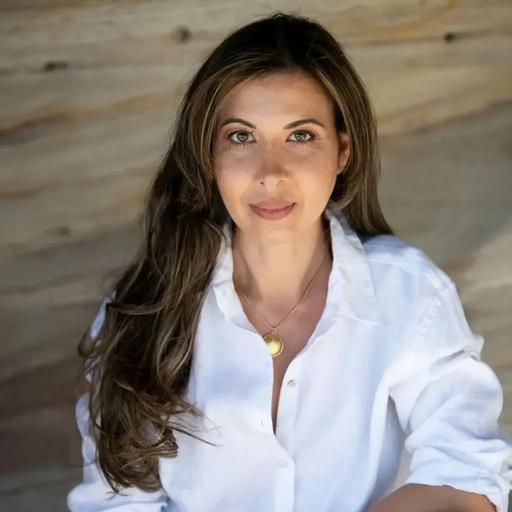
Clinical Psychologist, Speaker and Pioneer in Psychedelic Therapy
28 years Clinical psychology experienceone of the first Psychedelic-assisted therapy clinicians in Australia2012 Doctorate in Clinical Psychology completedMeditation teacher Contemplative practice
Dr. Maria-Elena Lukeides is a Clinical Psychologist, meditation teacher, and one of the early practitioners working at the forefront of psychedelic-assisted therapy in Australia. Based in Sydney, she has spent nearly three decades in psychology, building a career that spans community mental health, adoption services, early psychosis intervention, private practice, and now one of the most closely watched emerging areas in mental health care.
Her interest in suffering was never purely academic. It began early, shaped by a difficult home life and her own experience of anxiety, depression, and feeling unseen. As a teenager, one validating encounter with a psychologist gave her a new way to understand herself and changed the direction of her life. From that point on, psychology was not just a profession she admired. It became the work she felt called to do.
That calling took her through years of frontline clinical work with trauma, severe mental illness, and complex emotional distress, and later into doctoral training in Clinical Psychology. Alongside that path, she found mindfulness and meditation during a period of personal upheaval, and that practice became more than an interest. It became something she leaned on when life was demanding more than she thought she could carry.
Today, Maria-Elena brings those worlds together.
More from Dr. Maria-Elena Lukeides
All episodes → Well, That F*cked Me Up! Surviving Life Changing Events.S6 EP33: Dr Maria-Elena's Story - Trauma: The Monster InsideOct 2026Play episode →
 Hearts Entwined PodcastWhat If Chemistry Hides Familiar Pain? - Lyn Smith & Dr. Maria-Elena LukeidesSep 2026Play episode →
 The Impact Makers PodcastThe Parts You Hide May Hold the Key to Your HealingSep 2026Play episode →
 The Personal Success Podcast with Ryan WattsWhen Success Still Feels Unsafe: Dr. Maria Elena Lukeides on Fear, Flow, and Self LoveJun 2026Play episode →