
September 28, 2026
Csaba Toth - How to Build Teams That Decide Better
Sound bites
Don’t try to be right, try to get things right. That’s a very different mindset.
In this episode
Csaba Toth talks about why smart teams still make bad decisions, and how leaders can use team dynamics, diversity, and safety to improve performance.
- A failed restaurant booking venture led to research on why smart people misunderstand each other and how teams think and behave differently.
- Global DISC grew from that research and is now used to examine the human side of transformation in teams.
- Team scans can show growth, apathy, comfort, and anxiety zones, with one outlier potentially cutting performance by 30 or 40%.
- Leaders can contribute to toxic dynamics, and people often keep doing what they get away with.
- Trying to get things right works better than trying to be right, especially when using cognitive diversity.
Transcript
ShowHide
Automatic captions of the conversation. They can contain errors and do not name who is speaking.
My next guest lost his first business because he believed good intentions, qualifications and common sense were enough. Now, this failure then sent him on a much deeper study of why smart people misunderstand each other. And hopefully, he's going to share that with us today because I tell you, we could all use it. Now, that study then eventually led him to build leadership frameworks that are now used by more than 900 teams across 51 countries. Welcome to Leadership that Sells. This is the podcast about the real conditions where leadership and sales actually work and where they quietly break down.
I get to talk to founders, chief executives, sales leaders, operators, people who've made decisions when the effort was really high, the pressure was really on, but the playbooks that they had in the pocket didn't quite fit the bill. Now, we're not here to trade slogans or frameworks. What we're trying to do is to surface patterns, repeating patterns, things that consistently create momentum, try and identify what gets in the way, and then what experienced leaders eventually learn to stop doing. So, if you are responsible for results, not just ideas.
You're in the right place. Csaba Toth, thank you very much indeed for joining me. Thank you so much for having me. So, you lost your first business. You were in the shopping center one day, you put your business down, you walked away, and when you went back, it wasn't there anymore. So, you lost your first business because you've relied on good intentions and common sense. What was the commercial decision that you made that you failed to make that directly led to that business closing? I don't know if it was commercial because there is a story to it, and technically that failure became the foundation of my next company, the current one.
So, I started a company after the university, and it was a restaurant booking site. You book a table, we get the money, but it was a bit more exciting than that. We started with 35 restaurants in Brighton in UK, and in one year, we had 5,500. All of the UK became the fastest growing and biggest restaurant listing, and it turned into a joint venture with a software company. On paper, it made a lot of sense. In reality, it didn't. Because I couldn't get along with the other CEO, who was French. I'm not saying that was the problem, but definitely didn't help.
And we got to the point where we had to get out of the business, we sold the shares, it is still online, but we are not involved anymore. But this is when I started my research, because it didn't make sense. That was the exact topic of my dissertation. Eastern and Western European Joint Ventures. I had years of experience. The department where I studied is number one in the world in its category. Harvard is number two on that list. How come I couldn't put that theory into practice? So looking back now, that was a great experience.
That time it was horrible, but I wanted to understand what went wrong and how we could fix it. So I got certified in a lot of different things, like psychometric leadership, intercultural leadership models. And my assumption was that if all of these models are over correct, there must be a huge overlapping part. And that's what I'm interested in. There must be a structure beneath the surface. There must be a blueprint of why people think and behave differently, and it turned out that there is one. And that is what we call now global disc, and it's available in 50 something countries.
And that's exactly our topic now, that we focus on the human side of transformation, because we focus a lot on processes. But when it comes to people, there's a lot of guessing, hoping, assuming, and that's when things go wrong. You put really smart people in a team, hoping to create synergy, in reality, it turns into painful liability. But there is a blueprint. You can fix it, and that's why I lost it. So I don't know if it was a commercial decision, but definitely a painful one. Okay. I mean, you find, I mean, I've got stories from people I've met, and personally as well.
You put a lot of smart people in the room, and you hope for the best. And sometimes if your business isn't busy enough, frankly, these really smart people end up doing other things to use their intelligence. And those things tend to go for the negative. You know, they tend to be, those really smart people end up, you know, being really political, or they end up inventing problems to make your life, you know, to make their lives more interesting. So you've got, I mean, this was your, it's a good backstory there. You've got then to the point where you're trying to identify what these challenges are, what these issues are.
If you then come to a chief executive, a senior leader in a company, and you say, we're going to talk about psychological safety. They're going to go, yeah, yeah, okay, sure. Okay, next. It's a buzzword. Is there a number in that person's P&L or on their pipeline? Or is there a KPI you can point to that's going to show that they've got this cultural friction problem? I mean, when you were doing your restaurant piece there, what was the thing that eventually said to you, this isn't working, was it a number? So I completely agree with you.
So when you talk about psychological safety, then some people think that it's some kind of kumbaya, and be nice to people and be polite. Other people think it's connected to the DNI field. But it's something that is good, but we don't need it. So that's not how I start. Because the leaders are interested in what? Profit, money, growth. Okay, so that's the language they speak. So I asked them, so what do you think that the number one trait of high-performing teams is? And they come up with a lot of things. But Google research shows that it's Psycho-Jugo safety, by far.
The number one trait of high-performing teams is directly linked to money, profit and growth. So next question, where is your team on this dimension? Probably they are good, okay? So where was your team before you invested in a leadership program? Or where was your team after that? No idea. 99.9% of people cannot answer this question. Would it make sense to know that? And then we can get into the topic because it affects everything. So if it does affect everything, if the psychological safety is then as the Google study, this is a few years old now as well, it'll be interesting to have that repeated in the world of remote work.
But if that holds up, and you are then looking at an early stage failure, so you've got a $20 million company, and execution has stalled. We're just not working as well as we should be. Now, the first thing that your leadership is going to do, they're going to change targets. They're going to train their salespeople, replace their salespeople, they're going to add some management, they're going to do things. People default to doing things. You know, it's a very rare leader who does what I think is the major solution for most problems, which is doing fewer things.
You know, removing things. The default is something must be done, so let's do something, because I can be seen doing something. If I take things away or I reduce, it's a negative. But execution is stalled. People change their targets, they replace things, they add management layers. How do you go and prove to a founder or an executive that the problem is in fact behavioral friction rather than their flawed strategy? The decision you make is wrong. The problem is over here. And I think this is really logical, that people react to what they see.
But often the visible issues are not the real ones. They are not the root cause. So often those people solve a problem that is not the real issue, and then they get results accordingly. And that's not ideal. So more than 70% of transformations fail because of people. But less than 5% of the budget goes to people, the human side of transformation. And maybe even those resources are not up to date, or they measure something that doesn't really matter in that context. Because often the most engaged teams are the most resistant to change.
So that's not ideal. Now, that's the reason why we focus on the three invisible forces that make or break a team. And one is Psychological Safety, the other one is Motivational Drivers, and the third one is Cognitive Diversity, which is technically the immune system of a team, the invisible layer. And that is rare. But the benefits of diversity are not automatic. You cannot unlock it by relying on common sense and good intention. So this is exactly what we focus on. We can measure the nine biomarkers within those, and we know exactly what to do in order to improve performance.
So we've done more than 900 teams in over 50 countries. The interesting thing is that the patterns are very similar. They're not really industry-specific, not even country-specific because companies face very similar challenges. How they deal with them, that's a different story. And if we can back it up with case studies, we can create a certain level of certainty for the CEOs, then they are much more willing to focus on this. Because if you look at companies, they talk about psychological safety, motivation, they have a keynote speech, they have a webinar, fantastic, does nothing.
Often it makes things worse because they talk about that, workplace should be like this, but that's not how I feel and then people become even more disengaged. Fantastic outcome. But it's easy to dismiss this idea if you think it's abstract. But as soon as we can quantify it, as soon as you can see the report in front of you, we can make it tangible and practical, we bring it alive. Now they can deal with it. Now it's easier to do that. Without that, it's very difficult. And I also agree with you that it's easier to do something than stop doing something.
Because you know, you can eat a pizza, 2,000 calories, and you can run for half a day, or you just don't need the pizza. That makes much more sense. I like that. Yeah, true. When you look at any, as you said, this has been done across countries, across teams, across businesses. And when I look at any business I work with, there are only really three things they try to do. And that's either they want to cut costs, increase revenue or manage risk. That's it. Everything is within one of those. And then there are really only two things you can do with the people you're working with.
One is to add incentives or one is to add friction. Okay? And then around that, you can talk, train, coach, educate. So I think you've got a frame where people are trying to understand themselves. They're trying to understand their business. But they're not really in a position to pull a lever, because they don't know what happens when they pull it. They don't know which one to pull. And if you're in a position to give them, as you said, your nine biomarkers, that sounded great. Nine biomarkers, this is some sort of KPI dashboard type thing that says, that one here, this is the lever to pull.
If you pull this, this happens. That's a surprising, surprising, this is a challenging take. It's also possible. So I agree with you that, you know, you can make more money or you can spend less, but we can make it a bit more nuanced because companies can see how much money they make, but often they cannot see how much they are losing because often that is invisible. Disengagement can be invisible when people don't speak up, when they don't bring up an idea, that they don't care. You don't see that, but you're losing a lot of money as a company.
And that's exactly what we can reveal. Having said that, we can make it very concrete. So for example, we had a client, Fortune 500 company in the US global leadership team. In six months, we improved Psychological Safety by 30% and Motivation by 25%. They're leading thousands of people. They made a lot of money. That's concrete. It's transparent. It's measurable because if it's not, it's not a result. How much people enjoy the workshop doesn't really matter. Are you getting the results? Because if you can, we can measure it in a transparent way.
That's really important. But this is also terrifying sometimes because you know exactly what numbers can be empowering or intimidating. You can step on the scale and then you can say that, oh, this is fake news. I don't like it. Or you can go on a diet. You can make an informed decision. How you react depends on your self-esteem. And that's why I like your intro as well, when you said that this is for people who are responsible for the success of the company. And sometimes those aren't necessarily leaders or not HR.
It depends, but we need the people who care about the future of the company. Okay. You're talking about people who care about the future of the company. Sometimes you get people who deliver the future of the company, but perhaps are not necessarily invested in it. You get this lovely concept, and I have to pronounce this very carefully, Authentoxicity. So your concept of Authentoxicity. Now, if I get this right, you describe people hide behind this. Well, this is just who I am. It's a statement of this is who I am.
You have to accept me as I am. And they do that so that they don't have to change. Now, in the commercial world, there is typically in every sales team or in every leadership team, there is some person who is top performer, top billing, delivering great operational results, whatever it is, somebody who exhibits this toxic set of behaviors, but they keep hitting the number. They keep doing well. How would you do about that? The goal is, of course, you want to fire them, right? But if you fire them, you lose a lot. But maybe that's the big bad thing.
I don't want to change. I'm fine. It's not me, it's you. So one thing is that every single good idea can turn into a bad one if you overdo it. Authenticity is exactly like that. Being yourself is fantastic. But if you turn it into a glorified fixed mindset, that's a problem. Because I accept everything. I want you to accept me. I want the freedom of speech. But if you say something I don't like, you canceled. Well, it should be a two-way street. Your level of freedom should be matched with the level of responsibility you are willing to take.
Then it would be a very different world. But we don't like that part. There's a statue of liberty. There's no statue of responsibility. That's too much hustle. So this pick and choose attitude is not ideal. And that's why we talk about authenticity. Because it's very popular to say that, oh, just go to work, bring your whole self. No, don't do that. No, be professional. You shouldn't be suppressed, but at work, be professional. That's a very different thing. Because there are limits, there are standards, and there are norms that we do need to conform to.
And the employer has the right to say something about it. Let's be honest. So the level of that inclusion can vary. That's true. When it comes to the high performers, and I think Amy Edmondson calls them the brilliant jerks as one of the archetypes, then yes, the impression is that we are going to lose so much money. But what if we don't? What if we are already losing money? Because a lot of people are underperforming because of them. So the average would be probably the same. And this is what she said, that if you look at, for example, so for example, we do the scan, a team, and then let's say that you have the four quadrants, and if they score high on safety and motivation, they are in the growth zone, they are lacking both, that's apathy.
Then you also have comfort, and this is where they just burn out, in the anxiety zone. So if everybody is in the growth zone, that's a good place, you're making money. But even if you have one outlier, not in the growth zone, it can affect performance by 30 or 40%. That's a lot of money. So this is what I said, that companies often don't see how much potential they are losing. They can see how much they are gaining, how much they are spending, but how much potential they are losing, because of these invisible team dynamics, that's much more difficult to quantify.
That's exactly what we can do. Csaba, that was just quite an insight you had there. The fact, it's one of those blinding insights of utter common sense. Of course, this person is toxic, right? Fine. And the one thing that you have to do, if you have a low performer, is to act quickly and deal with it and get them out because the low performer is dragging down the performance of other people. Why? Because they're not performing well. Are they toxic? No, they might be the nicest person on earth, but they're still dragging the performance down.
The toxic person, the authentic but toxic person, you know, bring your whole self to work as long as you're not an asshole. In which case, leave the asshole at home. That's going to be dragging down performance. Duh. Of course it is. And it's also interesting. Once I had that kind of person in the US, so that was years ago when we did a workshop there. And there was a sales guy and he was like a superstar, you know, like a lonely wolf. Really smart, really educated, very successful. But we had a group exercise. So he came in, you know, long hair, confident.
He said, I'm not going to participate. I'm just going to contribute at the very end. So this guy is ready. But I'm not going to fight fire with fire. So we did the exercise. There were, I think, six or eight people. We almost finished. And I had a chat with him in front of everyone. I said, so you're really successful. Oh yeah, I want so many words. You did a lot of courses as well. I'm very smart. Okay, so is there a reason why you're not willing to share your knowledge with your colleagues, why you're withholding information from them?
And that's when the people around him just, what, what's going on? So it's just like turning up the heat around him. I said, I'm not fighting. Now you deal with this. After that, we were the best buddies. Probably that friendship wasn't honest, but he really changed quickly. So it's just about turning up the heat around them, because people do what they get away with. So if you have a toxic employee, as a leader, how do you contribute to that situation? That's not a question that they usually ask, but they should. I think it's one of those self-reflection things.
You want to know, you want to understand the world, you want to understand humanity, first look in a mirror. First look in a mirror. And why is my team failing? Why are you failing them as a leader? You know, where's your... Everybody's first reaction, I think, both from my kids to myself to the people I've already met. It's going really well because I've worked so hard and I'm very clever. It's going really badly because the macroeconomic environment and everything outside of me is stopping me. Right? It's a very male thing, actually.
I think women are a little bit better at it, but not much. They're a little bit better at recognizing that, well, actually, I may have a contribution factor to this. The negative side, I think, for a lot of women is that they say, well, it's going really well. It's not actually my fault. It's other people did it well. That's the negative side. We swap it over. That's a really fascinating insight. You talk about the quadrants there. And you're talking about the global disk framework. Now, I've worked for companies who had their own disk framework as well, and I've done Myers-Briggs, I've done disk, I've done the big five, Gallup strengths, all these different things.
And there's one of them that I think is decent, but most of them, I think, are fairly noisy. And yeah, okay. You want me to do one of these things? Fine. I will tick the damn boxes and I'll drag the sliders. And you can tell me that I'm a blue-hatted, extrovertive jerk of a empathetic, whatever it is. That's nice. And I won't change a damn thing. Why is a busy chief executive going to trust your version of the global disk framework over the dozens of other tools that are out there? This is a common issue because people look at the name global disk.
Oh, I know what it is. They don't. They just assume that it's a slightly different version of the one that they tried before. It's not. Because if you look at the concept of the four parasitic types, it's been around for two and a half thousand years. It started with Hippocrates, he came up with the four temperaments, and then hundreds of researchers came to the same conclusion that four different types and they're all a combination of those. They use different colors, metaphors, or bodily fluids and other revolting things, but the underlying concept was the same thing.
But what's missing from all of those psychomic assessment is the 50% that determines how you behave. And that's when they start paying attention. What do you mean by 50%? Well, your personality determines how you want to behave, but culture determines how you have to behave. That's why you can never ever separate them. So it's nice to get into psychometric assessments, but you don't exist in isolation. You exist in relation to other people and your environment. So for example, you and me could have an identical global disk report.
Doesn't mean that we behave the same way. It means that the underlying values and drivers are very, very similar, but you faced very different challenges than me. You found different solutions than me. And also when you grew up, how much could you be yourself? Or how much did you have to pretend in order to be accepted? Because we all belong to 15 or 20 culture groups at the same time. That's your gender, generation, county of origin, a lot of different things. They determine what is considered normal and acceptable.
And most people conform to certain norms. So, you know, it's nice to say that, oh, you just have to read the behavior, active, reactive, yes, but at that point, you have no idea if they behave like that because of who they are, the personality, or because of the environment they conform to, which is much more likely. So Global Disc focuses on this. It goes into the three different layers of your identity, what you do, how and why. It's not enough to talk about the behavior. We have to talk about why you do what you do.
But 95% of our actions are driven by values and beliefs we are not even aware of. But we think that we are so objective and logical. No, we're not. We know our own stories, and then we make choices to support our narrative. So now it feels real. Fantastic. So what happened? But that's exactly the problem with the standard psychomagic assessments. Blue, you read, so what now? We managed to widen the gap. We don't do that. Because everything is relative. So you take the assessment, we do the debrief, we get into this, and we can separate what is natural to you and what is normal to you.
But that's a starting point. Because then we can also see the mindset gap between you and me, you and your team, you and your environment. Because it's all relative. The bigger the mindset gap is, the more triggering it is, the higher the cognitive diversity is. That's exactly where the potential lies for success or disaster. It depends on your skills and your awareness. We can see the blind spot of your team. We can see the cognitive diversity of your team. And also, once we did the workshop or even the coaching, then you can have access to a program which is based on your global disk result.
21 real-life missions. Each of them is going to push you out of your comfort zone just a little bit more, step by step. Because learning is practical, it's emotional, it has to be experiential. So we're not using it as an excuse, but we help you escape your personal detrap by expanding your comfort zone and enhancing your behavioral flexibility. So again, there's no point in talking about this in the beginning because people just jump to conclusions. So I just ask them that, do you want at least three times more value than you are getting now with any psychometric or intercultural models?
What do you mean by three times more value? Come on, let's sit down. Now we talk about it. You mentioned there a thing that we make choices to support our narrative and people think, I'm so rational, I'm such a rational person and we're not, humans are not rational at all. This is why economics has to have the word science after it. It's an economic science, any science, like behavioral science, right? Has to have the word science in it, it's not a science. Or intelligence, like emotional intelligence. No, it's not.
Nothing to do with it. We are a rationalizing species. So I would even suggest that rather than we make choices to support our narrative, we invent our narratives to support our choices. So why did you buy the red car? Well, because it has the highest safety results and it's got, you know, good fuel efficiency and all. No, red cars are faster, and I want a fast car. And then you make the decision up that gives you the... It's a sales thing, you know, you have to have the rational and emotional. This is how you sell things.
And then your point, you're talking about the diversity of thought, the diversity of experience. Because this is the true diversity. It's always thought... I've always found it deeply racist, DE and I deeply, deeply offensive, that we're going to need to hire more women or black people because we don't have enough. And that just makes me want to vomit. You mean the bucket that somebody comes in defines who they are and what they're capable of? How disgusting is that? The diversity that you want is the diversity of the contents of the bucket, not the bucket itself.
You want these experiences, you want this cognitive diversity. I hired, I used to, we used them, not the Myers-Briggs, but kind of an archetype of the Jungian personality types. And it turns out I'm an ENTP, but I had hired 30 ENFPs or something like that. They were all the bloody same, okay? And I was actively trying to find a diverse workforce. I had lots of girls, I had lots of boys, I had lots of people from this background and that background, all around the world, except they were all essentially the same middle-aged Scotsman, just in a different bucket.
What a waste of time and energy that was. And that cognitive diversity, knowing that this is different, knowing that this is the true, one of the true drivers of creativity, of innovation. That's... It is, but not on its own. So no, no, not on its own. I agree with that. And then, you know, I always had a very similar opinion about the DNI field. And even years ago, when I told people that this is going to fail really badly, they said, oh, that's not right. And it did. Because they promised a lot, there was a lot of passion and a lot of anger, but not a lot of results that they promised.
But in terms of equality and equity, it is true that often the first obstacle is how you look. That is true. So, you know, that can be a problem. So if you are rejected because the way you look, that's a problem. If you get hired because of your look, well, that's the other side of the same coin. Yeah. But that's also a problem because it should be merit-based, but you shouldn't be rejected. But what you describe is called homophilic diversity, one of the strongest forces in team dynamics. And we have plenty of case studies where you have a bunch of different-looking people who think the same way.
And it's absolutely normal because you can force people to say that you celebrate diversity. Yes, but your brain doesn't, because by definition, it means unpredictability, and that's the last thing that your brain wants. But if I'm willing to embrace science and reality, then I know what to do to get better results. Because the more you understand yourself, the more you understand other people who think and behave differently, the more familiar and predictable they become. And now we can turn differences into synergy.
Without that, it turns into painful liability. And I had that saying that wasn't too popular, that in the DNI field, the I stood for it's my turn, not inclusion. Because lots of people were really passionate about a tiny segment of the diversity wheel, which was often based on their lived experience. And I don't want to discredit it or discount it at all. I do. Sorry, go on. That's my point. Because they are really passionate about it. Great. But that's the same kind of tonnivision that they are fighting, and they turn into the same dragon that they are chasing.
And the results didn't follow that. And the companies realized, oh, that's not good. It doesn't make sense. So when I talk about this, then I'm not against diversity at all. I'm all for inclusion as well, because that is the invisible force that unlocks the benefits. Without that, unfortunately, if you're just forcing diversity, you're creating more tension, and it turns into liability, and we saw the result of that. The biggest inclusion, I think, is people who don't speak up. You can have big brains behind a mouth that doesn't open.
And if somebody doesn't speak up in a team meeting, then you're missing that, you're missing out. The team's missing out. And if you've got somebody, inevitably, who does speak up, they get 80% of the talk time. And I've seen it. I've looked at the results of any number of team meetings, and you have the talk time per person, and it's loud. Quiet person has just a little bit of talk time. The loud person has a lot of talk time. And the job of the leader is to say, so, John, what do you think then? Well, and you hold everybody back and let John speak, you know?
That's the inclusion. Yes, but, and this is something that we can back up with data as well, that yes, it's the right thing to do, but that's exactly why you focus on psychological safety and motivation, because maybe John can speak, but he doesn't want to, because he doesn't care, he's not motivated enough, or he doesn't feel safe enough, or that's why he's going to agree to everything. Well, the action happened, the result is not great. So that's exactly what we can measure in team dynamics, because this is not something that you can necessarily see, because when there's too much agreement and too much harmony in a team, then usually it means two things.
One is that they are way too similar, or there's no psychological safety at all, so they just agree and comply, but then nothing happens. So we have case studies where, for example, you have this quadrant, you can see the team result, but you can also see the individuals, of course without name, so we don't know who is who, but you can see how polarized a team is. That's the interesting part. Because how is it possible that now if we talk about psychological safety, of course it exists on a team level, and most of the research is about that.
But if a team is polarized, then how is it possible that within the same environment, under the same leadership, some people are like fish in the water and others feel rejected and demotivated? That maybe it's not the environment, it's you, how you interpret the situation, the meaning that you're assigned to something, you're in a narrative. Because if you have a corporate PTSD from the previous job, it doesn't matter how inclusive they are, you're not going to believe it. Your perception is your reality and is going to determine how you collaborate, contribute and innovate.
But in that case, the solution is different. So it's not about shaming the company into inclusion, but it's about providing extra support to that person. That's the lever that we have to pull. What do you think is the most common behavioral mistake you see experienced team leaders making? I mean, like Simon said, leaders speak last, that's one thing. But there's also more to it because, you talked about the leaders taking credit for everything and if they're successful but not responsibility if something goes wrong.
Have you read the Extreme Ownership by Joko Willing? Yeah, yes. Yes. You remember that example with the boat? I think so, yes, but remind us. There were six or eight people in one boat, it was six or seven or eight of them, and one was always really bad, that was the last one. So they changed the leader on the boat, just the leader, same people, same task, and it became first one. Same people, different leader. And that was a really interesting case study, that you created the environment, you set the example, and that's really important.
But that's exactly the topic where common sense and good intention can backfire. Because a lot of leaders tend to be extroverted, they are more visible. But statistically, at least 20 or 30 percent of the people are much more introverted in your team. So if you try to motivate them based on what you need and what you want, it's going to backfire because maybe you love doing something, they cannot stand. And that's exactly the problem. Good intention, bad impact. Good intention, bad impact. Oh, we have to bring this in for landing.
We could go on for quite some time on this. This is fascinating stuff, Csaba. Fascinating stuff. If we had then the opportunity to put one message in front of all of these wonderful people out there, I gave you a very large pen and a huge number of big billboards, one at every train station, one at every airport. What one message would you put all around for everyone to see? In that case, maybe that's the one that helped me the most, because this is where I made the biggest mistakes. And this is like the condensed version of that experience, that don't try to be right, try to get things right.
That's a very different mindset. And I think a lot of leaders make this mistake because the ego and then the status quo is based on, yeah, I'm smart. It's my decision. I know what I'm talking about. I'm right. Yeah, but if you're a leader, you have a team, you have that collective knowledge and wisdom, a cognitive diversity. Can you tap into it? Are you sure that you see everything? Because the problem is that often the leaders or even just normal people have this kind of clarity and they think that, oh, yeah, because I've got that vision, because I've got the right amount and quality of information, but they don't realize that they have the clarity because of the tunnel vision they have.
It feels the same, but one is much more useful. So aiming to get things right instead of trying to be right, that's probably one of the hardest ones, but that's the foundation for unlocking the benefits of cognitive diversity. And there we'll have to leave it. Csaba Toth, thank you very much indeed for joining us. Thank you so much.
About Csaba Toth
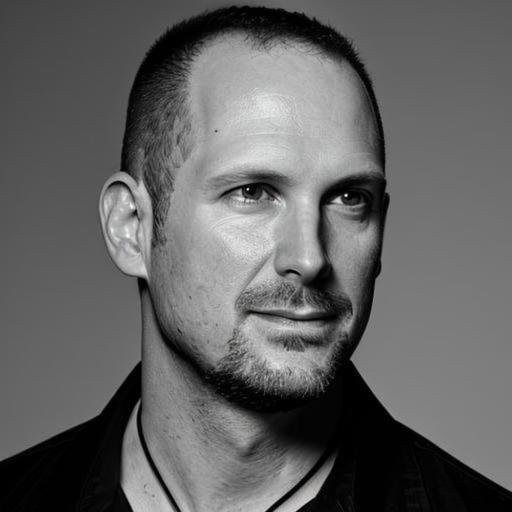
Expert in the Human Side of Digital Transformation, Founder of ICQ Global & Creator of ICF-Accredited Leadership Frameworks
900+ Teams supported by his frameworks250+ Certified partners worldwide51 Countries reached1 book Author of Uncommon Sense in Unusual Times
Csaba Toth’s work began with a failure that changed how he understood leadership. He lost his first business after assuming that speaking the same language, having strong qualifications, good intentions, and what seemed like common sense would be enough to lead people well. It was not.
That experience pushed him to examine why intelligent, capable people can still misunderstand one another, why some teams thrive while others quietly unravel, and why so many transformation efforts fail despite significant investment. Having grown up between cultures and worked across very different organisations, Csaba saw how personality, cultural background, bias, motivation, and psychological safety shape the way people make decisions and work together.
He founded ICQ Global after noticing a persistent pattern: organisations were investing in training without data, coaching without diagnosis, and culture change without meaningful measurement. The result was often short-term enthusiasm with little lasting change.
Csaba went on to create the multi-award-winning, ICF-accredited Global DISC™, Growth Zone™, and GameChangers frameworks. Together, they help organisations measure nine key biomarkers of high-performing teams, including personality, cognitive diversity, psychological safety, motivation, and the behavioural patterns that can quietly derail performance.
More from Csaba Toth
All episodes → The Business Growth Show with Athin CassiotisEP334 - Data Driven Leadership for Team Performance with Csaba TothNov 2026Play episode →
 Cultural Differences & Cultural Diversity in International BusinessCultural Differences and Personality with Csaba TothNov 2026Play episode →
 Conflict ManagedEp 235, Creating Systems That Motivate PeopleNov 2026Play episode →
 Embracing Digital TransformationWhy AI Makes Team Conflict Harder, Not EasierOct 2026Play episode →
 The future was yesterdayEP-44 Csaba Toth, AI Is Changing Work. Are People Ready?Oct 2026Play episode →
 Barriers and Boundaries Resilience LeadershipThe Role of Psychological Safety in Organizational Resilience with Csaba TothAug 2026Play episode →