Retirement
Why Couples Need Emotional Alignment Before They Retire
A retirement planner explains why couples who prepare their money but not their relationship can drift apart, and how to align before work ends.
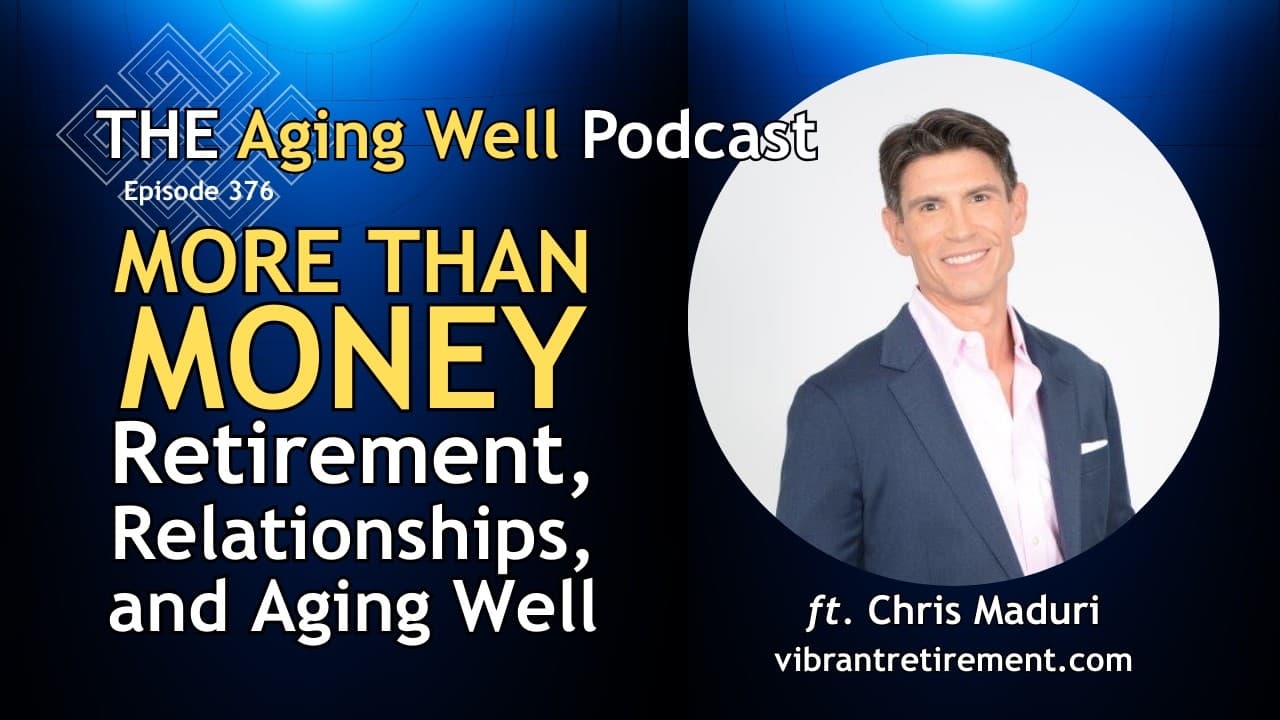
More Than Money: Retirement, Relationships, and Aging Well | Chris Maduri | Ep. 376
Video from The Aging Well Podcast w/ Dr. Jeff Armstrong.
Generated from the canonical interview transcript and validated against source data by Guests on Air.
How can couples align emotionally before they retire?
Chris Maduri says couples should talk honestly, well before retirement, about how they will spend their time, where they will live and how they will use their money. Alignment does not mean agreeing on everything. It means respecting each other's choices, giving and receiving feedback, and bringing in a third party when conversations stall.
Most retirement plans are built around one fear: running out of money. Chris Maduri, who has spent nearly two decades helping people plan a predictable retirement, argues that couples face a second risk that gets far less attention. On The Aging Well Podcast with Dr. Jeff Armstrong, he explained why partners who prepare their finances but never discuss their hopes can drift apart once work ends.
Maduri works with couples on emotional alignment: getting honest about how they will spend their time, where they will live and what they want the next chapter to hold. He came to that work after years as a wholesaler and financial planner, when a spiritual turn in his forties changed why he did the job and led him to follow what he calls the breadcrumbs.
His message is practical rather than abstract. The hardest parts of retirement, in his experience, are rarely the spreadsheets. They are the conversations couples postpone for years, about money, place, family and purpose, and the unspoken expectations that surface once two people share every day at home without the structure of work.
Key takeaways
- Plan how you will spend your time, not only your money, because an identity tied to work can vanish overnight.
- Couples most often clash over where to live and how to spend money once the paychecks stop.
- Emotional alignment does not require agreement on everything; it requires honest and respectful conversation.
- A counselor, pastor or other third party can help couples raise the questions they find hardest to ask.
1. Retirement planning is more than financial planning
Asked what most often decides whether a retirement succeeds, Maduri pointed first to planning, though not the financial kind alone. He urged people to take the time to get honest with themselves and with a spouse about what they truly want, where they want to be and how they will spend their days. For many people, he noted, what they do is who they are.
When that role ends, the loss can feel like an empty nest. Maduri said retirement is the first time since childhood that people have real freedom to follow their passions, yet many hesitate to try anything new. Without honesty about what they want, he warned, the days can blur into Groundhog Day: breakfast, the couch and little else.
He sees the risk as sharper for men, who often lose their social circle along with their job. Women, in his experience, tend to keep friendships beyond work. His own remedy has been doing things he loves, such as yoga and boxing, because shared interests are how people find their tribe once the office no longer supplies one.
2. Where couples most often disagree
The disconnects Maduri sees most often are practical. How to spend money is usually one of the biggest, followed closely by how to spend time. One partner may want to travel while the other wants to stay home. Where to live may be the largest decision of all: whether to keep the house, move closer to the children or head for a warmer climate.
Money also feels different once couples move from growing assets to spending them down. Maduri described how a single pool of savings that must last a lifetime can turn a dinner out into an argument. That scarcity mentality, he said, takes a psychological toll and strains the harmony at home, when proper planning and honest conversation could have prevented much of it.
He also named long-term care as one of the biggest factors in whether a retirement holds together. A protracted care event can cost one hundred to two hundred thousand dollars a year, he said, which few households can fund on their own without changing their plans. Balancing insurance, guaranteed income and investment growth, in his view, brings a peace of mind he considers critical in retirement.
3. Practical steps toward emotional alignment
Maduri was clear that alignment is not the same as agreement. Partners can want different things, and one may keep working while the other retires. Retirement need not be an on and off switch either: some people scale down, consult or volunteer. What matters is finding meaningful ways to fill the time, and reaching an understanding both people can respect.
His first practical step is learning to talk from a loving place, and to receive feedback as well as give it. He admitted to being non-confrontational and easily triggered, and said learning to name his emotions has been the biggest shift in his own life. He also suggested couples read a book such as The Five Love Languages together to understand what each partner needs.

When those conversations stall, Maduri recommends bringing in a third party, whether a counselor, a pastor or a church community, to guide the discussion. He also urged families to bring adult children into planning meetings, so nobody faces surprises later. His closing advice was simple: find stillness, be present and search your heart before deciding how to spend the years ahead.