Leadership
Why boardroom trouble follows personal agendas, not culture
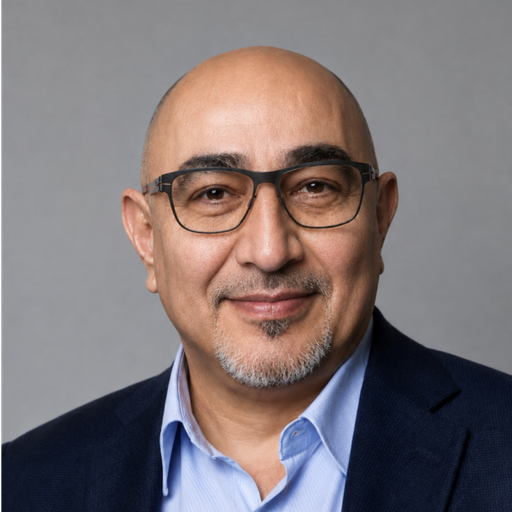
Dr Hussein Rifai has worked across the Middle East, North America and Australia. He argues that difficult and decent directors appear in every culture, and that working well across cultures starts with respect.
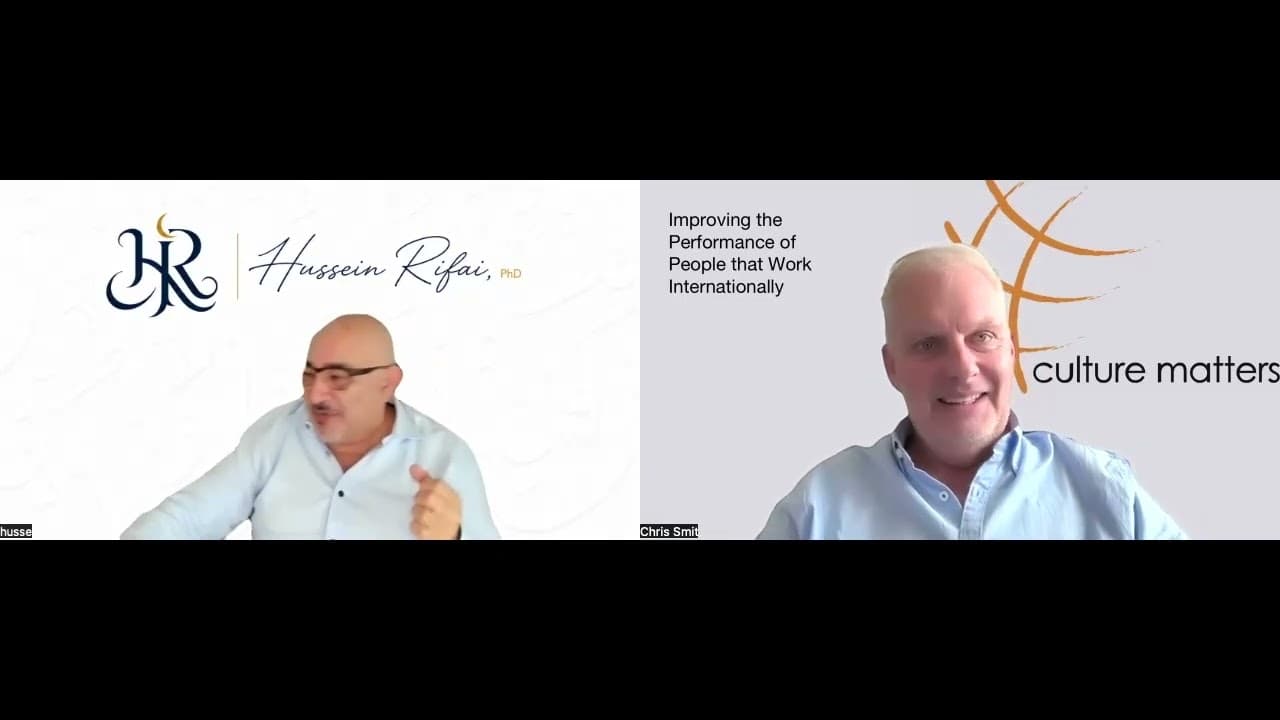
Cultural Differences and the Levant with Dr. Hussein Rifai at https://culturematters.com
Video from Culture Matters by Chris Smit.
Generated from the canonical interview transcript and validated against source data by Guests on Air.
Does culture or personality make a boardroom difficult?
Personality matters more than culture. Dr Hussein Rifai, who has sat on boards for more than 30 years, finds that boards become hardest when directors put their own benefit ahead of the shareholders. He has met decent and difficult people in every culture and religion he has dealt with, so he judges the individual first and then adapts with respect.
Dr Hussein Rifai was born in Nablus, in the West Bank, when it was part of Jordan, and grew up in Amman. His father rose to become chief justice of Jordan and his mother was an award-winning poet. On the Culture Matters podcast with Chris Smit, he traced how that mix of discipline and creativity shaped a life spent crossing cultures.
His working life began with Procter & Gamble, with postings in Saudi Arabia, Canada and Germany, before he moved to Australia in the late 1980s. Consulting roles with Ernst & Young and Boston Consulting Group followed, then several years in Dubai. He has travelled to more than 80 countries and has lived most of his adult life in the West.
The conversation turned to boardrooms, where he has spent more than 30 years, and to a question he hears often: are some cultures harder to do business with than others? His answer puts the weight on the individual rather than the passport, and it closes with three practical habits for anyone who works across cultures.
Key takeaways
- Boards become hardest when some directors pursue their own benefit instead of working for the shareholders they serve.
- Hidden agendas destroy value: one refused sale ended with the business in administration within about nine months.
- Decent and difficult people appear in every culture and religion, so judge the individual rather than the nationality.
- Cultural competence rests on three habits: respect everybody, keep an open mind and do not knock it until you try it.
1. Where a boardroom turns difficult
Asked when a boardroom becomes challenging, Dr Hussein Rifai is specific. The hardest boards, he says, are the ones where some directors are not aligned with the shareholders' benefit and are trying to do things for their own benefit instead. In his experience, a director with a hidden agenda does not necessarily work for the shareholders at all, whatever the role demands.
He gave an example from a few years ago. A business he was involved in buying had three directors, two of whom were brothers of the managing director. The managing director was seriously ill, and the two older brothers had no part in running the company, yet each drew a salary from sitting on its board.
An independent valuer put a figure on the business, which he called 100 for simplicity. The brothers voted to refuse the sale and asked for the equivalent of 250, so they could keep a salary of about $150,000 a year for attending four meetings. The managing director later died, his children were too young to take over, and within roughly nine months the business went into administration.
2. Personality, not passport
Chris Smit asked whether some cultures are more prone to hidden agendas than others. Dr Hussein Rifai rejected the idea. Being a decent person or a difficult person, he said, crosses cultures. People may project it and deal with it differently, but there are difficult Arabs, Australians and Germans, and genuinely decent people working for shareholders in every one of those groups.
He put the problem down to greed and to an attitude of being there for oneself rather than for the broader benefit. Some people are more sneaky or underhanded than others, but in every culture and religion he has dealt with he has found both good and bad individuals. His current business partners, one Lebanese and one Jewish, are among the most honest people he has worked with.
The same caution applies to labels within a single heritage. He noted that the largest Lebanese community in the world lives in Brazil rather than Lebanon, and that Lebanese Australians whose families arrived around 1900 differ greatly from those who came during the war. A shared ancestry, in his view, can still hide very different cultures.
3. Three habits for cultural competence
Asked for practical advice, he offered three habits. The first is to respect everybody. Anyone who enters a new culture feeling superior to it, he warned, has already lost the chance to adapt and fit in.
The second is to keep an open mind. Whatever people in another culture are doing, they have probably been doing it for centuries, and it is not wrong simply because a newcomer does it differently. The third is not to knock it until you try it, whether the unfamiliar thing is a dish someone is eating or the way a task is done.
His own path shows the same instinct. After weighing the United States, Canada and Sweden, he landed in Australia in July, found people on the beach in the middle of winter and knew it would be home, settling in Sydney. His forthcoming memoir, The Chaos Theorem, covers that journey from Palestine and Amman through decades of reinvention, and is related reading for anyone curious about where these views were formed.