Real Estate Tax
Ted Lanzaro on Why Real Estate Tax Planning Happens During the Year
CPA and real estate investor Ted Lanzaro explains why the biggest tax savings come from decisions made while buying, renovating, holding and selling property, not at filing time.
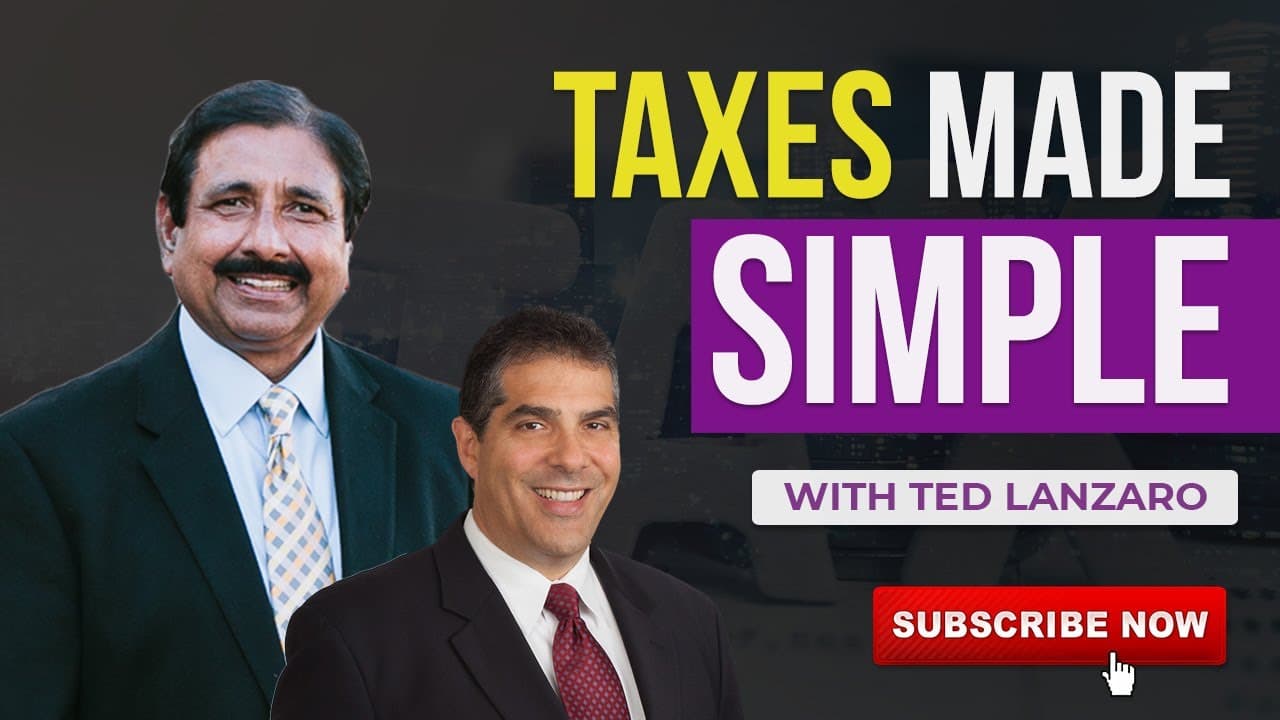
Taxes Made Simple With Ted Lanzaro
Video from Vinney (Smile) Chopra.
Generated from the canonical interview transcript and validated against source data by Guests on Air.
When should real estate investors plan their taxes?
Real estate investors should plan their taxes throughout the year, before they buy, renovate or sell a property, not after the year ends. Ted Lanzaro says each of those events opens its own set of strategies, from cost segregation to a 1031 exchange, and good records are what let those strategies hold up if a return is ever examined.
Most property investors meet their accountant once a year, when the tax return is due. By then, Ted Lanzaro argues, most of the useful decisions have already been made. Lanzaro is a CPA who has spent his career advising real estate owners and who invests in rental property himself, so he sees the tax code from both sides of the closing table.
In an interview with syndicator Vinney Chopra, Lanzaro set out how he tailors tax strategy to each investor. His starting point is that no single plan suits everyone. Whether someone is an active or passive investor, earns wages or runs a business, and how much they want to put toward retirement all change which strategies are worth using.
He also explained why a conservative accountant is often the product of a client's own messy records, how the real estate professional rules really work, and how passive investors can build up losses that pay off when a property sells. The common thread is timing: the investor who talks to a tax adviser early keeps more options open.
Key takeaways
- Tell your tax adviser before you buy, renovate or sell a property, because each event has its own strategies.
- A 1031 exchange must be arranged before the sale closes, with the proceeds going to a qualified intermediary.
- Real estate professional status needs at least 750 hours a year, more than half your working time, and real income.
- Passive losses you cannot use now carry forward, and they can offset the gain when the property finally sells.
1. Plan around the moments that change the tax bill
Lanzaro's core message is that tax planning is a year-round job. Once a year ends he can still help with some of that year's return, but the choices that matter most are open only while the year is under way. He asks every investor to call him when they are buying, selling or renovating a property, or holding a portfolio, because each of those stages carries its own set of strategies.
A purchase is the clearest example. When a client buys a building, Lanzaro wants the closing statement and a description of the property. For an expensive building he may recommend a cost segregation study, which splits the purchase into parts that can be depreciated faster. For a smaller property, such as a three-family house where hiring an engineering firm would not pay, he teaches the owner a simpler, conservative version of the same approach.
Renovations and sales have their own rules. During a renovation, an owner should track what is being installed for depreciation and also what is being thrown away, because those discarded items were paid for and can be written off. A sale is where timing is least forgiving: a 1031 exchange has to be set up before the property sells, with the money going to a qualified intermediary and strict deadlines of 45 days to identify and 180 days to close.
2. Good records turn strategy into protection
Many investors complain that their accountant is too conservative. Lanzaro's explanation is blunt: accountants hold back because so many clients keep poor records. If a return were examined and the documents were missing, an aggressive position would collapse. That is why he teaches documentation alongside strategy, and why he calls good record keeping the foundation that makes every other tax move workable.
The point matters most for investors who want real estate professional status, which lets rental losses offset other income. To qualify, a person needs at least 750 hours a year in a real estate trade or business, and that work must be more than half of their total working time. Someone with a full-time salaried job will rarely meet the test, Lanzaro says, although a spouse who works in real estate can qualify on a joint return.
He also wants to see the business making money: commissions for an agent, clients for a property manager, projects for a developer. Time should be logged daily with the property and the task named, and a simple spreadsheet makes that easy. An aggregation election then treats all the activities as one. Spending hundreds of hours at conferences without earning anything, he warns, does not make a real estate business.
3. Tailor the structure and the deductions to the investor
Entity choice shows why Lanzaro rejects one-size-fits-all advice. A syndicator in an LLC pays self-employment tax on all of the profit, while an S corporation owner pays it only on a reasonable salary. On about $100,000 of profit, he put the bill at roughly $15,000 in the LLC against seven or eight thousand dollars in the S corporation. Yet an S corporation also brings payroll and a separate tax return, and both cost money.
Retirement goals can tip the decision the other way, because the structure affects how much a business owner can put into a retirement plan. For a lower earner the savings may not cover the extra filings, while a high earner may save far more by switching. Passive investors in syndications face a different question, since their share of the losses often cannot be used against their salary in the year it arrives.
Those losses are not wasted, Lanzaro explains. They carry forward, can offset net income from an older rental portfolio, and are released in full when the property sells, often wiping out much of the gain. He also encourages investors to claim the costs of running their investing, such as mileage, phone use and educational events, against their partnership income, adding to that carryover year after year.