Resilience
Russell Harvey on Why Resilience Means Springing Forward, Not Bouncing Back
The resilience coach argues that returning to how things were wastes the lesson, and offers a wheel and ten habits for growing through change instead.
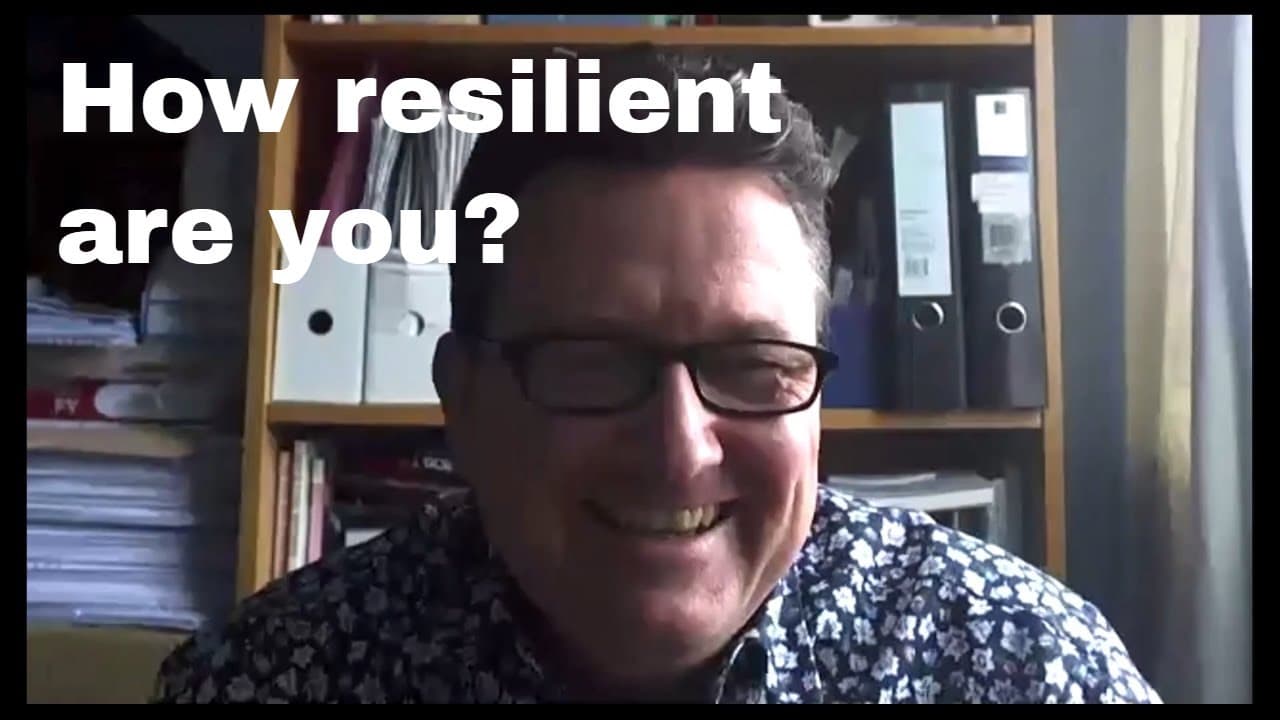
Russel Harvey asks "How resilient are you?"
Video from The Marketing Optimist.
Generated from the canonical interview transcript and validated against source data by Guests on Air.
Why should resilience mean springing forward rather than bouncing back?
Bouncing back implies returning to the person you were before a hard experience, which risks skipping the learning. Russell Harvey argues that resilience is about facing a situation, dealing with it, reflecting on what it taught you, and then moving forward as an adapted version of yourself with new skills, attitudes and behaviours.
Most dictionary definitions of resilience lean on the phrase bounce back. Russell Harvey, who works as The Resilience Coach and specialises in resilient leadership in a volatile, uncertain, complex and ambiguous world, thinks that phrase quietly undermines the whole idea. If the goal is simply to return to where you started, he says, there is a real risk that nothing gets learned along the way.
Speaking on a webinar hosted by The Marketing Optimist, he set out a different definition. A resilient person faces into an experience, deals with it, and then learns from it before moving on. The result is not the old self restored but an adapted version of that self, with sharper skills, a steadier attitude and better habits.
He backed that definition with practical tools rather than slogans. The session covered a seven-part resilience wheel for self assessment, the image of a resilience bath that can be filled or drained, and ten everyday habits that top it up. Together they offer leaders and teams a way to treat difficult periods as material for growth.
Key takeaways
- Resilience is about learning from hard experiences, not returning unchanged to how things were before.
- Rate yourself on seven areas: attitude, purpose, confidence, adaptability, support, meaning and energy.
- In times of change, list what has stayed the same and use it as a source of grounding.
- Build confidence by trying something, reflecting on what went well, and then doing it again.
1. Why bounce back is the wrong goal
Harvey describes himself as being on a personal crusade against the phrase bounce back. His concern is practical. When someone tells themselves they will deal with a situation and then go back to how they were before, the experience can pass without leaving anything useful behind. The underlying essence of resilience, as he puts it, is learning from life's events.
His alternative is to spring forward. After facing into an experience and using your resilience to deal with it, you pause and reflect on what it showed you. That reflection feeds into your skills, capabilities, attitude, behaviours and mindset, so the version of you that moves on is better prepared than the one that went in.
The idea matters most when circumstances do not return to normal at all. Harvey warned against waiting for things to go back to how they were, arguing that people and organisations will do some things differently for good. Shaping that new normal, he said, is within each person's gift, and springing forward is how it gets done.
2. The resilience wheel as a self assessment
To make the idea usable, Harvey shares a resilience wheel that builds on the work of Robertson Cooper. At its heart sits attitude, meaning our settled belief about whether life simply happens to us or whether we have some control over it. Around it are purpose, confidence, adaptability and support, plus two dimensions he added himself: meaning and energy.
Each part has a plain definition. Purpose is more than a goal; it is the reason you get out of bed and the legacy you want to leave. Confidence is the balance of positive and negative self talk. Adaptability is openness to change, which is hard because the brain works constantly to keep us safe by resisting new behaviour.
Support is judged by quality rather than size: do the people around you energise you or drain you? Meaning is the story we attach to events, visible in how we answer a simple question about our day. Harvey suggests scoring yourself from one to ten on all seven, then choosing one area that you have some energy to work on.
3. Ten habits that fill the resilience bath
Harvey pictures resilience as a bath or reservoir. Work on the wheel fills it, and the pressures of life can spring a leak. His ten tips are ways to keep it topped up, and he encourages people to pick two or three that genuinely appeal rather than attempting all of them at once. Self compassion comes first, simply being kind to yourself about whatever you feel.
Several tips are about other people. Empathy means recognising that someone else has their own thoughts and feelings, which is why he cautions against saying I know how you feel. Connecting and communicating matters because humans are social creatures. Humour helps too, and volunteering or doing something for someone else without expecting a return does good for the giver.
Others are about attention. In times of change, which he notes is all the time, focus on what has stayed the same to stay grounded. Make room for mindlessness, switching off and staring into space, because answers often arrive then. And when life asks one person to do several full-time jobs at once, accept that there is only so much one human being can do.