Leadership
Russell Harvey on How the Words We Choose Shape Resilience
The Resilience Coach explains how noticing language, mapping a support network and holding honest feedback conversations help people build resilience at work and at home.
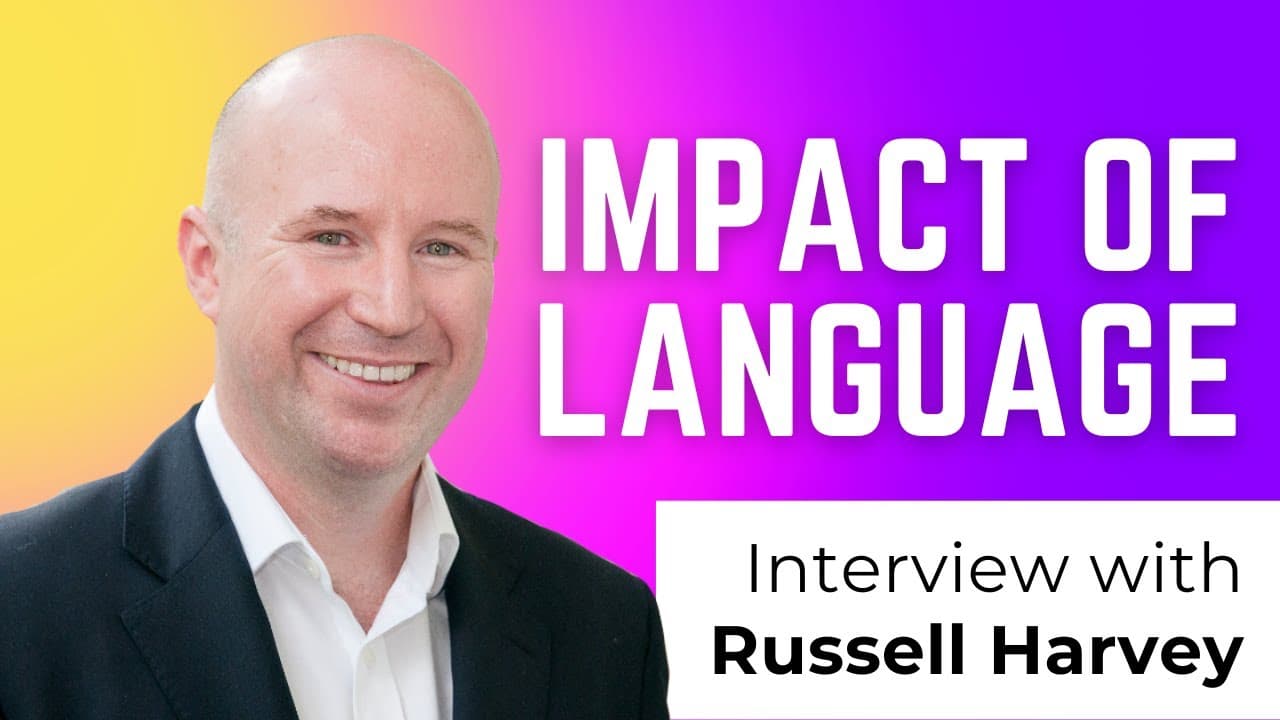
The Impact of Language: How Our Words Shape Our Mindset and Attitude
Video from Neuro-Linguistic Programming.
Generated from the canonical interview transcript and validated against source data by Guests on Air.
How does the language people use shape their resilience?
According to Russell Harvey, people constantly give themselves instructions and tell themselves stories through the words they use. Noticing phrases such as can't, won't and don't, then reframing them around what is actually wanted, changes mindset and attitude. The same care with language helps people map who drains or energises them and raise difficult behaviour without starting an argument.
Russell Harvey, known as The Resilience Coach, first came across neuro-linguistic programming after travelling the world in 1996 and teaching in Hong Kong. Back in the UK, a sales job led into training, and a practitioner course followed by a master practitioner qualification gave Harvey a lasting fascination with how language drives behaviour change.
In this conversation for a podcast series on how people use NLP in everyday life and at work, Harvey explains why the words people say out loud matter so much. Every sentence, in Harvey's view, is also an instruction or a story people tell themselves, and that makes language a practical lever for resilience.
The discussion moves from the training room to personal life. Harvey describes a seven-part resilience wheel, a simple exercise for mapping a support network, a sentence structure for giving honest feedback, and some surprisingly physical tricks for staying quiet once a difficult point has been made.
Key takeaways
- Listen for can't, won't and don't, then reframe the sentence around what the person actually wants instead.
- Resilience covers attitude, confidence, adaptability, purpose, energy, meaning and the support network around each person.
- Map the people around you by time spent together, then ask whether each one is a radiator or a drain.
- Describe the behaviour, own your thoughts and feelings, then stay quiet and let the other person respond.
1. Language as a set of instructions
Russell Harvey pays close attention to the words people play back in a training room. When someone keeps saying what they can't do, won't do or don't do, Harvey treats it as an opening: the more people speak out loud, the more they are giving themselves instructions and telling themselves stories about what is possible.

The response is to change the story rather than argue with it. Harvey invites people to reframe a sentence and think about what they actually want, so that the language points toward an outcome instead of away from a problem. Simple sentence structures, including embedded suggestions, carry the change from the session back into everyday work.
With a difficult group or a resistant individual, Harvey starts from empathy. Their frame of reference is acknowledged rather than challenged, and their own words are played back so they can notice the impact those words have on their mindset. Sometimes the wider room is asked how the same point could be phrased to reach a different outcome. The approach works in the moment and often surfaces new ideas about how the group can move forward.
2. A resilience wheel built on meaning and support
When Harvey went independent and completed a coaching diploma, years of work with people in very challenging business situations shaped a focus on resilience. Clients often arrived feeling that the world had come crashing down on their organisation. Research into existing approaches, including the Robertson Cooper model, led Harvey to design a personal resilience wheel.
The wheel has seven aspects: attitude, confidence, adaptability, purpose, energy, meaning and support network. Harvey spends extra time on meaning, which is about the stories people tell themselves. Even the answer to a partner asking how the day went reveals how someone is framing life, and that framing can be noticed, questioned and adapted.
The support network exercise is practical. People place themselves at the centre of concentric circles, plot everyone in their life by how much time they spend together, then ask whether each interaction is enjoyable. Harvey uses the resilience phrase radiators or drains, then asks how the picture looks now, how it should look, and which steps would change it.
3. Saying the difficult thing, then staying quiet
Some draining relationships cannot simply be avoided. Harvey describes two routes: personal strategies to accept the situation and stop worrying about it, or the braver choice of giving feedback about how the other person's behaviour lands. After six or seven years of having those conversations, Harvey reports some disastrous results, many more fantastic ones, and lessons from both.
The method starts by separating the person from the behaviour. Harvey advises against openings such as you did this or you made me feel, because that is when the argument starts. Instead, break the issue down to the specific behaviour, then say what you think and feel when it happens, owning those feelings rather than transferring them onto the other person.
Then comes the hardest part, which is silence. To resist filling the gap, Harvey suggests a pattern interrupt such as pressing the tongue to the roof of the mouth, sitting on the hands or fixing the eyes on one spot. Above all, practise the sentences in the car or in front of a mirror, and count to fifteen.