Mental Health
Nick Jonsson on Why Men Suffer Loneliness in Silence
In an SICC webinar on World Suicide Prevention Day, Nick Jonsson explained why men isolate when they struggle, why suicide must be talked about openly, and what speaking up did for his own recovery.
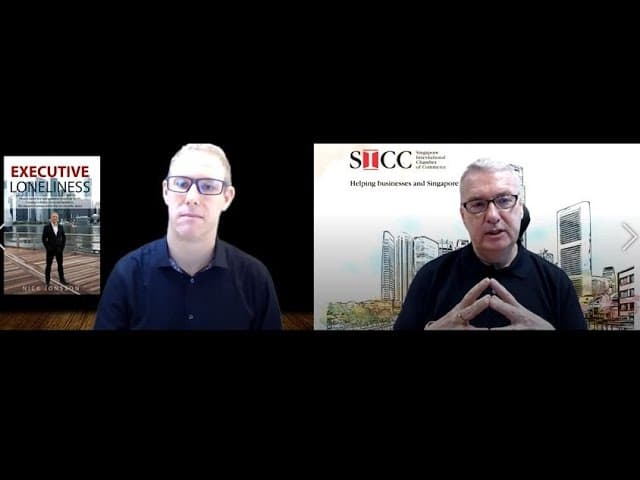
Nick Jonsson - SICC Keynote Executive Loneliness 10 9 2020
Video from EGN - Executives' Global Network.
Generated from the canonical interview transcript and validated against source data by Guests on Air.
Why do men suffer loneliness in silence more than women?
Nick Jonsson's research and interviews suggest that men tend to isolate themselves and project success rather than admit vulnerability, while women more often keep a few close friends they talk to openly. Women are more likely to see a doctor and get a diagnosis, he says, while men lock themselves in and suffer alone, which helps explain why more men die by suicide.
On World Suicide Prevention Day in 2020, Nick Jonsson gave the keynote at an SICC webinar on executive loneliness in Singapore. He spoke as the head of EGN Singapore and as a man who had come close to not surviving his own breakdown two years earlier. His message was direct: silence is dangerous, and men are especially good at keeping it.
His own story sat behind the talk. After losing two jobs, first in Vietnam and then in Indonesia, he spent years hiding anxiety and depression from everyone, including his family. By 2018 he was drinking too much, had gained 20 kilos and was convinced he would not survive. He told nobody, and that silence became the subject of his keynote.
In the session he shared the survey data and interviews behind the book he was writing, then turned to two harder subjects. The first was why men in particular suffer in isolation. The second was why suicide has to be discussed openly if more lives are going to be saved, and what breaking his own silence made possible.
Key takeaways
- Nick Jonsson's research suggests men feel lonelier than women but are less likely to seek a diagnosis.
- Men tend to project success and withdraw, while women more often keep close friends they confide in.
- Suicide stays hidden because people will not even admit that they know someone who died by suicide.
- His recovery began with telling his wife the truth, followed by therapy, exercise and Alcoholics Anonymous.
1. Men withdraw while women talk
While researching his book, Nick Jonsson asked who experiences the most loneliness, men or women. His own small conclusions were that men feel lonelier, while women are more often diagnosed with depression. Women make more suicide attempts, he noted, but more men die by suicide. He offered these as his reading of the research and his interviews, not as settled science.
The difference, he argued, lies in how men behave when they are struggling. Men isolate themselves and try to show success instead of vulnerability. Women tend to keep a few good friends they speak with openly. He noticed that his wife and her friends could talk on the phone for 45 minutes about everything, while men rarely have relationships like that.
That gap carries over into diagnosis. A woman with close friends may be encouraged by one of them to see a doctor and get support. A man is more likely to lock himself away and suffer alone. For Nick Jonsson, this explains why depression figures can look higher for women while many struggling men stay out of sight entirely.
2. Why suicide has to be spoken about
Nick Jonsson told the audience that people are reluctant to discuss mental health and even more reluctant to discuss suicide. At a live keynote in Myanmar, he asked about 400 people to raise a hand if they knew someone who had died by suicide. Almost nobody did, until three or four hands finally went up at the back of the room.
When he asked the same question in an anonymous online poll, 60 percent said they knew someone. He put the global figure at around 30 to 40 percent. The contrast, he said, shows how common suicide has become and how shy people remain, even about admitting that they know someone who was affected by it.
The subject was personal for him. Just as his own recovery began, a friend and colleague took his own life, and even the people closest to him had not known he was struggling. Nick Jonsson then volunteered with Samaritans of Singapore, which runs a 24-hour hotline, and launched a campaign to end executive loneliness.
3. What speaking up made possible
For Nick Jonsson, recovery began when he looked in the mirror and decided to be honest and vulnerable. In 2018 he told his new wife exactly how he felt and stopped trying to show how good he was. He described the relief as physical, as if his shoulders could finally drop and he could start to breathe again.

Together they decided he would get more help. He saw doctors, therapists and psychologists, followed a gentle fitness plan and faced his drinking through Alcoholics Anonymous, staying sober since his first meeting on 5 May 2018. The book he described in the keynote was later published as Executive Loneliness: The 5 Pathways to Overcoming Isolation, Stress, Anxiety & Depression in the Modern Business World.
He kept asking for help after the crisis passed. When video calls with his 11-year-old son in Sweden kept going quiet, a family therapist suggested he find out what his son loved most. They now play his son's favourite online game together every weekend. His closing advice was simple: if someone close to you is suffering, supporting them and speaking up is the first step.