Technology & AI
Multi‑Monitoring Agents: The New Dev Skill
Why multi-monitoring agents, layered memory, and inspectable formations matter for production safety and hiring in an agentic world.
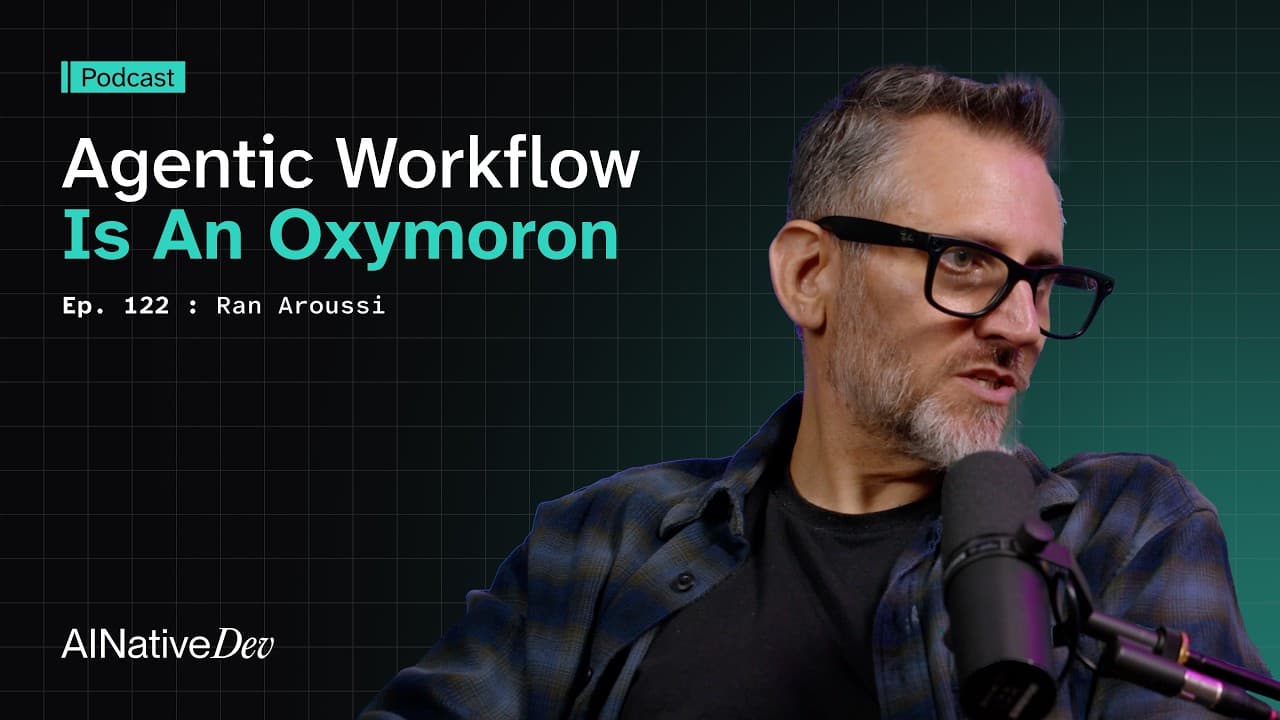
The New Dev Skill: Multi-Monitoring 10 Agents
Video from AI Native Dev.
Generated from the canonical interview transcript and validated against source data by Guests on Air.
How will developers and teams adapt to agent-driven development and which skills will matter?
Developers must move from line-by-line coding to supervising small teams of agents, mastering orchestration, layered memory, and audit trails. Engineers should learn to spec formations, approve git diffs, and keep humans in planning and confirmation gates. Hiring shifts toward apprenticeships and architect roles that gate production and own organizational memory.
Ran Aroussi argues that the most important developer skill today is not raw coding but supervising agent teams. In the AI Native Dev interview he described how agents change the apprenticeship model, shifting focus toward orchestration, memory, and operational discipline. This piece unpacks his practical advice for developers, leads, and agencies adapting to agentic workflows and production constraints.
He separates teachable knowledge from earned experience and warns that junior hires no longer need deep coding skills for basic tasks. Instead they must learn to multi-monitor agents, spec products, and hold the gate for production. Ran's MUXI project and formation schema aim to make deployments declarative and inspectable so organizations can safely scale agentic systems.
Practical operational problems, not models, break agent projects in production. Ran details layered memory, audit trails, orchestration, and explicit owner semantics as the plumbing that matters. He also proposes legal-firm style pod economics to retain talent in service businesses. This article translates his interview into concrete checks teams can run before they deploy agents into critical systems and customer-facing workflows.
Key takeaways
- Supervision beats single-threaded coding; developers must learn to orchestrate and multi-monitor small agent teams effectively.
- Production safety relies on memory, observability, audit trails, and explicit task ownership to avoid duplication and failure.
- Junior developers will accelerate faster but still need earned experience; apprenticeships compress, not erase, long lessons.
- Service firms should consider a law‑firm pod model to align incentives and keep senior talent invested.
1. Why supervision, not coding, is the new core skill
Ran frames the change as a redefinition of the developer's remit: less line‑by‑line implementation and more product orchestration. He says teams must build the operational scaffolding agents need — layered memory, explicit owner semantics, and orchestrators that prevent duplicate work. This shifts hiring and training: architects will be product-aware leads who design formations and gate production, while apprentices learn by monitoring and mentoring agents. These practices make autonomy auditable and reversible.
Related reading: the book called Company-Scale Agentic Al: The operator's guide to a company that runs on intelligence outlines operator practices for building company-scale agentic systems. Its emphasis on placing judgment, proving value in numbers, and building organisational memory echoes the production problems Ran highlights. The book's pragmatic method aligns with MUXI's declarative formation schema and inspectable configs to make agent deployments auditable and safer.
Ran's MUXI emphasizes declarative, YAML-based formations so engineers can inspect and approve changes in git, avoiding silent auto-updates that break trust. He treats memory as distilled knowledge: preferences, decisions, episodic and working buffers that teams can audit. This separation between raw logs and curated recall helps produce deterministic contracts around non-deterministic agents and lets humans keep final judgment on production‑critical decisions and accountability across releases.
2. Operational plumbing: memory, observability, and ownership
Most failures come from missing plumbing rather than model mistakes. Ran points out that memory must be layered and retrievable so agents do not hallucinate from stale context. Observability and audit trails are non-negotiable: teams must know which agent updated which claim and why. This transforms firefighting into reproducible debugging and lets human reviewers set thresholds that cause agents to request help rather than loop blindly.
To avoid duplication, Ran prescribes single ownership for truth: one agent or formation must hold the canonical answer for each task. He warns that adding agents without shared memory duplicates calls and contradicts results, creating maintenance debt. Design rules should include versioned formations, role-based access, and constraints that limit tool load. Teams must enforce diffs, manual approvals, and human confirmation for any production-changing formation updates.

The cultural line is critical: Ran says fully autonomous systems are technically possible but trust, quality assurance, and criticality dictate human gates. He recommends a staged path where agents propose git diffs and humans approve before deploy. For internal non-critical flows, teams can run end-to-end autonomous cycles. For customer-facing systems, humans must remain in planning and confirmation stages to avoid brand or safety failures and loss.
3. Hiring, economics, and the pod model
Ran expects services to shift toward a law‑firm model where senior developers run pods, earn revenue shares, and recruit apprentices. He argues this keeps talent engaged because revenue-stable firms can give partners a stake rather than relying on VC-style exits. That aligns incentives across delivery, sales, and client success, and it changes how agencies price retainers, structure royalties, and reward long-term ownership of client relationships.
Apprenticeship accelerates: Ran says juniors can reach mid-level faster because agents compress teachable knowledge. Yet earned knowledge — handling outages, capacity reasoning, and architecture trade-offs — still requires time in production. Teams should pair juniors with senior architects who act as delivery managers and FDEs, ensuring juniors learn by monitoring agent behavior, reading diffs, and taking ownership of parts of the formation under supervision with regular daily reviews.
Metrics change too. Instead of counting commits, teams measure throughput of validated formations, incidents caught by audit trails, and how quickly agents require human intervention. Ran reports Automaze ships more features because agents shorten development cycles, but production-grade work still needs careful testing and constraints. Measuring business outcomes and proving improvements in customer retention or speed justifies continued investment in agentic infrastructure and observability practices.