Scaling and Exit
Mark Mills on Building a Business a Buyer Cannot Ignore
From petrol station post boxes to 6,500 cash machines, Mark Mills OBE explains why recurring income, hidden advantages and patient negotiation decide what a business is worth.
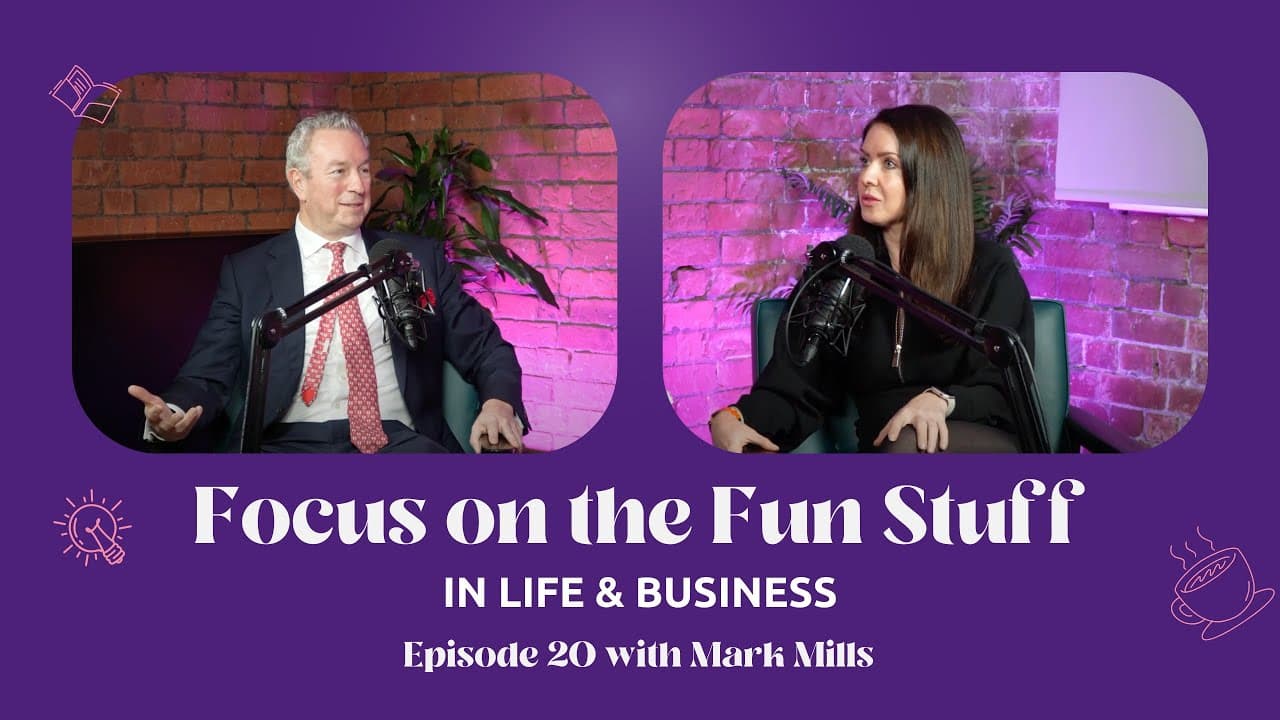
The Formula to Grow and Exit your Business with Mark Mills OBE
Video from Emma Mills.
Generated from the canonical interview transcript and validated against source data by Guests on Air.
What makes a business model worth scaling and selling?
A business model is worth scaling and selling when it earns recurring income, costs little to run and is hard for rivals to copy. Mark Mills built Cardpoint on those rules, kept his supply advantage private, never took a first offer and argued for selling when a key customer contract was set to turn against the business.
Mark Mills OBE has been selling since his school days, when he resold bags of broken biscuits from a factory where an aunt worked. In a long interview about growth and exits, he traced the line from payphones and petrol station post boxes to Cardpoint, the cash machine business that reached 6,500 machines and around 20 million in EBITDA.
The thread running through every venture is the business model. Mark admits he is obsessed with it. If the model does not work, he says, the business will lose money and eventually go bust. If it does work and it can scale, the owner ends up with something profitable, satisfying and fun to run, which is also what a buyer wants.
His lessons are practical rather than theoretical. They cover why recurring income comes first, how barriers to entry can be real or only perceived, why a founder should never name a competitor, and when to accept an offer. Each one came from a deal that either worked for him or cost him money along the way.
Key takeaways
- Build recurring income into the model first, because one-off sales vanish the moment a recession arrives.
- Barriers to entry can be perceived as well as real, and both keep competitors out of your market.
- Never accept the first offer, since patience in a sale can double the price a buyer is willing to pay.
- Sell while the numbers are strong and before a known risk, such as a lost contract, reaches the accounts.
1. Recurring income is rule number one
Mark's first real venture sold payphones at a time when BT had been the only place to get one. He and his brother sold a couple of thousand of them, and the business worked well until a recession hit. The flaw was that they were paid once per phone and earned nothing when the phone was used, so when buyers stopped buying, the income stopped too.
That experience set the rule he still repeats to founders: recurring income comes first. Had the payphone business taken a penny from every call, he says, he could have retired at 21. Instead it was wound up. A business with recurring income can keep going through a downturn because it does not depend on winning a fresh sale every single month.
The post box business put the lesson to work. Mark signed up around 2,000 petrol stations, then persuaded Nestlé to advertise on the boxes. He also studied the Telecommunications Act at night school and found that Royal Mail had to collect from a post box if the owner paid an annual fee. Advertisers paid year after year, and running costs stayed low.

2. Barriers to entry can be real or perceived
Cardpoint began after Mark and his brother flew to the United States in July 1999 with money in the bank but no business, planning to look for an idea. In a convenience store he paid $3 to withdraw cash from a machine and saw the model at once. The first Cardpoint machine went live on 17 March 2000, and within an hour someone had used it.
Filling machines with cash looked like a huge barrier, since each early machine held about £25,000. Mark found a bank that took in more notes from supermarkets than it paid out through post offices, and it agreed to let Cardpoint use its cash, charging interest only on what was still outstanding. Cardpoint went on to dispense around 500 million a month.
He never told anyone about that arrangement. Rivals assumed they needed a fortune in their own accounts to enter the market, so the perceived barrier kept them out. The same discipline applied to competitors: when a payment processor casually named its rival during a pitch, Mark called the rival and signed with them. His advice is never to talk about your competitors, because you are only advertising them.
3. Know your buyer and when to sell
When an outdoor advertising company made an offer for the post box business, Mark was shaking with excitement, yet he held to the brothers' rule of never accepting a first offer. He waited a week without calling. The buyer rang back, disappointed, and doubled the offer. Later, Royal Mail bought the business as a defensive move because it had grown so large.
He had also insisted on a sell-on clause, which pays the original sellers again if the buyer sells within a set period. The buyer tried to remove it the night before signing, arguing it would never sell. Mark refused to sign without it, and 36 months later the sale to Royal Mail triggered the clause, six months before it was due to expire.
Timing mattered at Cardpoint too. A motorway services operator had refused to share the cost of its machines, so Cardpoint kept almost all of the income, and the operator came to resent the deal. Mark knew that contract would not be renewed, so when a strong offer arrived he argued for taking it. He now takes owners through a 40-step process covering the model, fast growth and the exit.