Entrepreneurship
Hugo Brooks on the Question Founders Forget to Ask Before Starting Again
After three decades of building brand and innovation businesses, one question at home changed where Hugo Brooks points ambition and how founders can choose their next move.
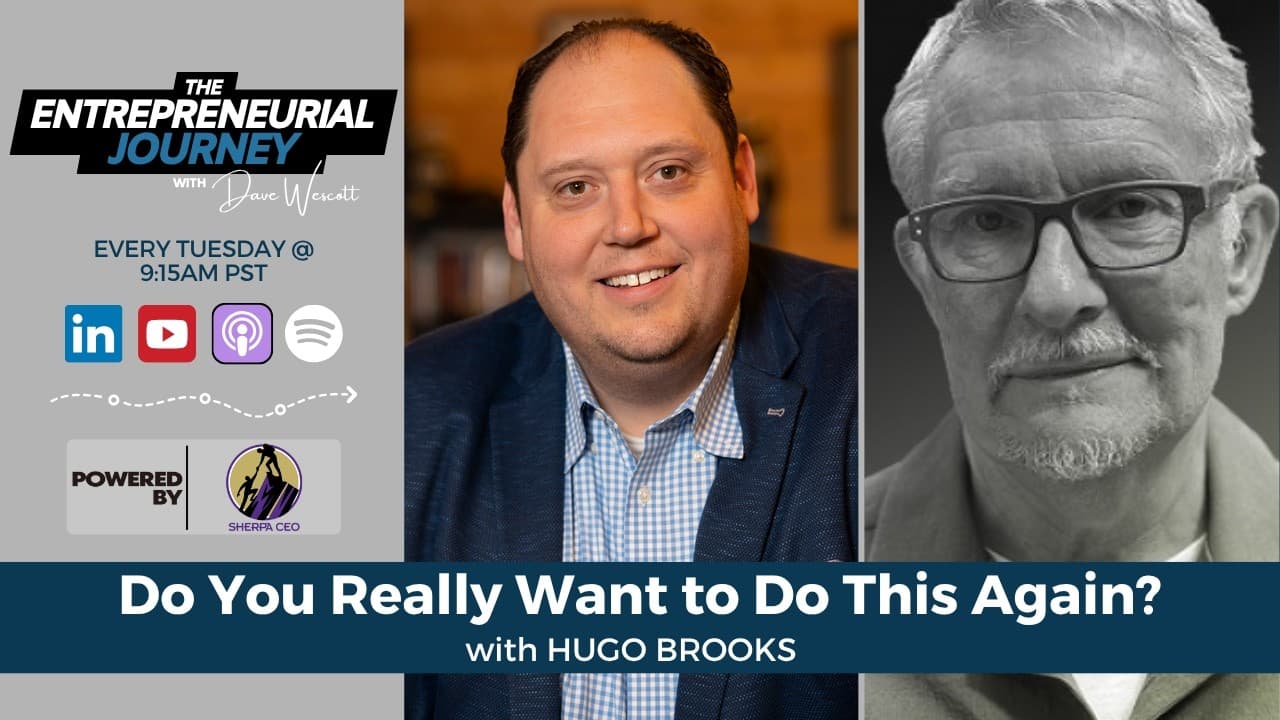
Do You Really Want to Do This Again? | The Entrepreneurial Journey
Video from Dave Wescott.
Generated from the canonical interview transcript and validated against source data by Guests on Air.
What question should founders ask before rebuilding a business again?
Before planning the next reinvention, founders should ask whether they genuinely want to do it again. Hugo Brooks says that single question, never asked in more than 30 years of running brand businesses, led to stepping away, studying what ambition really is, and helping leaders aim their drive at goals that match their own values rather than habit.
For more than 30 years, Hugo Brooks ran businesses in the marketing, brand development and creative communication space, from design consultancies to brand and innovation consultancies, with global brand owners such as Coca-Cola and Nestle as clients. Speaking with Dave Wescott on The Entrepreneurial Journey, Brooks called it a roller coaster of an industry, where budgets flow in good times and stop the moment the economy looks unhealthy.
About three years ago, coming off one of those peaks, Brooks was drawing up the usual plans for the next downturn: reinvent the business, find a new proposition, bring in new people and make it work again. Then Brooks's wife asked a simple question: do you really want to do this again? It was a question Brooks had never asked in all those years of building and rebuilding.
That question led Brooks to offload the business, step back and ask what ambition really is. The answer became Magnetic North, a consultancy that helps founders and leaders find a meaningful but flexible direction for their drive, along with a book series on the subject. This article sets out the ideas Brooks shared about deciding where ambition should go next, and why the decision deserves regular review.
Key takeaways
- Ask whether you genuinely want to repeat the cycle before planning the next reinvention of a business.
- Ambition is a powerful but neutral force, and it only becomes useful once you choose where to point it.
- Goals pass in minutes, but the years spent striving towards them are what make up a working life.
- Direction should be revisited regularly as circumstances, knowledge and responsibilities change over a career.
1. Ask the question before the next reinvention
Brooks described a familiar founder reflex at the bottom of a cycle: reinvent the offer, swap out people and find a way to make it work again. The habit is understandable in an industry where success rises and falls with client budgets. Yet in more than 30 years, Brooks never paused to ask whether this was how the time should be spent, even though much of the work had been enjoyable.
Once the question was asked, Brooks made a bold decision to stop and offload the business. Brooks noted that letting go is psychologically easier when a business is in decline than when it is growing, which helps explain why so many founders keep riding the next wave without ever stepping off to check whether the direction still suits them.
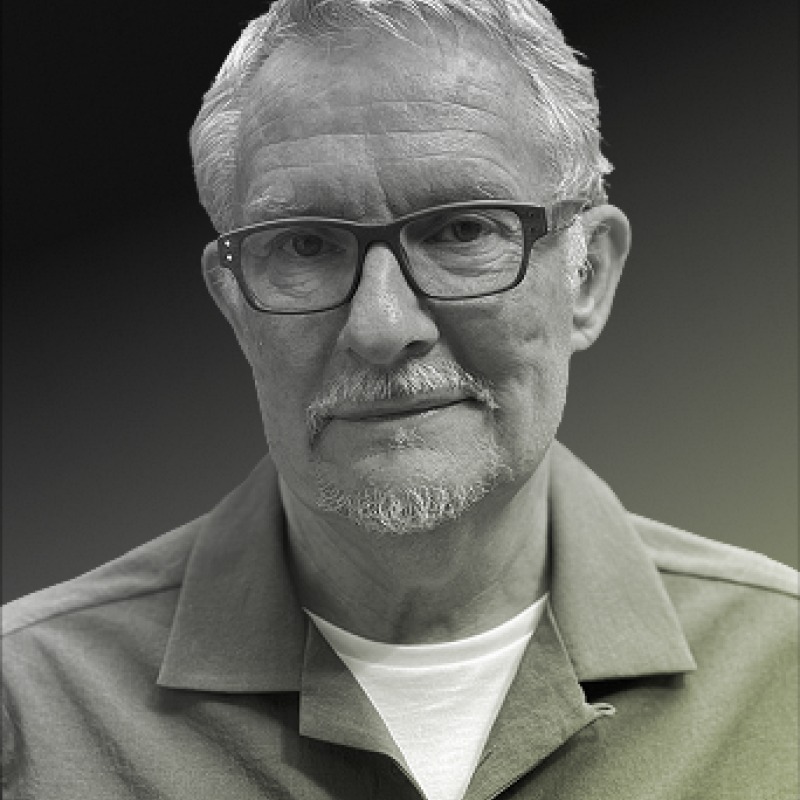
Stepping away raised harder questions: who am I now, what do I do, and what am I for? Brooks found them difficult to answer and realised that one force had been driving every decision along the way. That force was ambition, and understanding how it works, and why it so often runs ahead of conscious choice, became the focus of the next chapter of a long career.
2. Treat ambition as a neutral force you can steer
While writing about the subject, Brooks spoke to 40 or 50 business owners and founders and found that people hold very different types of ambition. The common thread was that ambition is immensely powerful but neutral. As Brooks put it, ambition can cure world hunger and ambition can cause World War II; it only becomes useful once someone decides how and where to apply it.
That idea sits at the heart of Ambition: Redefining Success for a Restless Age, which Brooks is publishing in four parts. The first part, available now on Amazon, sets out what ambition is, with history, neuroscience and stories. Later parts cover how to harness it, the social responsibility that comes with ambition, and a practical workbook of tools and steps for readers to follow.
Brooks also uses a technique to help clients uncover their values: imagine that a best friend is delivering their eulogy. What would that friend want to say? It is probably not last quarter's sales figures or how many cars someone owned. The answers point to what is truly meaningful, and Brooks then helps clients join that set of values to the drive they already have.
3. Follow magnetic north, not a fixed point
Brooks compares goals to a pair of doors. Walking through them takes a couple of minutes and the moment of achievement is fleeting, yet the corridor leading to them can take three, five or ten years. Because that striving is what adds up to a working life, Brooks argues the destination needs to be genuinely meaningful rather than a brittle target borrowed from social norms.
The lesson came the hard way. In Brooks's early 30s, success arrived too young: offices in New York and London, flights back and forth, and a lifestyle that felt like a dream come true. When the economy changed overnight, the immature business was left exposed and the family lost their home. Brooks believes that stage of life called for building security, not chasing more.
That experience shaped the name Magnetic North. True north is a fixed point on a map, while magnetic north moves as the planet moves, and a compass follows it. Brooks says direction should be stopped, evaluated and reconsidered on a regular basis. Change is not always upheaval: 25 to 30% of clients find they are already on the right path and return to it with renewed focus.