Leadership
How Mark Mills Built Scalable Value and Exited
Mark Mills reveals demand-driven growth, ruthless planning, and the sale process that turned cash machines into a £175 million exit.
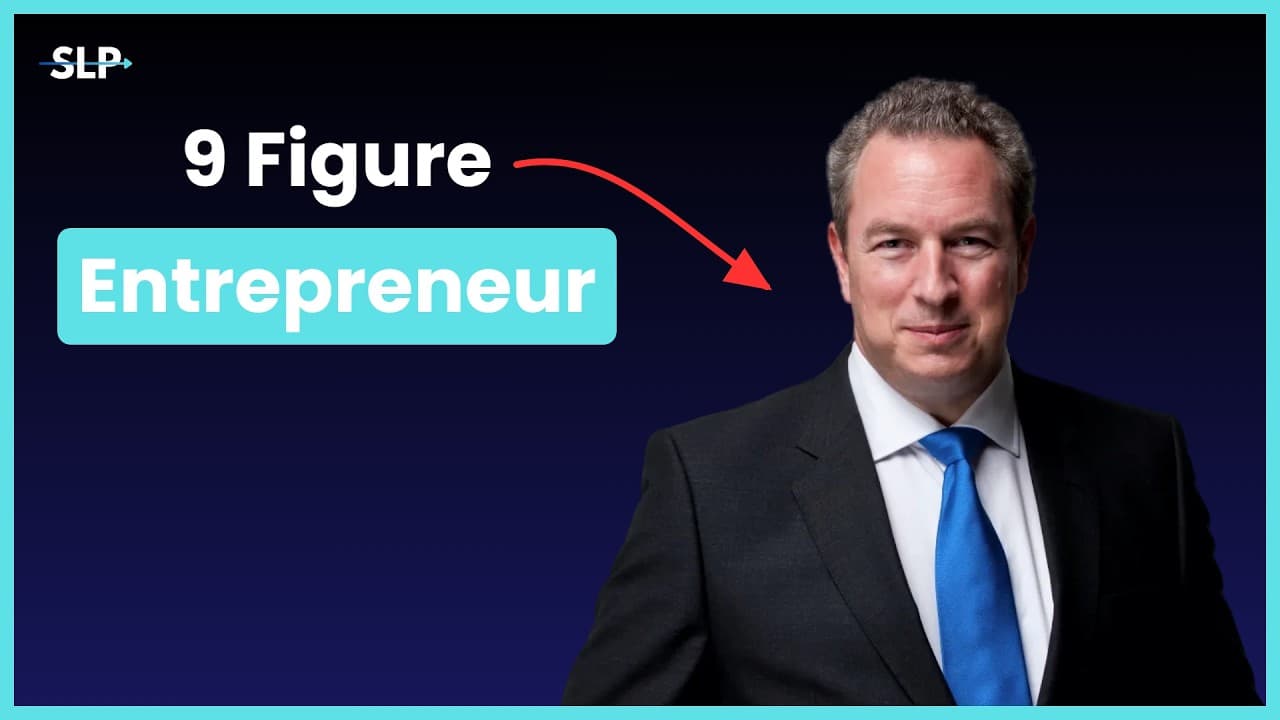
Why Most People Never Achieve The Goals They Set - Mark Mills
Video from Straight Line Path Podcast.
Generated from the canonical interview transcript and validated against source data by Guests on Air.
How did Mark Mills scale Cardpoint and plan the sale to achieve a high valuation?
Mark Mills scaled Cardpoint by starting with proven customer demand, engineering creative finance and partnership solutions to overcome barriers, and defining a fixed future target. He translated that target into strict KPIs, unit economics and a competitive sale process, which together unlocked recurring cash flows, predictable growth, and a high valuation culminating in a substantial exit.
Mark Mills began selling broken biscuits at eight and later built Cardpoint by tracing demand to supply. His experience shows how observing simple customer needs, asking practical questions, and creating operational fixes turns small ideas into large businesses. The episode explains disciplined goal setting, planning rigor, and precise metrics that scaled Cardpoint to a predictable near 100 million run rate.
He solved barriers by partnering with banks, leasing machines, and convincing unexpected allies to free up the cash float. Mark treats perceived obstacles as puzzles worth dissecting, turning friction into a competitive advantage. His petrol station post box story and the first cash machines in the UK show relentless curiosity, practical negotiation, and a relentless focus on unit economics and rollout.
Mills insists on pegged deadlines, ruthless daily KPIs, and shrinking big goals into measurable monthly actions. He credits a fixed date for forcing backward planning, aligning teams, and converting vague ambition into executable sales and operations tasks. Weekly measurement, list buying, disciplined fitting schedules, and transparent finance turned a hypothesis into repeatable performance that buyers could value and trust.
Key takeaways
- Start from proven customer demand, then design supply and pricing to capture that demand profitably and scalably.
- Set a firm future date for growth or sale, then work backwards into measurable monthly, weekly, daily KPIs.
- Perceived barriers can become moats; negotiate partnerships and creative finance to convert obstacles into competitive advantages.
- Small margin improvements and tidy unit economics compound; buyers pay for recurring revenue and predictable per-unit performance.
1. Demand first, then supply
Mark’s earliest lessons came from selling broken biscuits and organising parties, which taught him to find demand before scaling supply. He made choices only when a clear customer need and willingness to pay appeared. That habit prevented wasted effort, focused early sales work, and created proof points that could be scaled. By validating the market with small experiments, he ensured every expansion had a measurable lead indicator and revenue justification.
He solved the cash float problem by asking pragmatic questions and persuading a bank to treat idle cash as an interest‑earning resource. That arrangement converted a blockade into an operational advantage, letting Cardpoint install many machines without draining equity. The negotiated credit turned cash into a managed expense, aligning collector timetables and bank appetite. Practical partnerships like this reduced startup capital needs and accelerated rollout speed materially.
He formalised ambition by pinning an exact future date and working backwards into monthly targets, weekly actions, and daily activity. Each senior leader received a tight set of KPIs tied to installs, transaction forecasts, list purchases, and fitting schedules. The cumulative effect was a machine of measurable activity, where weekly variance highlighted bottlenecks and allowed rapid corrective steps. That discipline turned a distant goal into executable operational rhythm.
2. Turn metrics into a machine
Cardpoint’s growth relied on relentless attention to unit economics: pence per balance inquiry mattered, charges per withdrawal added up, and realistic traffic expectations drove site selection. Mark insisted each machine’s forecast had to show recurring cash flows before committing capital. By modelling transactions, charge rates, and maintenance costs at device level, the team could prioritise high‑return installations and prune low‑velocity locations, improving overall portfolio yield predictably.
He financed rapid rollout through mixed approaches: vendor leases, clever vendor deals, and later an AIM listing to widen capital access. Breaking machine cost into monthly obligations kept cash demand manageable while preserving growth momentum. The IPO and a debt facility allowed quick inorganic expansion through acquisitions. That blended funding approach reduced equity dilution, kept founders accountable to unit profitability, and enabled fast scaling without choking operational execution.

When offers came, Mark refused scattergun conversations and instead engineered a short, competitive sale process. He made the business buyer‑ready by removing founder dependence, assembling proof of recurring cash flows, and documenting operational KPIs. A deliberate, short auction created urgency and extracted higher bids. The result was discipline: lower founder fatigue, cleaner negotiations, and the confidence that the asking price reflected verified performance, not wishful thinking.
3. Prepare mentally for life after sale
An exit solves financial questions but often creates psychological ones. Mark warns founders about the sudden void that follows signing: calendar gaps, lost purpose, and unexpected grief when the company that structured daily life suddenly belongs to someone else. Preparing projects, advisory roles, or hobbies in advance prevents panic and preserves negotiating clarity. Anticipating the emotional side of exit keeps decision making clean during the sale and eases the transition afterward.
Mentors and peers are invaluable but also finite; Mark suggests engaging advisers for defined terms and rotating them as needs change. Early mentors tend to be generalists while later advisers become specialised in strategy, fundraising, or operations. Books, clubs, and structured networks supplement mentoring, giving founders fresh perspectives to test assumptions. This rotating advice model accelerates learning while avoiding overreliance on any single viewpoint regularly.
Mark remains reachable via LinkedIn and brief consultations, and he shares rules that apply across sectors. His core advice is deliberate: peg a date, build proof of recurring revenue, measure unit economics, and prepare yourself emotionally for the post‑sale chapter. For owners thinking about exits, his frameworks help surface hidden value, align buyers’ incentives, and increase probability of a higher, cleaner outcome and sustainable success.