Remote Work
Carlota Montoro on Hiring Leaders for Teams They Will Never See
An HR consultant who builds people functions for international companies explains why remote leadership hires fail on trust, not skills, and why honest hiring starts with self-knowledge.
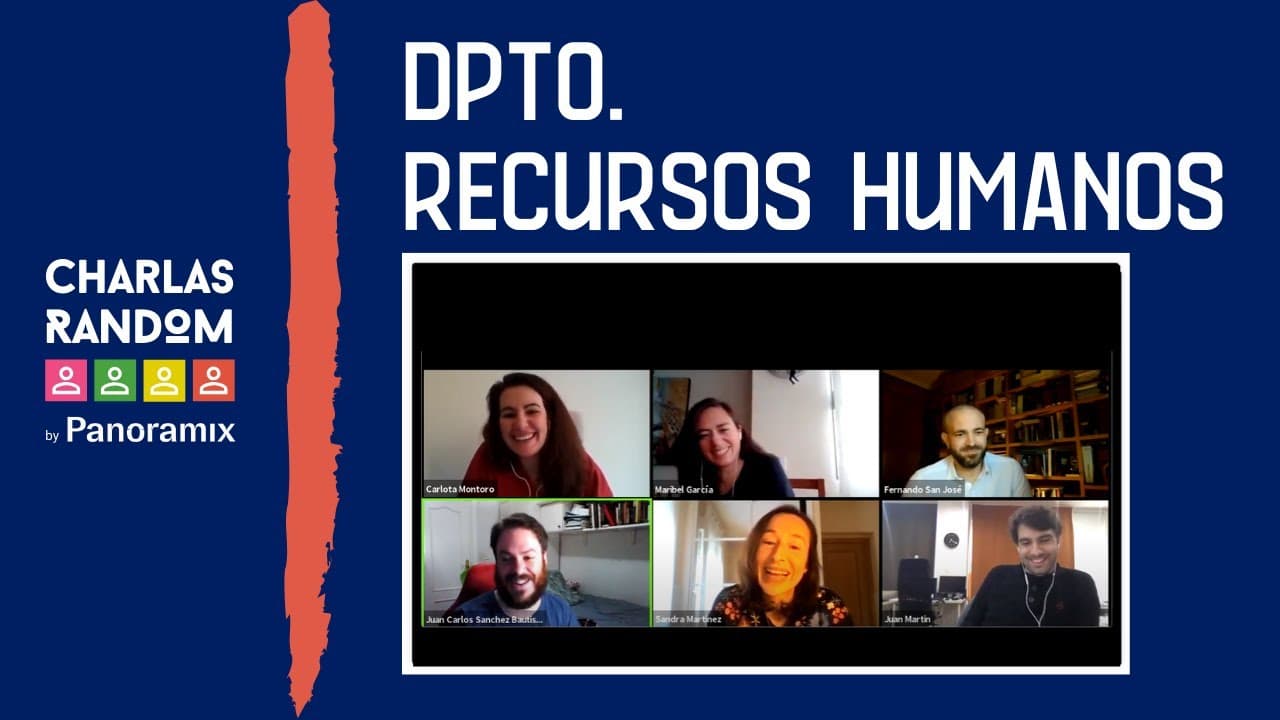
Video from Charlas RANDOM.
Generated from the canonical interview transcript and validated against source data by Guests on Air.
Why is hiring a leader for a fully remote team so hard?
Because the hard part is rarely technical. Carlota Montoro found that strong candidates liked the idea of a remote leadership role but doubted they could manage people they could not see. The fix sits with the company: a real culture of trust, honest interviews about how the work runs, and a clear sense of what the business can offer.
Carlota Montoro has spent around fifteen years in human resources, most of it international. After a spell living in London, Carlota described working mainly with international clients as a generalist, building HR departments from zero for small and mid-sized companies and helping them structure the way they run their people so the business works more efficiently.
On a Spanish-language panel of HR practitioners hosted by Charlas RANDOM, the conversation kept circling one question: what really changes when a team stops sharing an office? Flexible hours, trust, values and hiring all came up, and Carlota brought the view of someone working with companies that had no office at all.
The message was practical rather than theoretical. Remote work does not fail because people lack skills. It fails when leaders cannot let go of seeing people at their desks, when companies hide how they really operate, and when a business has never worked out what it actually offers the people it wants to hire.
Key takeaways
- The hardest part of a remote leadership hire is finding someone willing to lead people who work from home.
- Candidates who manage by sight struggle with remote teams, even when objectives are clearly set.
- A culture of trust changes behaviour quickly; most people want to do their work well.
- Honest interviews and real self-knowledge attract the right people and keep the wrong ones out.
1. The remote leader problem is not technical
At the time of the panel, Carlota Montoro worked with several companies that had no office and employed people in many parts of Europe. While interviewing for an internal leadership role at one of them, Carlota described a position that meant directing a team spread across different locations, every member working remotely. The job advert drew plenty of attention, and candidates were genuinely interested at the start of the conversation.
Interest faded once the details landed. Candidates started asking how they could control employees by objectives if they never saw them. It was not one or two people raising the doubt; it happened with a large share of the applicants. Experienced managers who looked strong on paper were uneasy at the thought of leading people sitting in home offices across the continent.
For Carlota, the lesson was clear. The real challenge in filling that role was never technical qualification, which many applicants had. It was finding a leader comfortable directing people who were at home, trusting them to deliver without watching them. Anyone hiring for a distributed team should test for that comfort early, because it decides whether the hire works.
2. Trust changes people faster than expected
The panel debated whether older managers adapt less easily to flexible and remote work. Carlota agreed with the other speakers that age was not the point. Carlota has met people doing very mechanical jobs who turn out to have highly creative hobbies outside work. The difference is the culture they came from, one where speaking up at work earned them nothing good.
That history matters, Carlota argued, because nobody can expect such people to become creative overnight just because a manager suddenly asks them to. Behaviour that took years to learn does not switch off on command. Leaders who want new ideas from a team that was trained to stay quiet need to change the conditions, not simply the request.
The encouraging part is how quickly people respond when the conditions do change. With a shift in culture towards genuine trust, Carlota has seen people change in a short time. Most people want to do their work well and are more creative than their job titles suggest. Trust from the top is what releases that, in an office or across a remote team.
3. Honest hiring starts with self-knowledge
Carlota was openly critical of how the HR function sometimes handles selection. From a generalist point of view, the recruiter who runs the interview is often the same person who later faces the employee. That alone is a reason to be completely honest from the very first conversation about what the role and the company are really like day to day.
Candidates usually say they want to learn, develop and use all their skills, because that is what everyone says. Carlota looks past those stock answers to what the person really wants from the next role, and whether their values and personality fit the company as it actually is. The honest close is simple: if this suits you, welcome; if not, you will not be happy here.
Honesty depends on companies knowing themselves. Many are unaware of how attractive they are to candidates, what candidates value in them, or whether they are just another interview kept as a backup. Smaller firms often copy the selection processes of large corporations. Carlota's advice is to be very conscious of who you are and what you can attract with what you offer.