Midlife reinvention
Anne Paphitis on Writing Your Own Next Chapter in Midlife
Fairy tales stop at happily ever after. Anne Paphitis asks what comes next, and why nobody else will write it for you.
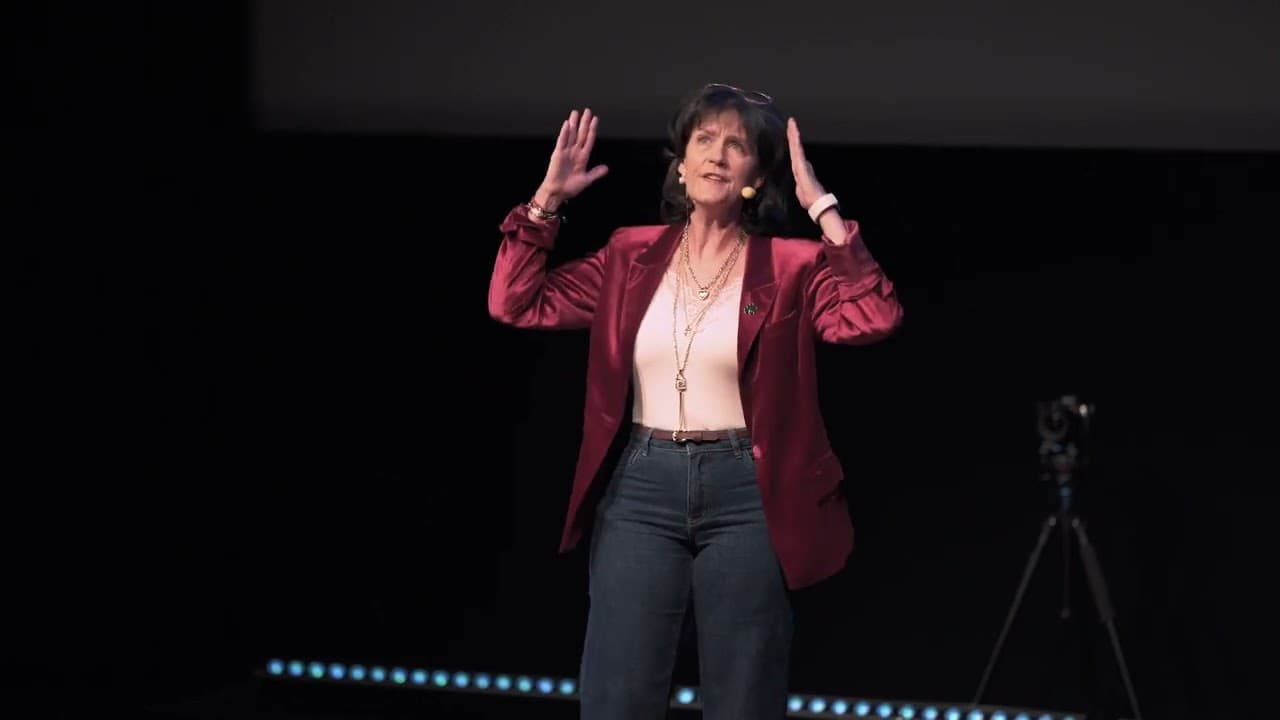
Video from Anne Paphitis.
Generated from the canonical interview transcript and validated against source data by Guests on Air.
How can people in midlife write a new chapter when life feels safe but flat?
Anne Paphitis says the first step is noticing that the limit you feel is a line you drew yourself. Nobody is coming to rescue you, so the next chapter is yours to write. It can be a big move or a small brave step, as long as it follows a long-forgotten interest and feels like you.
Most of us grew up on stories that end at the wedding, the family and the crown. Once the happily ever after arrives, the book closes. Nobody explains what happens when the children grow up, a relationship changes, or a career that once fitted perfectly no longer fits. That missing sequel is where many adults quietly lose their spark.
In a talk at the SpeakerX finale in Sweden, midlife coach Anne Paphitis takes that fairy tale apart. She describes a life that is good, solid, safe and sensible, and yet somehow smaller than the one people once dreamed of. Her point is not that stable lives are bad. It is that stability can slowly become a tower with invisible walls.
This article draws out her main ideas: why a comfortable life can still feel flat, how the limits we feel are often lines we drew ourselves, and why waiting for someone else to hand over the next chapter never works. She closes with a simple challenge that applies to anyone who has quietly put down the pen.
Key takeaways
- A good, safe and sensible life can still feel narrower and flatter than the one you once dreamed of.
- Living longer matters less than how alive you feel during the years you actually have left.
- The line between your life now and the life you imagined is usually one you drew yourself.
- No one is coming to rescue you; the next chapter is yours to write, boldly or quietly.
1. When happily ever after runs out
Paphitis starts with the stories we heard as children, where a princess waits in a tower and a prince eventually arrives. Those stories, she argues, did more than entertain us. They became the scripts we chased as adults: the wedding, the family, the job, the stability. Fairy tales end with a full stop, and many of us quietly assume our own stories end there too.
The trouble starts once those quests are complete. The children grow up, relationships change or end, and the career that once gave life its purpose no longer fits. Paphitis describes the moment people realise they have put down the crown and landed back in a tower. It is not the wicked witch kind, but a practical one built from responsible walls.
She is careful to say this life is not a failure. It is often exactly what people worked hard to build. The glass slippers become sensible shoes and the tiara becomes reading glasses, and the audience laughs because they recognise it. The problem is not the comfort. It is the slow loss of the bold, brave version of yourself who believed anything was possible.
2. How alive will you be while you are here?
Paphitis points to the research predicting lifespans of 80, 90 and beyond, and to how hard people work to stretch their lives out for as long as possible. Living to a ripe old age sounds wonderful. But she asks what that extra time is worth if it is spent accepting a life that feels a little narrower, flatter and smaller each year.
Her reframing moves the question away from length and towards quality. The measure of a life, in her view, is not only the number of years on the clock. It is how much aliveness those years hold. That shift matters for anyone in midlife who has done everything right and still wonders whether this is really all there is.
She is honest about why people stay put. It is easier to cling to the familiar and the hard-won practicalities of adult life, and to avoid being distracted by childish dreams. To show what she means, she marks an invisible line on the stage. On one side is where you are now. On the other are the things you once imagined doing.
3. Picking up the pen again
The uncomfortable part of her message is that nobody else drew that line. At some point, she says, people decide to write the end of their own story and close the book, leaving the blank pages empty. The possibilities still left in life roll away into the forest below the window, while the person inside the tower waits for rescue.
That rescue never comes. There is no handsome prince and no magical moment when someone hands you the version of yourself who feels alive again. Paphitis argues that this part of the story was always meant to be written by you. That can sound daunting, but it also puts the pen, and the key to the tower, back in your own hands.
Her examples show there is no single right answer. A couple sold everything to travel Africa in a camper van. A man left law enforcement to become a full-time artist at 48. Liam writes, directs and acts in films and plays on the side. Her own father went skydiving at 80. Each chose to step slightly beyond a line they once thought was fixed.