Personal Reinvention
Anne Paphitis on Why Midlife Change Starts by Taking Things Out
Before you add the journal or the yoga class, decide what can go. Anne Paphitis explains why real self-care makes room in a full life instead of filling it further.
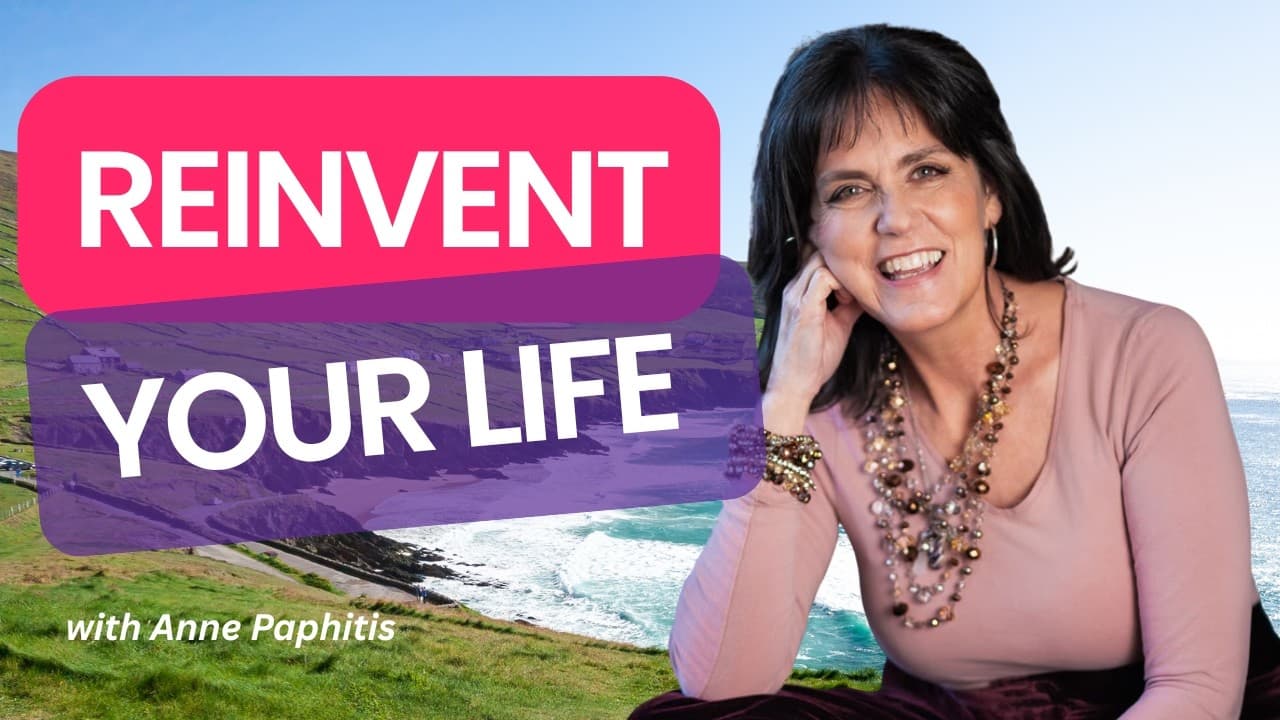
Midlife Reinvention for Women: Simple Strategies to Rebuild Your Life
Video from Burnout Recovery & Personal Development Support.
Generated from the canonical interview transcript and validated against source data by Guests on Air.
How do you start reinventing your life in midlife without burning out?
Start by taking stock rather than adding more. Anne Paphitis advises finding what in your life is past its expiry date and removing it first, because new habits piled onto a full day are the first things dropped under pressure. Then be patient, keep a clear but flexible direction, ask for help, and use short resets to calm the mind.
When women in midlife decide something has to change, the usual first move is to add something: a new journal, a yoga class, a course or a fresh routine. Anne Paphitis, a resilience coach and speaker who helps women through major life transitions, believes that instinct is the reason so many fresh starts quietly fail within weeks.
Speaking with Denise Eckert on The Relaxation Community channel, she described a different first step. Before bringing anything new in, take an honest stock of what you are already carrying, and ask which parts of it have outlived their purpose. Only then is there room for something that will actually help.
Her view comes from experience as well as practice. She ran a school in South Africa for students who did not fit the mainstream, trained as a life coach, and four years ago chose to rebuild her own life by moving to Ireland. Patience, clarity, asking for help and real rest run through all of it.
Key takeaways
- Take stock before adding anything: find what in your life is past its expiry date and let it go first.
- New habits stacked onto an already full day are usually the first things dropped when pressure builds.
- Reinvention takes patience, a clear but flexible direction, and the willingness to ask other people for help.
- Real self-care calms the mind, while decorative or performative self-care only stretches you further.
1. Why adding more is the wrong first step
Anne Paphitis puts it simply: the temptation is to just add things into your life. People rush out to buy a journal or join a class, hoping the new habit will bring back the energy and joy they feel is missing. The trouble is that capacity and energy change as we get older, and a full day does not grow longer because we want it to.
What happens next is predictable. The new activities, brought in to help, become the first things dropped when life gets unmanageable, because it is far easier to slip back into routines followed for years. The fresh start fails, and the person feels they have failed with it, when the plan itself was the problem.

Her answer is to ask a harder question first. If your day is already full, what can you take out? That might be a commitment that no longer gives you anything, a role kept out of habit, or even five or ten minutes spent on something that does not benefit you. Clearing that space is what lets the new habit stick.
2. Three things that make a reinvention hold
Asked for her top tips, she started with patience. There is no fairy godmother who waves a wand and makes a new life appear. Change takes determination and a great deal of kindness towards yourself, because there will be days when leaving the familiar behind feels like a mistake, or even a little insane.
Her second tip is to be clear about where you are heading while staying ready to adjust. The direction you set out in may evolve once you start, and some parts of the plan will not fit as expected. Regular reassessment is not a sign the plan has failed; it is part of how a new chapter takes shape.
The third is to lean on other people. When you step into reinvention you are a beginner in a new existence, so it makes sense to ask for support, advice and practical help. Moving countries in her fifties taught her that even simple tasks, like reading an official letter, go better when you are willing to say you do not know.
3. What real self-care looks like
For years, Anne Paphitis believed in pushing through when she was juggling too much. Her main self-care practice now is the opposite: noticing when stress has climbed too high, and stepping away long enough to think clearly. That can be a half-hour walk around the garden, a drive to look at scenery, or simply sitting and looking at the view.
The point is to disengage the mind, which is why watching television or meeting a friend for coffee does not always count. She pictures a stressed mind as a muddied pond. Let your mind be still for a short while and the silt settles, so things become clear again. Even ten minutes can be enough to feel back in control.
She is wary of self-care that is mostly for show. It cannot be performative, she says, and it should not become one more thing that stretches you. Her closing advice was to stop putting yourself at the bottom of the list of priorities, because when you take care of yourself, you are better able to take care of everyone else too.