Leadership
Adeline Tiah on investing in the next trajectory while still growing
The executive coach explains why success can blind leaders to the race for tomorrow, and how future-back thinking and calculated risk keep teams ahead of disruption.
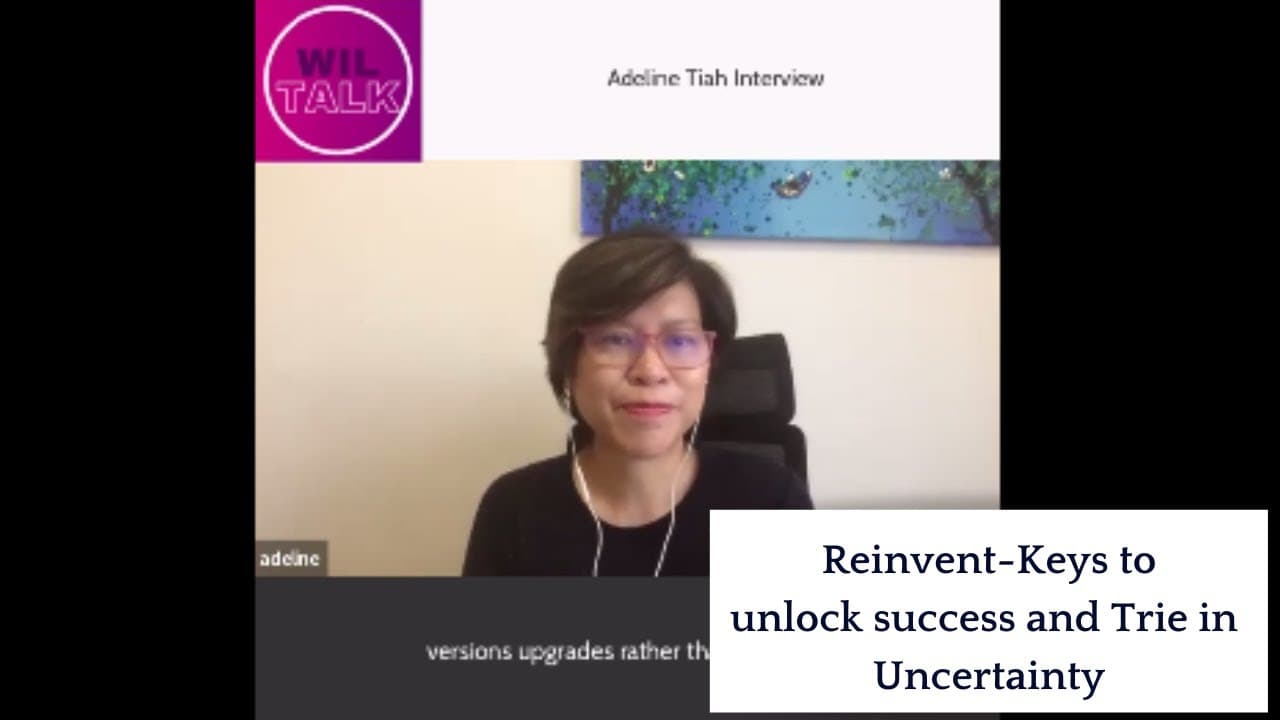
WIL Talk #63 Adeline Tiah, Business Executive | CMO on-Demand | Leadership & REINVENT Coach
Video from Women In Leadership Empowered.
Generated from the canonical interview transcript and validated against source data by Guests on Air.
Why should leaders invest in the next trajectory while the business is still growing?
Adeline Tiah argues that leaders should invest in the next trajectory while the business is still growing. Success breeds complexity and pulls attention toward current challenges, so future-back thinking helps: picture where the business should be in twenty years, work backward, and take calculated risks. Teams take those risks when failure is treated as learning rather than as the end.
Most leaders spend their energy on this quarter's problems, and Adeline Tiah believes that is exactly how successful businesses get caught out. In an interview on the Women in Leadership Talk podcast, the Singapore-based executive coach and former chief marketing officer argued that success breeds complexity, and that the race for tomorrow is quietly lost while teams are busy defending today.
Tiah's answer is the key takeaway of a book built from years of coaching: invest in the next trajectory while the current one is still growing. In the interview, the rule applies to a company's products, to the people working inside it and to an individual career alike. Waiting until growth stalls means the investment arrives too late to matter.
The conversation moved from Fujifilm's turn into cosmetics to the way Steve Jobs approached the phone, and on to a parent's reflection letter after a failed exam. Across each story, Tiah drew the same line: teams and people grow when calculated risk feels safe to take, and when failure is treated as information rather than as a verdict.
Key takeaways
- Success breeds complexity, so leaders focused only on current challenges can miss the race for tomorrow until disruption arrives.
- Invest in the next trajectory while the business, the team or the career is still growing, not after it stalls.
- Future-back thinking starts from where the business should be in twenty years and works backward to what to do now.
- Calculated risk needs a safety net, because people take bolder steps when failure is framed as learning, not as the end.
1. Why success makes the future harder to see
Tiah's starting point is a warning about comfort at the top. As success breeds complexity, leaders become absorbed in the current set of challenges and forget the race for tomorrow. Before they notice, a competitor has solved a problem customers had not yet put into words, and the business that looked secure is already being disrupted.
Netflix and Blockbuster is the familiar example. One company saw that viewers wanted streaming and video on demand at home, and digital technology let it meet that need, while the other did not look closely at what consumers needed. Tiah's point is not about technology alone. It is about whether leaders keep studying how customers are changing.
Fujifilm offers a richer case. According to Tiah, the company kept evolving after digital cameras arrived and built digital labs early. Then, while processing film, it recognised that its know-how with ingredients such as collagen and nanotechnology could serve another market, and it launched high-end cosmetic products that grew into a meaningful revenue stream.
2. Invest in the next trajectory while still growing
For Tiah, the Fujifilm story captures the central lesson of Reinvent 4.0: Your Keys to Unlock Success and Thrive in Uncertainty, which the host introduced as inspired by the author's own successes and experiences. The lesson is to invest in the next trajectory while the current one is still growing, rather than waiting for decline to force a change.

The host pointed out that the rule reaches beyond products to people. Leaders who invest in their teams before the next challenge arrives give those teams a chance to be ready for disruption instead of scrambling through it. Tiah added that change is no longer constant but exponential, which makes agility the theme that holds the whole investment together.
Tiah calls the method future-back thinking. Present-forward improvement is incremental, because leaders can only see what is already within sight. Future-back thinking starts by imagining where the business should be twenty years ahead, then walks backward to decide what must happen now. Steve Jobs, in this telling, did not set out to improve on Nokia or Motorola phones but to change daily life.
3. Make calculated risk feel safe for teams
Investing ahead means taking risks, and Tiah is careful to describe them as strategic and calculated. In the interview, that kind of risk means weighing the opportunity trade-off and finding the courage to act on it. The aim is not to gamble on every idea but to decide deliberately where the next growth will come from.
Tiah's own career shows the pattern. Early on, Tiah turned down a global bank to join a Singapore telco startup that had not yet launched, later moved from telco into banking, and later still took a two-year career break before joining a fintech. Each move was uncomfortable at first, and each one built new skills and new networks.
The lesson for teams comes from a story about Tiah's son. After a failed exam, the response was comfort, a safety net and a reflection letter on what went well, what did not and what to do next. The next term brought A grades and stronger intrinsic motivation. Leaders who frame failure as learning give people the same room to take bolder, smarter risks.