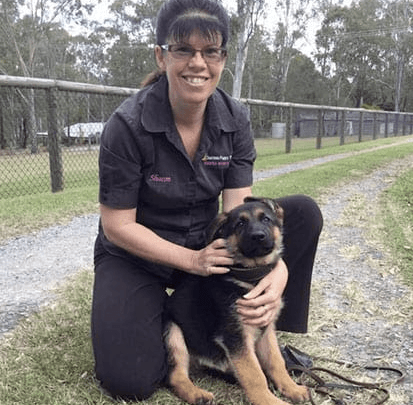
Sample Podcast Questions for Sharon Mills
- 1
You placed 450 German Shepherd puppies over 21 years; what specific homecoming mistakes did you see most often and why do they derail early training?
- 2
You talk a lot about teaching owners to understand “dog language.” What are the signals puppies are already giving us that most humans completely miss?
- 3
Why are the first 16 weeks so important in shaping whether a puppy becomes calm, confident, and easy to live with?
- 4
A lot of owners worry that correcting a puppy will damage the bond. How do you explain the difference between correction, punishment, and the kind of guidance puppies naturally understand?
- 5
What have you learned from watching mother dogs discipline and guide their puppies that most modern training advice overlooks?
- 6
When a puppy is biting, jumping, pulling, or ignoring commands, what should owners look at first before assuming the dog is stubborn or badly behaved?
- 7
What are the long-term consequences when owners wait too long to train a puppy and assume they will simply grow out of bad habits?
- 8
How can small behaviours like biting, jumping, pulling, or ignoring boundaries escalate if they are not addressed early?
- 9
What changes do you typically see in both the puppy and the household when owners take action in those first crucial weeks?
- 10
Some owners might feel sceptical that an online programme can really help them train a puppy at home, so what would you say to someone who thinks puppy training has to happen in person to work?
Latest episodes

Key topics
How Teaching Owners Dog Language Ends Puppy Chaos
Many new puppy owners struggle because they don’t truly understand how their dog thinks and communicates, leading to frustration and confused puppies. They resort to commands or punishment without real connection, which can exacerbate bad behaviours or breed mistrust. This gap between human and canine communication leaves many feeling defeated in their training efforts. Sharon Mills offers a unique approach based on decades of watching dog mothers and raising German Shepherd litters. She educates owners on simple, observable canine behaviours and explains why teaching owners the ‘language’ of dogs is essential to effective training. Her methods are less about rote repetition and more about building mutual understanding, respect, and reliability. Listeners will gain insights into how dogs interpret human signals and learn how to bridge that communication gap with clear, dog-centred techniques. Sharon’s approach reduces behavioural issues by fostering a relationship where the puppy willingly follows guidance, resulting in less stress and more harmony at home.
Why Early Puppy Training Is a Secret to Lifelong Calm
Many new puppy owners underestimate just how crucial the first few weeks at home are for a dog's future behaviour. They often feel overwhelmed by the immediate challenges but don’t realise the lasting impact early lessons have on a puppy’s brain development and temperament. Without the right guidance, small issues can snowball into big behavioural problems later in life. Sharon Mills draws on over 34 years of breeding and training experience, having raised 450 puppies with a deep understanding of canine psychology. She explains how puppies develop an adult brain by 16 weeks and why owners need to harness this window to teach calmness and obedience early. Her Train Your Puppy in Just 3 Days framework empowers owners with practical, simple steps that mimic natural maternal dog behaviours to instill lifelong good habits. Listeners will walk away understanding exactly when and how to apply early training to shape a confident, well-mannered dog. Sharon provides actionable tools that prevent common issues like biting, jumping, and leash pulling by starting right from day one, making puppyhood less stressful and more rewarding for the whole family.
The family dog can expose every disagreement a couple has about boundaries
A puppy often enters a relationship as a shared dream, but it can quickly become a source of resentment when one partner enforces rules and the other allows exceptions. Sharon has worked with couples where disagreements over feeding, sleeping arrangements, jumping, discipline, and who carries the daily workload create confusion for the dog and repeated tension between the adults. She explains why the dog’s behaviour is often a symptom of inconsistent communication within the household, and how couples can agree on a small set of clear, realistic boundaries without turning every incident into an argument. The conversation gives listeners a practical way to reduce conflict, share responsibility more fairly, and stop the dog from becoming the battleground for deeper disagreements about parenting, leadership, and care.
View all topics →
Latest episodes
Key topics
How Teaching Owners Dog Language Ends Puppy Chaos
Many new puppy owners struggle because they don’t truly understand how their dog thinks and communicates, leading to frustration and confused puppies. They resort to commands or punishment without real connection, which can exacerbate bad behaviours or breed mistrust. This gap between human and canine communication leaves many feeling defeated in their training efforts. Sharon Mills offers a unique approach based on decades of watching dog mothers and raising German Shepherd litters. She educates owners on simple, observable canine behaviours and explains why teaching owners the ‘language’ of dogs is essential to effective training. Her methods are less about rote repetition and more about building mutual understanding, respect, and reliability. Listeners will gain insights into how dogs interpret human signals and learn how to bridge that communication gap with clear, dog-centred techniques. Sharon’s approach reduces behavioural issues by fostering a relationship where the puppy willingly follows guidance, resulting in less stress and more harmony at home.
Why Early Puppy Training Is a Secret to Lifelong Calm
Many new puppy owners underestimate just how crucial the first few weeks at home are for a dog's future behaviour. They often feel overwhelmed by the immediate challenges but don’t realise the lasting impact early lessons have on a puppy’s brain development and temperament. Without the right guidance, small issues can snowball into big behavioural problems later in life. Sharon Mills draws on over 34 years of breeding and training experience, having raised 450 puppies with a deep understanding of canine psychology. She explains how puppies develop an adult brain by 16 weeks and why owners need to harness this window to teach calmness and obedience early. Her Train Your Puppy in Just 3 Days framework empowers owners with practical, simple steps that mimic natural maternal dog behaviours to instill lifelong good habits. Listeners will walk away understanding exactly when and how to apply early training to shape a confident, well-mannered dog. Sharon provides actionable tools that prevent common issues like biting, jumping, and leash pulling by starting right from day one, making puppyhood less stressful and more rewarding for the whole family.
The family dog can expose every disagreement a couple has about boundaries
A puppy often enters a relationship as a shared dream, but it can quickly become a source of resentment when one partner enforces rules and the other allows exceptions. Sharon has worked with couples where disagreements over feeding, sleeping arrangements, jumping, discipline, and who carries the daily workload create confusion for the dog and repeated tension between the adults. She explains why the dog’s behaviour is often a symptom of inconsistent communication within the household, and how couples can agree on a small set of clear, realistic boundaries without turning every incident into an argument. The conversation gives listeners a practical way to reduce conflict, share responsibility more fairly, and stop the dog from becoming the battleground for deeper disagreements about parenting, leadership, and care.
View all topics →