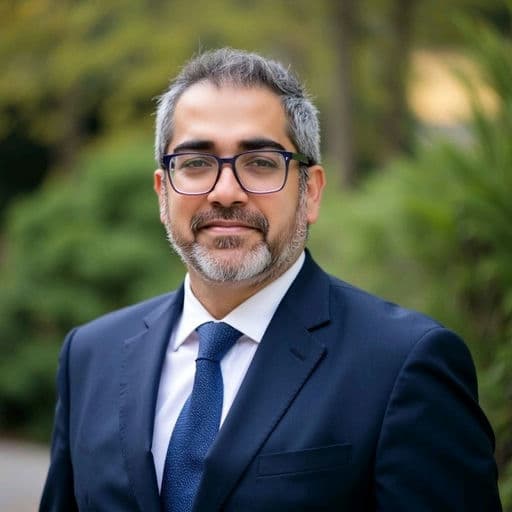
Sample Podcast Questions for Sahil Nijhawan
- 1
When you first moved into the travel industry, what did you start to notice about how many different people and relationships sit behind a single trip being sold?
- 2
For people who only see the destination at the end of the journey, what are the hidden pieces of the travel ecosystem that can make Australia, New Zealand, or the wider Oceania region easier or harder to sell?
- 3
When COVID took your travel business from tens of millions in sales to zero, what was the moment where you realized you had to stop trying to protect the old version of the business and start thinking differently?
- 4
During those two years working in real estate and doing supermarket shifts, what did you learn about customers, local trust, or business that you might never have learned if travel had kept going smoothly?
- 5
When you eventually returned to travel and began rebuilding, what mistakes or assumptions from the first version of the business were you determined not to repeat?
- 6
With Nexus now operating globally, what does it take to build a business that can scale across countries without losing touch with what works locally?
- 7
A lot of businesses are chasing attention through ads, automation, and digital channels. What have local clubs, sporting groups, and member communities shown you about where real commercial trust is still built?
- 8
When you bring AI into a team, how do you decide whether it is genuinely helping good people do more, rather than just adding another tool for the sake of it?
- 9
You’ve seen consultants dramatically increase their sales capacity with the right AI support. What actually changed in their day-to-day work that made that kind of jump possible?
- 10
When a founder comes to you looking for investment, what tells you they value guidance and judgement as much as they value the money?
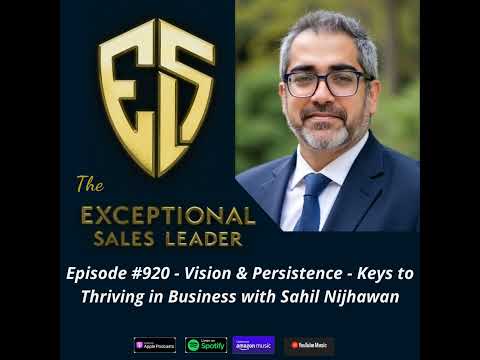
Latest episodes
Key topics
You cannot build a portfolio if every business needs all of you
Most founder conversations assume you have to bet everything on one company. Sahil's approach is different. He focuses day-to-day on Nexus Oceania with a target to scale it to $1 billion in regional sales, while his other ventures - HostOS, AUM Tea, TravelTwin - are monitored and delegated, run by co-founders with fortnightly calls and clear ownership. The unlock is that he has actively trained himself on AI systems including OpenClaw, Claude, Sintra, and others, using them as a personal leverage layer to extend his oversight without extending his hours. He believes learning never stops - and that if you don't evolve, you will be replaced. For ambitious founder and business audiences, this is a practical conversation about how to compound across ventures without dropping the ball on the main one.
Building AI-native businesses, not bolting AI onto old ones
There's a real difference between adding AI to an existing workflow and designing a business where AI is the workflow. Through TravelTwin and HostOS, Sahil is building AI-native platforms from scratch. Across his wider portfolio, he is a strong believer that AI's biggest value is enhancing what good people already do - a sales consultant doing $2 million today can realistically do $4 million with the right AI support, without changing who they are or how they sell. He has also personally trained on AI systems like OpenClaw, Claude, and Sintra to run a portfolio of businesses with a small core team. He can speak to all three angles: AI as a multiplier for individual performance, AI as the foundation of a new venture, and AI as a personal leverage tool for operators running more than one company.
Scaling global businesses without losing local credibility
Sahil can speak to what it actually takes to scale a global business inside a regional market - building Nexus Oceania from launch to over $30 million in sales in year one with a target to reach $1 billion, while staying close enough to the ground to keep agent, supplier, and community relationships warm. Nexus itself is on track to become one of the top few names in the global travel industry, and the same principle applies across his other ventures: global ambition, local credibility. For business audiences operating across borders, this is a conversation about why the companies that scale fastest are usually the ones that resist the temptation to centralise everything.
View all topics →
Latest episodes
Key topics
You cannot build a portfolio if every business needs all of you
Most founder conversations assume you have to bet everything on one company. Sahil's approach is different. He focuses day-to-day on Nexus Oceania with a target to scale it to $1 billion in regional sales, while his other ventures - HostOS, AUM Tea, TravelTwin - are monitored and delegated, run by co-founders with fortnightly calls and clear ownership. The unlock is that he has actively trained himself on AI systems including OpenClaw, Claude, Sintra, and others, using them as a personal leverage layer to extend his oversight without extending his hours. He believes learning never stops - and that if you don't evolve, you will be replaced. For ambitious founder and business audiences, this is a practical conversation about how to compound across ventures without dropping the ball on the main one.
Building AI-native businesses, not bolting AI onto old ones
There's a real difference between adding AI to an existing workflow and designing a business where AI is the workflow. Through TravelTwin and HostOS, Sahil is building AI-native platforms from scratch. Across his wider portfolio, he is a strong believer that AI's biggest value is enhancing what good people already do - a sales consultant doing $2 million today can realistically do $4 million with the right AI support, without changing who they are or how they sell. He has also personally trained on AI systems like OpenClaw, Claude, and Sintra to run a portfolio of businesses with a small core team. He can speak to all three angles: AI as a multiplier for individual performance, AI as the foundation of a new venture, and AI as a personal leverage tool for operators running more than one company.
Scaling global businesses without losing local credibility
Sahil can speak to what it actually takes to scale a global business inside a regional market - building Nexus Oceania from launch to over $30 million in sales in year one with a target to reach $1 billion, while staying close enough to the ground to keep agent, supplier, and community relationships warm. Nexus itself is on track to become one of the top few names in the global travel industry, and the same principle applies across his other ventures: global ambition, local credibility. For business audiences operating across borders, this is a conversation about why the companies that scale fastest are usually the ones that resist the temptation to centralise everything.
View all topics →