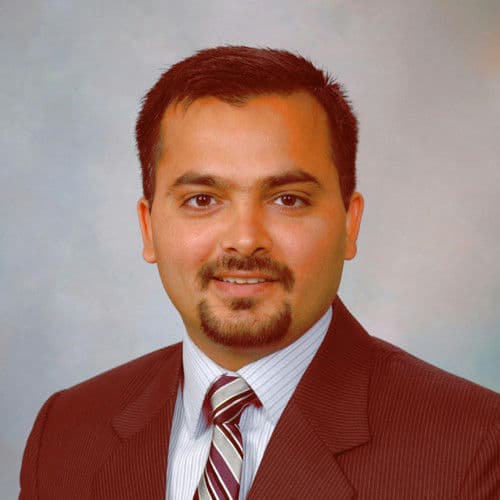
Sample Podcast Questions for Dr. Sanjeev Kumar
- 1
You’ve built a career in one of the most demanding corners of medicine. What pulled you toward cancer surgery in the first place, and when did it start to feel like this was the work you were meant to do?
- 2
You trained across India, the UK, and the US. Looking back, what did that journey teach you about ambition, adaptation, and what it really takes to keep moving forward in unfamiliar systems?
- 3
A lot of people hear “robotic surgery” and imagine a neat, futuristic process. What does the reality look like when you’re operating on cancer, where the disease doesn’t follow a script?
- 4
When people talk about AI replacing surgeons, what do they usually misunderstand about what actually happens in the operating room?
- 5
You were early to robotic surgery, well before most people were talking about it in mainstream conversations. What did you see in that field that made you want to commit to it so early?
- 6
There’s a lot of public fascination with living longer, but much less honesty about the diseases that make those extra years harder. What do you wish more people understood about the gap between longevity culture and the realities of cancer and obesity?
- 7
In your work, you’re dealing with women’s cancers at the highest level of complexity. What are some of the conversations around women’s health that still feel far too shallow or overlooked?
- 8
Telesurgery and AI are opening up possibilities that would have sounded impossible not long ago. What feels genuinely promising to you right now, and what still belongs more to imagination than reality?
- 9
You’ve talked about wanting to reach a broader public audience because a lot of the people shaping these conversations aren’t the ones doing the work every day. What changes when the person explaining the future of medicine is someone who has actually held the scalpel?
- 10
After everything you’ve seen so far, what still gives you a sense of curiosity about where medicine is going next?
Latest video
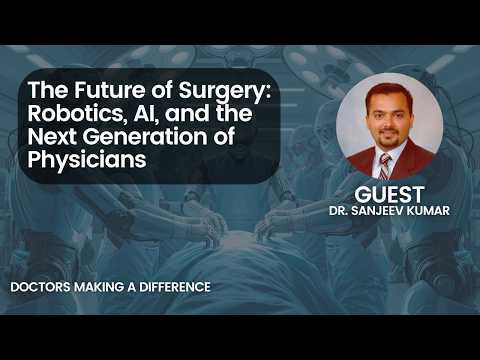
The Future of Surgery: Robotics, AI, and the Next Generation of Physicians With Dr. Sanjeev Kumar
Latest episodes


Key topics
How do you become a leader in a field that keeps changing under your feet
Sanjeev discusses what it takes to build real authority in a field like robotic cancer surgery, where the technology evolves, the science moves, and the standard for expertise keeps rising. His story across India, the UK, and the US shows the making of a surgeon who chose one of the most demanding paths in medicine and then established himself at the front of a growing specialty. This opens up a conversation about ambition, mastery, and leadership in modern medicine that feels substantial, current, and earned.
What a leader in robotic surgery knows about the future of AI in medicine
Sanjeev discusses what AI is genuinely beginning to change in surgery, where the technology is being misunderstood, and why the hardest decisions in medicine still resist simple automation. As a leading robotic pelvic surgeon working in cancer care, he can explain why AI attracts so much hype, what robotic medicine already makes possible, and where human judgment remains the difference between pattern recognition and real surgical expertise. This creates a high-level conversation about the future of medicine that feels informed, current, and far more credible than the usual AI predictions.
The longevity conversation gets a lot weaker when it ignores obesity and cancer
Sanjeev discusses why so much of the public conversation about living longer stays focused on optimization while overlooking the diseases that actually shorten life and reduce quality of life. He can connect obesity, cancer risk, women’s cancers, and prevention into a more serious conversation about what helps people not just add years, but avoid the conditions that make those years harder. This gives the audience a more grounded take on longevity by bringing prevention, disease burden, and real clinical consequence into a space that is often dominated by trend-driven wellness talk.
View all topics →
Latest video
The Future of Surgery: Robotics, AI, and the Next Generation of Physicians With Dr. Sanjeev Kumar
Latest episodes
Key topics
How do you become a leader in a field that keeps changing under your feet
Sanjeev discusses what it takes to build real authority in a field like robotic cancer surgery, where the technology evolves, the science moves, and the standard for expertise keeps rising. His story across India, the UK, and the US shows the making of a surgeon who chose one of the most demanding paths in medicine and then established himself at the front of a growing specialty. This opens up a conversation about ambition, mastery, and leadership in modern medicine that feels substantial, current, and earned.
What a leader in robotic surgery knows about the future of AI in medicine
Sanjeev discusses what AI is genuinely beginning to change in surgery, where the technology is being misunderstood, and why the hardest decisions in medicine still resist simple automation. As a leading robotic pelvic surgeon working in cancer care, he can explain why AI attracts so much hype, what robotic medicine already makes possible, and where human judgment remains the difference between pattern recognition and real surgical expertise. This creates a high-level conversation about the future of medicine that feels informed, current, and far more credible than the usual AI predictions.
The longevity conversation gets a lot weaker when it ignores obesity and cancer
Sanjeev discusses why so much of the public conversation about living longer stays focused on optimization while overlooking the diseases that actually shorten life and reduce quality of life. He can connect obesity, cancer risk, women’s cancers, and prevention into a more serious conversation about what helps people not just add years, but avoid the conditions that make those years harder. This gives the audience a more grounded take on longevity by bringing prevention, disease burden, and real clinical consequence into a space that is often dominated by trend-driven wellness talk.
View all topics →