
Dr James Goolnik
Holistic dentist and #1 Amazon-bestselling author redefining oral health as whole-body health
Sample Podcast Questions for Dr James Goolnik
- 1
After years in traditional dentistry, what recurring patient problem made you realise dentistry needed to look beyond drilling, filling and repairing teeth?
- 2
Most people interested in longevity track their sleep, glucose, supplements and exercise, so why do you think the mouth is still being left out of the health optimisation conversation?
- 3
You’ve said that the best dentistry is no dentistry. What does that actually mean for someone who wants to prevent problems rather than keep repairing them?
- 4
When someone gets a cavity, what are the root-cause questions they should be asking before simply accepting that it needs to be drilled and filled?
- 5
What can saliva, pH, gum health and oral bacteria tell us about what may be happening elsewhere in the body?
- 6
A lot of people see bleeding gums as normal or harmless. What could blood in the sink actually be telling them?
- 7
How can gum inflammation connect to bigger health conversations around diabetes, cognitive decline, autoimmune issues or chronic inflammation?
- 8
What are some early signs in the mouth that might suggest someone is under more stress, sleeping badly, grinding their teeth or heading toward a wider health issue?
- 9
Why do you think health-conscious people often talk about the gut microbiome but rarely think about the oral microbiome?
- 10
You’ve written about sugar and taste buds. How quickly can someone start changing their relationship with sugar, and what happens when their taste buds begin to “reboot”?
- 11
For someone listening who already has a dentist, what questions should they be asking to make sure their oral health is being looked at as part of their whole-body health?
Latest video
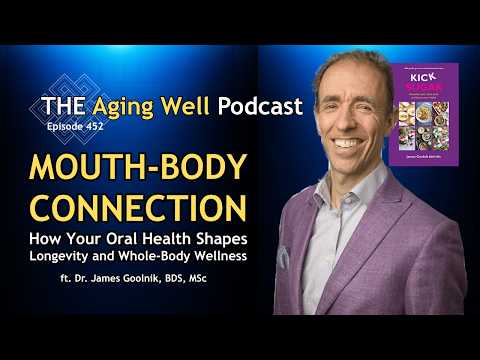
The Mouth-Body Connection: How Your Oral Health Shapes Longevity and Whole-Body Wellness | Ep. 452

Key topics
Translating sleep-tracker data into actionable dental plans
Many patients bring sleep-tracker reports but do not know what to do with the data. James explains how dental teams can interpret common patterns - fragmented sleep, regular desaturation spikes or mouth-breathing signatures - and suggest appropriate next steps, from airway assessment to medical referrals. This segment equips listeners with a pragmatic way to turn wearable data into referrals, appliance decisions and targeted conversations that improve both sleep and oral outcomes.
Designing a values-led private practice that filters ideal clients
A clinic’s values determine the patients it attracts. James walks through the strategic choices - messaging, pricing, team roles and clinical protocols - that build a practice aligned with prevention, nutrition-integrated care and senior clinician focus. He offers concrete examples of how values-based branding and intake design reduce low-fit enquiries and scale a clinic without diluting care standards. This topic is ideal for hosts focused on practice growth and ethics.
Your dentist may spot the health change before your doctor does
Many people only visit the dentist when something hurts, but James has spent decades seeing how small changes in the mouth can reveal bigger changes in someone’s life and health. A patient who suddenly develops decay, starts grinding, breaks teeth, struggles with gum inflammation or wakes exhausted may be showing signs of stress, sleep disruption, blood sugar change, poor nutrition or airway issues before they connect those dots themselves. James can walk listeners through how a more integrated dental appointment looks at patterns, not just teeth, and why mouth health belongs in the same conversation as sleep, hormones, nutrition, brain health and inflammation. For holistic health, functional medicine and patient education podcasts, this positions dentistry as an early-warning system rather than a repair service.
View all topics →
Latest video
The Mouth-Body Connection: How Your Oral Health Shapes Longevity and Whole-Body Wellness | Ep. 452
Key topics
Translating sleep-tracker data into actionable dental plans
Many patients bring sleep-tracker reports but do not know what to do with the data. James explains how dental teams can interpret common patterns - fragmented sleep, regular desaturation spikes or mouth-breathing signatures - and suggest appropriate next steps, from airway assessment to medical referrals. This segment equips listeners with a pragmatic way to turn wearable data into referrals, appliance decisions and targeted conversations that improve both sleep and oral outcomes.
Designing a values-led private practice that filters ideal clients
A clinic’s values determine the patients it attracts. James walks through the strategic choices - messaging, pricing, team roles and clinical protocols - that build a practice aligned with prevention, nutrition-integrated care and senior clinician focus. He offers concrete examples of how values-based branding and intake design reduce low-fit enquiries and scale a clinic without diluting care standards. This topic is ideal for hosts focused on practice growth and ethics.
Your dentist may spot the health change before your doctor does
Many people only visit the dentist when something hurts, but James has spent decades seeing how small changes in the mouth can reveal bigger changes in someone’s life and health. A patient who suddenly develops decay, starts grinding, breaks teeth, struggles with gum inflammation or wakes exhausted may be showing signs of stress, sleep disruption, blood sugar change, poor nutrition or airway issues before they connect those dots themselves. James can walk listeners through how a more integrated dental appointment looks at patterns, not just teeth, and why mouth health belongs in the same conversation as sleep, hormones, nutrition, brain health and inflammation. For holistic health, functional medicine and patient education podcasts, this positions dentistry as an early-warning system rather than a repair service.
View all topics →