
David Frost
Master Fitness Trainer, Change Leader, Elite Rower and Author at Well Past Forty LLC
Sample Podcast Questions for David Frost
- 1
Was there a moment when health stopped being something you taught and became something you had to confront personally?
- 2
What went through your mind when you were told your arteries looked decades older than you were?
- 3
You’ve spent a lot of time helping people one-on-one. What made you start thinking about how to reach people at a much bigger scale?
- 4
A lot of people know what they should do for their health and still don’t do it. Where do you think that gap really comes from?
- 5
The wellness world can be full of miracle language and quick fixes. What have you learned about why simple advice is often the hardest advice for people to accept?
- 6
For someone listening who feels overwhelmed, broke, busy, or already behind on their health, where would you want them to begin in real life?
- 7
You work with people facing serious physical challenges, including spinal injuries and amputations. How has being around that kind of resilience changed the way you think about fitness and what the body is really capable of?
- 8
Men, especially later in life, can be very good at pretending everything is fine. What have you noticed about the stories men tell themselves before they finally decide to take their health seriously?
- 9
You talk a lot about living well, not just living longer. How did your idea of a good long life change as you got older?
- 10
When somebody reaches their seventies and realizes they still have time to change the trajectory of their health, what becomes possible that maybe didn’t seem possible before?
Latest video
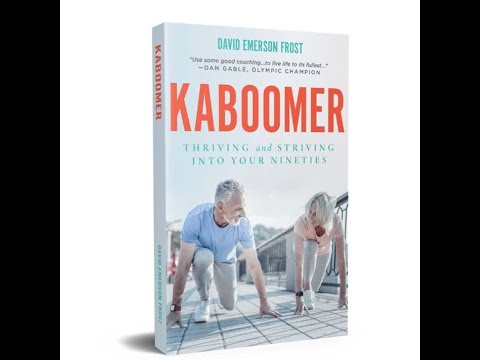
Kaboomer: Interview
Latest episodes
Key topics
Men don't have a motivation problem, they have a denial problem
A lot of men do not ignore their health because they are lazy. They ignore it because they still think decline is something that happens to other people, until the body finally forces the conversation. David can speak to that without theory or scolding, because he was active, accomplished, and still got hit with a serious coronary wake-up call in his seventies. This makes the episode useful for men who need a more honest conversation about pride, avoidance, and what it looks like to adapt before a crisis makes the choice for them.
Better health advice starts when we stop assuming people need a gym membership and a perfect routine
A lot of people tune out health advice because it assumes they have spare money, spare time, and a life built for optimization. David brings the conversation back to what is actually possible for ordinary people, showing how small, accessible habits can begin with something as simple as walking shoes, a towel, and a water bottle. His perspective makes this especially valuable for audiences who feel excluded by expensive wellness culture, because he is not selling an ideal lifestyle - he is showing how people can start where they are and still protect their health in meaningful ways.
Longevity means nothing if those added years become smaller and harder to live in
Most longevity conversations fixate on adding years, but far fewer ask what those years will actually feel like. David brings a more grounded perspective shaped by his own health wake-up call, arguing that living longer only matters if you still have the strength, energy, independence, and physical freedom to enjoy your life. This opens up a richer conversation about health span over lifespan and why the real goal is not simply to extend life, but to protect the parts of it people are most afraid to lose.
View all topics →
Latest video
Kaboomer: Interview
Latest episodes
Key topics
Men don't have a motivation problem, they have a denial problem
A lot of men do not ignore their health because they are lazy. They ignore it because they still think decline is something that happens to other people, until the body finally forces the conversation. David can speak to that without theory or scolding, because he was active, accomplished, and still got hit with a serious coronary wake-up call in his seventies. This makes the episode useful for men who need a more honest conversation about pride, avoidance, and what it looks like to adapt before a crisis makes the choice for them.
Better health advice starts when we stop assuming people need a gym membership and a perfect routine
A lot of people tune out health advice because it assumes they have spare money, spare time, and a life built for optimization. David brings the conversation back to what is actually possible for ordinary people, showing how small, accessible habits can begin with something as simple as walking shoes, a towel, and a water bottle. His perspective makes this especially valuable for audiences who feel excluded by expensive wellness culture, because he is not selling an ideal lifestyle - he is showing how people can start where they are and still protect their health in meaningful ways.
Longevity means nothing if those added years become smaller and harder to live in
Most longevity conversations fixate on adding years, but far fewer ask what those years will actually feel like. David brings a more grounded perspective shaped by his own health wake-up call, arguing that living longer only matters if you still have the strength, energy, independence, and physical freedom to enjoy your life. This opens up a richer conversation about health span over lifespan and why the real goal is not simply to extend life, but to protect the parts of it people are most afraid to lose.
View all topics →