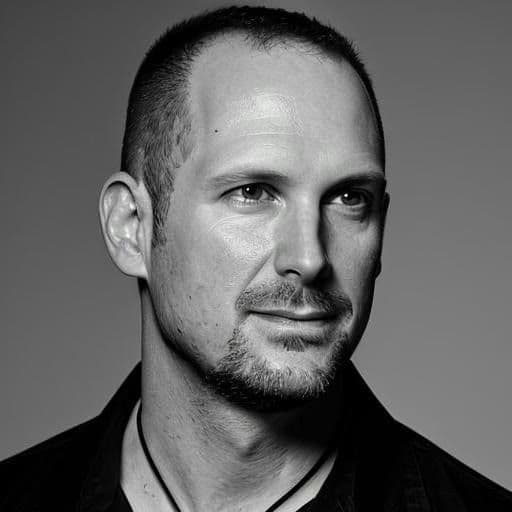
Csaba Toth
Expert in the Human Side of Digital Transformation, Founder of ICQ Global & Creator of ICF-Accredited Leadership Frameworks
Sample Podcast Questions for Csaba Toth
- 1
What happened in your first business that made you realise good intentions and strong qualifications were not enough to lead people well?
- 2
When you began working across different cultures and organisations, which misunderstandings surprised you most?
- 3
Can you take us inside a team that looked highly capable on paper but was quietly struggling to work together?
- 4
How can a leader tell whether disagreement is improving a team’s thinking or slowly damaging trust?
- 5
What tends to go wrong when organisations invest in leadership training before understanding what actually needs to change?
- 6
Can you share a moment when measuring something like psychological safety or motivation revealed a problem that leaders had completely misdiagnosed?
- 7
Why do tensions between people from similar backgrounds sometimes become just as damaging as traditional cross-cultural differences?
- 8
During a digital transformation, what are the earliest signs that employees are moving from genuine engagement into quiet compliance?
- 9
How is AI forcing senior leaders to reconsider who they are, rather than simply learn a new set of tools?
- 10
As leaders become able to automate more of their work, how should they decide what they must continue to own personally?
Latest video

HR Fest Budapesten Csaba Toth
Key topics
The biggest cultural divides in your team may have nothing to do with nationality, and performance starts with measuring them
Cross-cultural leadership is often treated as an international issue, yet some of the most damaging misunderstandings happen between people from the same country, sometimes sitting in the same office. Csaba’s data-driven work examines how personality, profession, generation, values, social background and other overlapping influences shape the way people interpret behaviour, communicate and make decisions. By measuring cognitive diversity alongside psychological safety and motivational drive, he shows when difference is producing better thinking and when it is creating silos, friction and costly delays. Leaders who make these dynamics visible can address the real source of tension instead of misdiagnosing it as poor attitude, weak capability or resistance to change.
Leadership development is wasted investment unless it produces measurable behaviour change
HR and L&D teams are under growing pressure to justify programmes that generate positive feedback but leave no evidence that leadership or team performance has improved. The problem begins when organisations invest in coaching without diagnosis, training without data, and culture initiatives without a clear understanding of what needs to change. Csaba makes personality, bias, motivation, psychological safety, and team dynamics visible, creating a baseline from which progress can be measured rather than assumed. His programmes have produced a 30 percent increase in psychological safety, a 25 percent increase in motivation, and engagement results four times higher than comparable teams.
The leadership identity that built your career may make you obsolete unless you redesign it
Many senior leaders are responding to AI by learning new tools while privately questioning what their role is becoming. Csaba argues that this is not primarily an AI problem but an identity problem, because AI will amplify whatever clarity, confusion, or outdated judgement already exists. He helps leaders examine the identity their past created, define the non-negotiables and decision rules they need now, and identify the work only they should continue to own. Redesigning that identity allows leaders to use AI to strengthen what makes them distinctive rather than becoming interchangeable with everyone else using the same technology.
View all topics →
Latest video
HR Fest Budapesten Csaba Toth
Key topics
The biggest cultural divides in your team may have nothing to do with nationality, and performance starts with measuring them
Cross-cultural leadership is often treated as an international issue, yet some of the most damaging misunderstandings happen between people from the same country, sometimes sitting in the same office. Csaba’s data-driven work examines how personality, profession, generation, values, social background and other overlapping influences shape the way people interpret behaviour, communicate and make decisions. By measuring cognitive diversity alongside psychological safety and motivational drive, he shows when difference is producing better thinking and when it is creating silos, friction and costly delays. Leaders who make these dynamics visible can address the real source of tension instead of misdiagnosing it as poor attitude, weak capability or resistance to change.
Leadership development is wasted investment unless it produces measurable behaviour change
HR and L&D teams are under growing pressure to justify programmes that generate positive feedback but leave no evidence that leadership or team performance has improved. The problem begins when organisations invest in coaching without diagnosis, training without data, and culture initiatives without a clear understanding of what needs to change. Csaba makes personality, bias, motivation, psychological safety, and team dynamics visible, creating a baseline from which progress can be measured rather than assumed. His programmes have produced a 30 percent increase in psychological safety, a 25 percent increase in motivation, and engagement results four times higher than comparable teams.
The leadership identity that built your career may make you obsolete unless you redesign it
Many senior leaders are responding to AI by learning new tools while privately questioning what their role is becoming. Csaba argues that this is not primarily an AI problem but an identity problem, because AI will amplify whatever clarity, confusion, or outdated judgement already exists. He helps leaders examine the identity their past created, define the non-negotiables and decision rules they need now, and identify the work only they should continue to own. Redesigning that identity allows leaders to use AI to strengthen what makes them distinctive rather than becoming interchangeable with everyone else using the same technology.
View all topics →