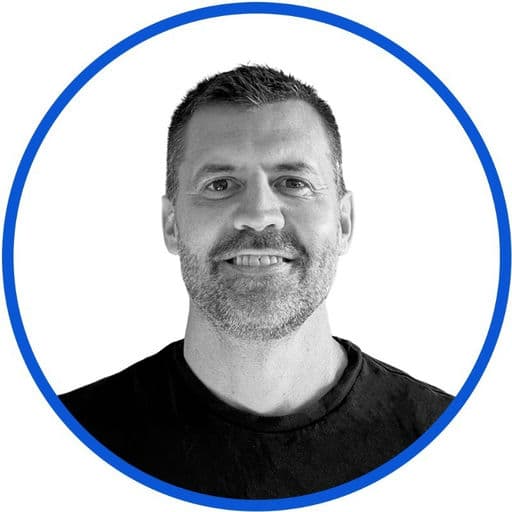
Andrew Sparks
Founder of exyt™ Helping Owners Remove Themselves as the Operational Bottleneck
Sample Podcast Questions for Andrew Sparks
- 1
When your own company grew quickly and then hit the ceiling, what were the first signs that the way it was running wasn’t going to keep working?
- 2
You’ve said it wasn’t one dramatic breaking moment but a build-up over time. What does that slow pressure look like for founders who are inside it?
- 3
As a business grows, how do founders unknowingly train their team to bring everything back to them?
- 4
You talk a lot about founders becoming bottlenecks without realising it. Why is that so hard to see when you’re the one inside the business?
- 5
In your experience, what usually breaks first when a business outgrows the way it’s being run — the people, the systems, or the founder?
- 6
You’ve worked in high-pressure environments outside of business. What did those experiences teach you about decision-making that most founders don’t learn early enough?
- 7
Many owners believe working harder is the only way through a growth plateau. Why does effort often stop being the solution at a certain stage?
- 8
When founders try to “step back” and it fails, what’s usually missing beneath the surface?
- 9
You’ve said a lot of business owners were never taught how to actually run a company — only how to be good at the work. Where does that gap show up most clearly?
- 10
Looking back, what do you think you misunderstood about growth when your own company first started scaling?
Latest episodes
Key topics
Technical excellence can build the business, but it cannot get the owner out of the middle
Builders, tradies, architects, designers, and construction-adjacent founders often start businesses because they are exceptional at the work, but that same excellence can quietly trap them in every quote, approval, client issue, and delivery decision. Andrew can speak to this audience without sounding theoretical because he came from the tools himself, then built his way into business, psychology, and operational restructuring. His message is not that standards need to drop; it is that quality has to be transferred into systems, leadership, and decision-making that do not rely on the founder being everywhere. For trades, construction, built environment, and service-business podcasts, this is a much stronger fit than generic leadership because it names the exact transition their listeners are living through.
Andrew turns founder extraction into a practical operating system, not another round of business coaching
Too many owners are stuck in monthly coaching conversations while the actual structure of the business stays untouched. Andrew’s view is sharper: if the business still depends on the founder for momentum, the work is not to keep talking about the problem, it is to remove the bottleneck through leadership structure, decision rights, accountability rhythms, and ownership below the founder. His background in performance psychology means he understands the human pull to stay central, but his work now focuses on the operational changes that let the owner actually get out. For no-BS entrepreneurship, SME, and founder-led business podcasts, this gives hosts a strong, slightly provocative episode about why advice is not enough when the business itself is badly designed.
Andrew helps founders escape the second-stage squeeze because he had to restructure the ceiling he built himself
Most founder-led businesses do not stall because the owner has lost ambition; they stall because the habits that created early growth become the ceiling on the next stage. Andrew speaks directly to owners who have a team, revenue, clients, and momentum, but still find every decision, approval, and problem coming back to them. Having grown exyt™ rapidly and then hit the same operational ceiling he now helps clients break through, he can unpack why the second-stage squeeze is not a motivation problem, it is a business design problem. For founder, SME, operator, and practical business growth podcasts, this creates a highly relevant conversation about what has to change when hard work stops being enough.
View all topics →
Latest episodes
Key topics
Technical excellence can build the business, but it cannot get the owner out of the middle
Builders, tradies, architects, designers, and construction-adjacent founders often start businesses because they are exceptional at the work, but that same excellence can quietly trap them in every quote, approval, client issue, and delivery decision. Andrew can speak to this audience without sounding theoretical because he came from the tools himself, then built his way into business, psychology, and operational restructuring. His message is not that standards need to drop; it is that quality has to be transferred into systems, leadership, and decision-making that do not rely on the founder being everywhere. For trades, construction, built environment, and service-business podcasts, this is a much stronger fit than generic leadership because it names the exact transition their listeners are living through.
Andrew turns founder extraction into a practical operating system, not another round of business coaching
Too many owners are stuck in monthly coaching conversations while the actual structure of the business stays untouched. Andrew’s view is sharper: if the business still depends on the founder for momentum, the work is not to keep talking about the problem, it is to remove the bottleneck through leadership structure, decision rights, accountability rhythms, and ownership below the founder. His background in performance psychology means he understands the human pull to stay central, but his work now focuses on the operational changes that let the owner actually get out. For no-BS entrepreneurship, SME, and founder-led business podcasts, this gives hosts a strong, slightly provocative episode about why advice is not enough when the business itself is badly designed.
Andrew helps founders escape the second-stage squeeze because he had to restructure the ceiling he built himself
Most founder-led businesses do not stall because the owner has lost ambition; they stall because the habits that created early growth become the ceiling on the next stage. Andrew speaks directly to owners who have a team, revenue, clients, and momentum, but still find every decision, approval, and problem coming back to them. Having grown exyt™ rapidly and then hit the same operational ceiling he now helps clients break through, he can unpack why the second-stage squeeze is not a motivation problem, it is a business design problem. For founder, SME, operator, and practical business growth podcasts, this creates a highly relevant conversation about what has to change when hard work stops being enough.
View all topics →