
September 5, 2026
Nicola Anderson: Stop Being Trapped in Your Own Business

Listen
Sound bites
What is the life you're trying to build here so that we can figure out what business you need to build that life.
In this episode
Nicola Anderson talks about why scaling SMEs can trap founders in day to day operations, and how structure, delegation, and visibility create real freedom.
- Founders often want more sales or growth because they are overwhelmed and stuck in the operational hole they created.
- A business grows around the founder, so stepping back requires a structure that can carry day to day responsibility without them.
- Clear ownership, reporting lines, and a senior leadership layer help founders trust the team and leave the business for periods of time.
- Visibility comes from data, systems, CRMs, and automations so the owner can see what is happening when they are away.
Transcript
ShowHide
Automatic captions of the conversation. They can contain errors and do not name who is speaking.
Nicola Anderson: I would generally start. So it's generally what happens is somebody will say to me that I I can't I need to get the day today. I'm just like I'm completely overwhelmed. I'm doing too much. I really want to grow my business, maybe. I want to grow my sales. I you know, and I'm just dealing with maybe I'm dealing with people challenges all day long. I'm stuck in the day today. I need to get out of this operational kind of hole that I found myself in. Because generally what happens is a business grows up around the founder because they started off.
So we'll start. That's that'll be generally be the kind of conversations I end up having. And that's so I'll start off by asking them, you know, what is it you want your your business to look like? Because what is the what is the life you're trying to build here so that we can figure out what business you need to build that life. So, you know, let me give you a, for instance, um worked with somebody recently, uh kind of in their early 60s, kind of doesn't want to retire, not interested in the R-word. I find a lot of that in um SMEs in the entrepreneur world.
Nobody wants to retire, but they would like more of a balance in their life, right? Davis Nguyen: Welcome to Success Leaves Clues, the podcast where we interview business owners on how they built their businesses and the hard lessons they learned along the way. My name is David Swain, and I'm a business coach and the founder of Purple Circle, where we help business owners achieve their first six-figure, seven-figure, and eight-figure year, all without sacrificing their quality of life. Before becoming a business coach and before founding Purple Circle, I started and scale with several seven and eight-figure coaching businesses and have been a consultant at several businesses doing over $100 million each, including some that are publicly listed and doing over a billion dollars each.
In every episode of the podcast, you're gonna learn lessons that took our guests years to learn, and you'll be able to learn that in minutes. No matter if you're a new business owner or an established business owner, every episode is gonna give you the clues in order to elevate your business. Pedro: Welcome to Success Leaves Clues Podcast. I'm Pedro, and today I'm joined by Nicola Anderson, who's the founder of Capacity to Grow, a UK consultancy helping SME founders scaling past five million pounds in revenue break free of day-to-day operational dependency.
Drawing on 37 years of business experience, she works as a strategic advisor and fractional COO using her Dash Framework, Delegate, Automate, Stop, Hire, to build stronger leadership teams. Welcome to the show, Nicola. Hi, thank you very much for having me. It's great to be here, Pedro. Great to have you. Okay, and uh before we get into what you do now, okay. I would love for us to backtrack a little, you know, rewind a bit, because you could be doing so many different things with your life, but here you are, right?
I am. So what led you here exactly, like being a business owner, consultant slash coach, whatever you want to call it, thought lead partner, you know? The lay the label doesn't matter, but what led you to this journey and why? Nicola Anderson: Yeah, sure. Gosh, why? Okay, let's try not to take too long on this 37-year journey. Um, I guess if we take the last sort of 25 years, um prior to that, I kind of worked in many industries, education, media, MCG, and then for the for the last 25 years I worked in construction, clearly modular construction, like off-site construction basically.
And I ran commercial and operational teams and um project delivery teams um of up to about 150 people um across kind of across the UK. So kept me busy. I learnt a lot. Um I learned that I I I get things done and that I really enjoy getting the best out of people. Those were the kind of the two key things for me. And that's kind of the that's a theme through my career, really. Um I think that you know, for me personally, there's nothing more rewarding than see me seeing a team perform well and to see people kind of reach their potential, particularly when they don't see the potential in themselves, perhaps, or they maybe have a limiting belief on what they can achieve.
So having teams that perform well, leaders that kind of lead well, and businesses that kind of perform and grow, that's kind of that's my bag, really. And so about five years ago, I kind of like, like a lot of people did, I think, kind of after COVID, kind of got after COVID, I kind of like, you know, 50 was kind of like fast approaching. Kind of had one of those, I had a moment where I was like, what's my life all about? What am I doing? I'll be honest to say I wasn't a particularly, I wasn't particularly keen on my uh my uh line manager at that point who was the MD.
And it just sort of made me kind of pause and think about what do I want from the kind of like the next, well, the next 50 years of my life, hopefully, right? Maybe even more, who knows? Um I just thought, you know what, I'd really love to be my own boss. I'd love to kind of run my own business. I'd like to work with more businesses than just one, you know. I'd like to kind of, you know, take the skills I've got, take the knowledge I've gained, and kind of, you know, use it to help other businesses. Um I'd kind of worked with some really large businesses up to that point.
And I just thought that um actually I'd really like to work with smaller businesses. I'd like to take the knowledge and skill set I've got into smaller businesses and help them think bigger and help them kind of, you know, to run more efficiently, to make the best of their teams, best of their peoples, and ultimately achieve their goals. I think values is really important to me. I think the reason that we come to work and the reason that we run our own businesses, you know, whatever those reasons are that we're doing that, that's really important.
Otherwise, what are we doing it for? I'm not particularly, I'm not the right person for you. If you just want to grow a business to hit a big number, I'm more interested in what that big number helps you do, and that big number helps you achieve in life. What's it for? You know, is it if it's just a big number so you can have a really nice car and a really nice house is and really nice, you know, watches or whatever, that's great, brilliant, but I'm pleased for you. That's lovely, but I'm not the alright person. I'm I'm the person that's gonna come in if you're running a business and you're thinking, like, I'm just like stuck in the day today.
I can't get out of it. I thought there'd be more to life than this. I want to travel more, I want to spend more time with my family, I want to pursue other ventures, I want to maybe create a legacy with my business, then I'm the person to come and help you do that. And so that's what I do now. So I work with founders of um SMEs that are generally turn around 5 million plus because kind of what gets you to five million does not get you to 10, because you can do a lot of it yourself up to the five million point with a few people around you.
But once you sort of start to think bigger than that, you've kind of got to get out of the day-to-day. You've got to be able to think strategically, you've got to be able to lead, you've got to be able to think forward. And so that's kind of where I come in and help now, really. I come in and I kind of work with founders to understand what's keeping them in the day-to-day and what do we do about it? How do we get them out of that box? I've got frameworks, frameworks and tools and experience that kind of can help them do that, really.
So, yeah, that's kind of that's where I'm at and why I'm there. So, yeah. Pedro: Interesting. But I'm gonna backtrack a little. I'm curious about one thing, you know. So you mentioned the line management line manager, yeah, on the construction uh business that you worked for 25 years. Sure. That was not great, and you're wondering what's next for me, right? So but what made you come up with the decision behind being an entrepreneur or even trying a different job in the same industry, right? You could be choosing or chasing something different, but why be an entrepreneur, right?
I'm not sure. Sometimes it's and I'm thinking a lot right now, some some consultants, some coaches out there, sometimes they they start getting people to ask them stuff and they like start to realize, okay, people are reaching out to me. But what made you, you know, start the business? That's the main thing. Nicola Anderson: Okay, so I kind of I had sort of sat down and I thought, okay, so if I was going to run my own business, what would it be? Because I wasn't clear on that. So I kind of sat down and thought, okay, so what's my skill set?
You know, if because it's you know, the industry I worked in was very niche. I couldn't go and do that on my own. You know, I couldn't, I couldn't, you know, win, deliver a modular building on my own. I can't manufacture that. That's not feasible, right? So, what are the skill sets that I have? What are the what's the skills I've got that I could package that could be useful to others? And that's kind of what I sat down with. And I literally went old school with a notepad and a Sharpie, big spider diagram, kind of like wrote down all the sort of things I'm good at, all the sort of things that I enjoy doing, because that's really key as well.
You want to do something you enjoy, don't you? And I kind of like, and I ended up with a really kind of vague, well, it's kind of business support at that point because I just thought, well, that's marketable, right? So, you know, everybody needs a bit of business support. And because my joke, my my business has evolved really over the five years, and I just thought, okay, so I kind of like put it out on LinkedIn, I kind of had it in my notice, put it out on LinkedIn, started out offering kind of business support to the construction industry.
Um, and people that initially that I knew reached out to me and said, Oh, I could really do with your skills, I could, you know, can you help me? Can you help me? And then over time, people started to see my posts on LinkedIn and sort of think, okay, I wonder if you can help me. And kind of like probably within 18 months, 12 to 18 months, I started to venture out of construction and started to, and that actually, you know, whilst I still have some really great clients in the construction industry, it was it was a bit of a, you know, well, this is nice, this is different, this is interesting.
There's so much I've got skill-wise and experience-wise that I can bring into any sector. But for me, it was like, you know, it's just like it's having like a different flavor of ice cream, right? It was a that's a different, that's different, that's nice, okay. That's you know, that makes life a little bit more interesting. But you know, working with dentists, with vets, with, you know, all manner of industries from be going from being purely B2B to a bit of B2C as well, you know, and yeah, so some really in interesting industries.
And I kind of like at a time when my confidence kind of grew that okay, I can do this. People do need my skill set. Let me just redefine what it is I am, who I am, what is it I'm offering. And you start to kind of like, I think when you're in corporate, you have no idea about the entrepreneurial world really. You know it exists, but you don't really get it. I was having this conversation with somebody recently who's just done the jump from corporate. It's like he said to me, like, I had no idea this whole world existed.
And I was like, I know it's fantastic, isn't it? It's really exciting. And it's like it's a world where anything is possible if you're prepared to work hard, prepared to make connections, and prepared to put the graft in, and that you know, you're credible and that you, you know, live by your values as well, really. And so, yeah, so for me, it was a case of okay, what's my skill set? What do people want? And then as people started to kind of buy into that, by starting off with my kind of like my my sort of close network, I suppose, I gained confidence, I realized how I could add more value, and my reputation kind of started to grow, and people would refer people to me to the point where kind of, you know, these days, you know, I position myself as is somebody that will go in and help your business grow, help you build your team, help you to develop your leaders.
And I do do some of the implementation as well, but a lot of it is strategy, a lot of it is looking at looking at a business and identifying what others can't see when you're kind of when you're too clock close to it, when you're stuck in the middle of something. So, you know, we you know, you get this in your own personal life as well, don't you, right? As as well as your business life. I mean, you're too close to something, you can't actually see what needs to be done to fix it. And I think that's where I kind of come in and put a lens on that really and kind of help take leaders on that journey.
Because a lot, a lot of um leaders that I work with, a lot of business owners I work with, you know, they've started maybe, particularly in the construction industry, they've started on the tools. They started out maybe as an electrician on the road and the tools, just man in a van, and they've kind of grown and they've grown a business and they've got a business to five million now. They've got maybe, maybe more, they've got a whole team around them, and they don't have that knowledge that I have from being in the corporate world of working for multi-million pound businesses.
Um, you know, they don't have that knowledge about what is business rhythm. How do you develop a team? You know, how do you be a good leader? They're kind of a lot of those are yes, you have to have a natural aptitude for that, and you need to be as an entrepreneur, you've got to be brave and take risks and and go for it a lot of the time, right? But there's some good lessons from corporate that can help you have structure so that you enable you to grow because you've got to have the right foundations, right? To grow and scale your business, haven't you?
And that's kind of like so that's kind of the journey I've I've kind of gone on, really. But I love it. I love the entrepreneurial world, I love, I love learning new things. I love how, you know, anything is possible in this world. And and it and it is a world that's separate from corporate, and it is a world when you're stuck in the corporate world, you have no idea it exists, and you know, and once you sort of set a foot in it, you're kind of it's infectious, and it's kind of like, you know, there's so many people to learn from.
There's so much you can try. If you're if you're prepared to kind of put in the hard work, take the risks, push yourself out of your comfort zone, go have conversations, reach out to people, it's amazing how far you can get really. Um, I think that's a kind of, you know, that's a really exciting world to be in. Um, rather than having somebody else decide for you what your career should be, and you know, and kind of be stuck in an organization, which don't get me wrong, I love my corporate career. I learned so much from it.
Um but it's a very clear defined path. And it's, you know, it's kind of like this this is how the way we do things and this is the lane you stay in, and all the rest of it. Whereas like when you when you set foot in the entrepreneurial world, you can be anything you want to be, as long as you're prepared to put in the graft and you're prepared to put in the hard work, like I say, and be brave enough to put yourself out of your comfort zone, then you can, you know, if you if you if you can go for it, you can, you know, it's pretty you can achieve pretty much anything if you're brave enough and lucky enough.
There's a little bit of element of luck in there, being in the right place at the right time, having the right conversations with the right people. But I think that, you know, it's it's amazing what can be achieved. And don't get me wrong, I'm not saying it's all, you know, it's all you know, sunshine and rainbows. It's tricky at times, right? You know, it's tricky at times, isn't it? You know, it's kind of like it's it's not a you know linear journey. It goes up and down, and it's you know, you're responsible for your own, you know, turnover for your income.
It's like, you know, you don't work, you don't get paid. Or, you know, or if you don't, you know, put in the put in the hard work, you won't reap the rewards. So it doesn't land on your lap. So I think there's a there's a whole generation um coming through, you know, all of them obviously. I don't mean to tie everybody with the same brush, but there's a generation coming through who see what they see on Instagram, on TikTok, and they think it's easy money. It's just easy easy to go out there, be an entrepreneur, win big, have a load of money in the bank, etc.
It it's not, it doesn't just land on your plate, you know, lap. You've got to work for it, you've got to put in the hard craft. It's not, you know, it's not easy money, and it's not easy running your own business. There's a lot you have to do, a lot of hats you have to wear, and there's a lot of things you have to think about at the same time. Lots of juggling, isn't there? You know, you've got to think about say you, you know, you've got a couple of clients, you're doing really well, you're on a good retainer, maybe, you know, and income is good, etc.
You can't take your foot off the marketing gas because those retainers come to an end, you know, potentially, you know, that job's not potentially going to be there in six months. Time because you've gone into a group done a great job and you know, brilliant. They don't need you anymore. That's a win because you've done what you said you will do, right? But the marketing has to keep going because you need to keep the leads coming in, you need to keep your presence up, you've got to post regularly, you've got to, you know, you have to, you know, put yourself out there and make sure that people know you exist and know what you do and that you articulate that well.
So it's kind of, you know, so you're juggling with marketing, you're juggling with delivery, you're juggling with your finances, maybe. And it's kind of you're going out networking, so you've got to juggling your time as well. And it's if anything, I think probably I work more now than I used to work, but I'm happier doing it because I'm choosing to do it and I'm choosing the kind of I'm choosing to do the work that I I enjoy really and where I, you know, I'm doing in choosing to do things where I feel I can make a difference and have a positive impact on people and their businesses, really.
Pedro: Yeah. Interesting. You know, I really like the journey you set me in with the evolution of the ICP, the ideal client profile, you know, what you started serving, who do you serve now, the from B2B to B2C and all that. Also, super cool about the mention about corporate right. I was a corporate employee here in Brazil and the banking industry. I was also a consultant for Ernest Young for a while. And uh, it's so interesting, right? And I became uh a coach, actually a business owner and all of that. And uh the things we don't realize when we're in corporate, right?
It's like a well-model machine running in the back end that you don't even know how that looks like from the inside, and then it's just more work at your desk. You don't you you don't have to deal with, you know, lead sales sometimes. It's just like this work that you clock in, clock out, leaves, and hey, you have no clue sometimes. So that is really appalling when we we are facing that type of thing, like when we become a business owner. So I really like that as well. Okay, now I would uh love to do kind of a game of pretend with you.
Okay, right? I would love to pretend to be your avatar right now in front of you. Your you know your potential ICP here. So, first of all, if I got it right, you have different lanes here. I you mentioned B2B and then B2C now and business owner, but let's pretend I'm one of the main ones, however we want to pick. Okay, I'm the guy in front of you. So, first of all, how would I be able to find you, you know, marketing-wise, you're in your business, so I can, you know, reach out. Nicola Anderson: Yeah, to find me, you'd find me on LinkedIn predominantly.
That's my kind of you know, shop window, I would say. That's where I'm most active in LinkedIn. I find that's where I find most of my clients, really. And that's where I share my kind of thought leadership and you know, and share my views and opinions on things. And you can find me on my websites. I've got three for my sins. So I have my capacity to grow, I have recruit to grow, which is a product that I have that really helps teams out. I've got my personal brand uh website as well, which is for me is quite a new thing, really.
And I think that's something that I've kind of, you know, as my business has grown and I've kind of wanted to get involved in doing things like this, sharing knowledge, talking on podcasts, talking on stages. I've realized that actually personal brand is really important too. And so, yeah, so that's where you'd come find me. And hopefully, you kind of, you know, you would reach out to me on one of those platforms and then we'd have a chat. We'd book a call, we'd have a chat, or even better, if you're local enough and I'm happy to travel, we'll have a coffee because I'm all for a for a coffee and a chat in real life.
I like that. Um, particularly if there's cake involved, why not? Pedro: Why not? Yeah, the fancy term people say is thought leader, right? That's the fancy term to have your personal brand. Okay. So let's say, Nicola, I was looking at one of your three websites, right? And I was like looking at your LinkedIn event. Or locally, you you you go into some events, we were shaking hands, grabbing coffee, and I'm like, Nicola seems cool, you know. So I reach out, I'm like, hey, how does it look like to work with you, Nicolai?
Right? And we go, we can speed up the sales process a little bit. You can add a note there, totally fine. The real thing here is like I would love to have uh an understanding of your structure. You know, how does it look like to work with you and the outcomes I can expect? I understand you have different lanes, different offers. You can pick the main one or the one you're most excited about right now. Nicola Anderson: Okay. So um, okay, so I would generally start. So it's generally what happens is somebody will say to me that I can't I need to get out the day to day.
I'm just like I'm completely overwhelmed. I'm doing too much. I really want to grow my business, maybe I want to grow my sales, I you know, and I'm just dealing with maybe I'm dealing with people challenges all day long. I'm stuck in the day-to-day, I need to get out of this operational kind of hole that I found myself in. Because generally what happens is a business grows up around the founder because they started off. So we'll start. That's that'll be generally be the kind of conversations I end up having. And that's so I'll start off by asking them, you know, what is it you want your your business to look like?
Because what is the what is the life you're trying to build here so that we can figure out what business you need to build that life. So, you know, let me give you a, for instance, um worked with somebody recently, uh kind of in their early 60s, kind of doesn't want to retire, not interested in the R-word. I find a lot of that in um SMEs, the entrepreneur world. Nobody wants to retire, but they would like more of a balance in their life, right? He wanted to have more time to go off in his camper van and drive around Europe.
But to do that, he couldn't do that at the moment because he didn't trust his team uh enough to not be in the business all the time. And he didn't have enough visibility on his business so that he felt comfortable being away from the business. He couldn't see what was happening, he could see his numbers when he was away. So there's a couple of things to unpick there. So for him, we talked about, you know, we would talk about tell me about your current team, tell me about why you don't trust them. And and it's not necessarily because he's got poor people in the team, it's not that at all.
It's because you've always been the person that's been responsible for your business, you've always taken it on your shoulders, it's your business. So learning to trust, learning to delegate, that's a skill. You do have to have the right people around you, you have the right structure in you. This particular business didn't have a senior leadership team. So it's very flat. So to be out of the business, you've got to have somebody else that's kind of taking responsibility for the day-to-day if you're not there. So one of the things I kind of would do with this client is kind of like we talk about his team when who in your team is, you know, is able to step up, step into that senior leadership team role.
It doesn't have to be a big team, two, three people, you know. And do we need to recruit somebody in to fill a gap there? And what what are we doing kind of with a structure below that then? Who's reporting into who? Because quite often that doesn't exist either. Um, and let's sort out that first. So we're sorting out the structure, which means then we can sort out ownership who owns what, who's responsible for what in the business. And then we need to look at visibility. And visibility generally comes from data. You know, lots of businesses they will have a spreadsheet, some might have.
A CRM, but when you're kind of at that sort of stage where you're kind of like three to ten million, quite a lot of businesses don't have any kind of CRM system, they've maybe got some spreadsheets, that's kind of it really. So it might be a case of we need to introduce some systems. We need to look at maybe these days we look at putting some AI in, we look at doing some automations so that when you're not there, when you're sitting in front with a nice glass of wine outside your camper van, you can go on your phone and you've got you can see the data, you can see who's kind of, you know, what orders have been won, what's in the order book, what's in the pipeline, you've got confidence that everything is fine, everything's as it should be when you're not there.
You've got the team that are looking at after it for you, you've got that point of contact to you, so that if it really is important, it really is urgent, it really does have to be you, that person can contact you. But that's a really clear example, I think, of a business that I've kind of worked with and that how that works really well. So it's kind of, yeah, it's really about that structure, the ownership, the visibility, all of those good things that you need in a business to be able to step out of the day-to-day and trust that the business will still run.
Now, for some people, they don't want to be out the country. It's not that. They just don't want to be in the day-to-day anymore. They still want to be involved in the business. Um, they still want to be present maybe even every day, but they're maybe thinking about exit. They're building towards an exit event. Now, you yes, you can sell a business if you are still involved in the day-to-day as a business owner, but it will affect the value because what's going to happen is once you've solved the business, you're going to have to, you're going to be tied in for a period until you're able to extract from the business.
And they're going to they're going to factor in the cost of replacing you as well in that business. So there are there are things about you remaining in that business at the point of sale that will not be beneficial to you financially. You are far better building a business where you can extract yourself from the day-to-day from day one or certainly within within the early days, within the first 12 months, potentially, depending on what your agreement is. So, you know, it depends on what that person is trying to achieve ultimately.
So that is that big question about what is it you're what trying to achieve in life? What is it you're trying to, you know, why, why are we looking at your business? What is that business going to deliver for you? And then let's then we make it up and work backwards from that. Um, and that's kind of that's that's the general gist of kind of how I work and what I do really. And, you know, it means I get to work with some really interesting businesses, some really interesting people that are trying to achieve different things.
But a lot of it is around if you pull it all back, really, the key thing they're all trying to aim for is some form of different lifestyle. I'm not necessarily saying that they're trying to create a lifestyle business, maybe not. You know, and that's not necessarily what I'm saying, but it is they're trying to create some sort of lifestyle, whether that's from an exit event they want to sell or they want to free up their time to go and look at acquisitions because they want to grow their business, and but they can't do that.
If they're stuck in the day-to-day of business one or business two, whatever it is, they want acquisitions, they need to be able to free to go and do that and then be involved in that and bringing that into the group. Um, or it might just be they want better balance, they want to be able to travel, they want to spend more time with family, children, whatever they might be. So it really is about what's that vision, and then from that you can pull back into okay, so what are the goals we need to hit to get there? Um, and that's kind of that's how I work, really.
Pedro: Okay, you know, I'm I'm listening to you and I'm thinking about one more, and it keeps bouncing here. It's freedom and whatever you want to do with it, right? Yes. And uh on a side note, I want to ask you something here that I feel like really hits home for me. It's like I was in corporate, we established that. And when I clocked out, I really clocked out, right, Nicola? I was like Sayonara to everyone, bye and leaving. And when you become a business owner, it's there is almost like a switch that turns on and it's harder turn off in a way, right?
It's you need to set up your own boundaries, you need to, you know, be respect respectful of your own time and set the limits there. But it's easier said than done. And sometimes I'm in my workspace here, I'm a part-time, you know, podcast host, so I love what I do here, but I also have a business. And my wife is in the in the room sometimes, and she's listening to me on the office, and she's like, that doesn't sound like work. You're laughing a lot, which is great, right? That's awesome. I love it. Okay. However, sometimes it's so much fun, uh that and that drains me anyway, you know, and I keep working.
I don't realize sometimes I'm like 10 hours in, 11 hours in. I'm like, wait a minute. I this is not healthy, you know, because it drains you anyway. So my question to you is your work seems pretty hands-on, right? You're talking about almost like a high-touch customized. You you have a product, you have that service that you already do. So, how do you think about capacity, your own capacity? So you don't stretch yourself too thin. Nicola Anderson: Yeah, and you know what? I was guilty of this. I had to sort of take a bit of a uh a step back myself and think about how how am I gonna make my business run a bit smoother?
Because um, probably about, I don't know, eight months ago or something, I kind of really start to feel that that like I just was just working every hour I was awake, really. And the thing is, is like, you know, if you've built a business that you like, you enjoy doing it. So you're quite happy doing it. It's good, it's almost like it's your it's your well, it's more than a job, isn't it? It's your job, let's say, but it's also your hobby too, right? So and it's like you never stop. But then you do, it catches up with you.
You start to feel tired and you start to think, okay, this isn't smart working. I need to think about how I make this run more efficiently so that I can be more efficient and help my clients more and I make sure all my juggling balls still stay in the air, right? And so for me, that's about bringing in um freelance support. So I bring in my own freelance support. Now, I've had really large teams in the past. I'm not really looking to build a business where I hire people. That's just not the model that I want, but I'm more than happy to engage with other freelancers.
So I have a fun, I have an amazing actually freelance um business manager who is absolutely epic and awesome, and she has her own team as well. So I've had to learn to delegate myself as well. So I've had to learn to practice what I preach, really. You know, there's not everything that I do needs to sit with me. Now there's something really important though about that that I kind of I dwell on this point with my clients as well. Is like when you're sitting down, I quite often will do a delegation task with my clients.
And it's like, okay, tell me everything that kind of is coming in and out of you during the day, during a week, what's coming in and out of the inbox? What do people come to you for? Let's capture it all. But let's just let's just brain dump, yeah. Um we have a look at that and we have a look and see, okay, so what can we delegate? Now that's not a straightforward answer because what I always say is that, okay, so we can have a look at this list and we can understand what can be delegated, right? And so that you can look at this from your own business as well, right?
What could you delegate on paper? What should you give to somebody else to do? There's a really, really important question that you have to consider because, as we said, you enjoy running your own business, it's almost a hobby as well as a business, right? Don't give away all the things you enjoy doing because then it will the job will become a bit joyless, right? Because if you're the person, I'll take my business for instance, right? I actually I'm I really like being creative. I'm quite a creative person. I'm quite happy spending the evening sitting in Canva, creating graphics, maybe, or you know, knocking up a landing page myself and go high level or something.
Yes, I could outsource that and I could get somebody to do it probably a bit quicker than me as well. Actually, I really enjoy doing it. So, so what so why would I? If I can find time for that, why would I? You know, and it's like because I think uh you can, but if you look at it on paper and you actually look at it, you know, from with a black and white view on the world, that's something I should I should probably get somebody else to do for me. But if I give away all the things I enjoy doing, then I'm not going to love my business as much as I currently do, right?
Now, granted, I haven't got time for everything. So there might be some things I enjoy doing. I think, actually, yeah, that just doesn't make sense. I've got to get somebody else to do that bit. But if you give away all the joy, then you're gonna end up six months' time thinking, I just don't love my business. This is not what I want, you know? Um, and I get that a lot with clients, you know, a lot of clients that kind of like, well, I probably shouldn't do this, I probably shouldn't do that, da da da. And it's like, so okay, let's look at the time you've got available, let's look at kind of you know what you must do, what must sit with you, you know, what has to remain with you, what is your responsibility, and then let's look at kind of okay, so what could sit with you um and out of those things that could sit with you, what do you actually enjoy doing?
Hang on to some of those and then we'll delegate the rest. I think you can apply that to yourself, whether you're you know, a small business of one, two, three, four, five people, or if you're running a business of you know, a hundred people plus, I think it's you know, don't give away the joy. Because otherwise, do you know what I mean? I mean, I don't know if you find that in your business, but yeah. Pedro: A hundred percent. Like basically what you did in consulting terms is like you you explained to me uh the time audit in a way, right?
We detect uh low leverage tasks versus high leverage tasks that people are more often than not, they're not doing it when they should. However, you added something very interesting. If you really, really love a low-leverage task, low value task, whatever you want to call it, keep it. Because at the end of the day, you this is supposedly to make you happy, right? Not just making money. Back to the origin story. You're not a good fit for everyone. It's not just about the bottom line. Love that. Absolutely. Yeah now I'm super curious about one thing, uh, right?
Which is future. So shifting gears for a second, where do you you see yourself taking this business? You already established you don't want to imagine 150 people again, right? That's that's part of the past. You're more into freelance, but what do you see for the future? Like what scale means to you? Sometimes it's a lifestyle thing, sometimes it's not really the pen. So what's up? Nicola Anderson: Yeah, for sure. That's a really great question, actually. Uh, I do I am still growing, I do still want to grow a bit. I've got a couple of other ventures that I'm looking at as well now.
So working with um a couple of other people, partnerships, I guess, joint ventures, that's quite interesting now. Try a few JVs, uh all kind of on the similar um sort of uh trajectory, but I think that's quite interesting working with other people a little bit. But for me, it is definitely about a lifestyle business. But I want, you know, I want good income from my lifestyle business as well, really. And so for me to be able to be in a business where it's kind of hybrid, so I do spend time on client sites, I do spend time with clients at times, but also if I you know, plumber time, well, I can pick up my laptop and I can go and work from anywhere.
And for me, I kind of I'd love to do more of that um, you know, in the years ahead, really. You know, I'd love to go and just pick up my laptop, go work in France for a month, maybe in the sunshine during the winter months here in the UK and still be able to be really present for my my clients and still really be able to make an impact. That's good, that's a good business for me. To do that, I have to make sure that you know I have got the right people around me. I am delegating the right tasks, I've got the right systems and processes, all the good stuff I teach my clients, yeah, all the good stuff I help my clients with.
I need all those things in place. But yeah, for me, it's about freedom, like you said. It's about freedom, freedom to enjoy my business and freedom to enjoy it from where I want to enjoy it, and also, you know, the excitement of you know trying other things occasionally, joint ventures, you know, like I say. Um, and I think that's really kind of key as well. I think for me as well, learning's really important. I I feel and I feel like a lot in the entrepreneurial world, really. It's kind of like we like to learn, and I'm always kind of looking to upskill myself, learn new skills.
Some I learn well, some not so much, but yeah, for sure. So for me, that's you know, I I want to feel, you know, I want to feel I'm pushing myself out of my comfort zone a little bit, but I don't feel the need to stretch myself uncomfortably out of my comfort zone anymore. I've done a lot of that already in my life. I you know, I'd much rather have a positive impact and enjoy the freedom I can create for my business, really. Pedro: Okay, exciting. Now, let's step into sci-fi territory. I like to do this thing so once in a while.
Okay. Okay. Let's pretend we have a time machine in front of us, Nicola. Okay. Nicola Anderson: Okay. Pedro: We're gonna have two stops. First stop, you can go back in time around what five years ago when you opened shop, right? Nicola Anderson: Okay, yeah. Pedro: And uh you can give yourself past Nicola one piece of business advice you wish you knew back then that you know now. Okay. Okay. What would that be? Nicola Anderson: Okay, dream bigger from the start. So I think when I first sort of started out and I kind of like, I really kind of like, I thought, well, business support, you know, I can do that, that's fine.
But actually, and then you know, within sort of 18 months, twelve two years, I was kind of like I was doing what I consider to be consultancy. Yeah. I think that have more faith in myself from day one, that actually the skill set I had, people want that, and that I didn't have to make myself smaller to be able to run a business, if that makes sense. The skill set. Nothing wrong with wanting a business support business. I'm not dissing that at all. It's just that I kind of took a step back in the level of work that I was doing from where I was, and I didn't need to do that really.
I think I did it, which was more of a confidence thing than a than a need thing. And I think, like, yeah, just have more belief in your skill set and understand that you know if you put yourself out there and talk to the right people, it will happen. Pedro: Yeah. Okay. Love that. Nicola Anderson: That's my first, that's my first start. Where are we going now? Pedro: Okay. Where were we going now? You can you can pinpoint like a moment in time in the in between one to five years you're in the business, right? When you started from today, and you can select a moment, and you may have more than one, but I went at the top of mind that you were like, This is why I started this, you know, a moment that everything clicked, a fulfilling moment that you're like, I get it.
Now I did it, you know, something like that. So, what moment would that be? Nicola Anderson: Yeah, I've got one of those moments. Okay, so I have a a client. So I met a client at an event. He heard me speak on stage, reached out to me afterwards, um, wanted some sort of just some help, really. He bought a business, been in the business a few years, and the team were dysfunctional. They were kind of like they weren't getting on well, there was arguing going on. It was a team he'd kind of inherited, not one he'd developed.
And he kind of, you know, just wasn't really enjoying what he was doing. He was absolutely trapped in the business, couldn't go on holiday with his with his family, um, and was really just sort of like, what am I doing? Have I done the right thing? Do I need to get out of this? Do I just need to give up and walk away? Do I need to, you know, try and sell or just yeah, just shut the door and walk away. So do you know what? To start with, there was no business there. It was just a conversation. So we just chatted a few times, kind of got to know each other a little bit, and to the point then, you know, where we kind of we started to talk about the team and what needed to happen.
And over kind of probably the course of a year, yeah, it's probably been a year now, nearly, um he's slowly worked his way through the team, had difficult conversations, said goodbye to some people. I've helped him recruit some new people into the business that are better fit for where the business needs to go. And the most important thing, and the moment you mentioned really, is the fact that in the last sort of six months of working together, he's been on three holidays now with his family. He's actually on holiday right now with his family as again, too.
So it's kind of like he we managed to put structure in place, we had to put the right people in place. It's kind of back to that bit at the beginning that the team that he could trust and delegate to, and he has the visibility to be able to go freely leave the country, spend time with his kids and his wife on holiday, uh, and enjoy the benefits of being a business owner. And I think that is incredibly rewarding to have somebody send you a picture with their themselves, their family, and you know, and smiling kids' faces is like, yeah, that that that's what it's about for me.
You know, that's got somebody out of the day-to-day and back into their life that matters. Yeah. Pedro: I love that, dude. That's awesome. Okay. Now, Nicola, if someone listening wants to connect with your follower work, right? And we're gonna have all the links in the description. But thank you. Where can people find you best, you know, and connect with you? Nicola Anderson: I know you have three websites, but how I do have three websites, but don't worry, they're all linked together, so you only need to find one.
It's all good. But yeah, come find me on LinkedIn, Nicola Randerson2Grow, or um, go to my website, capacitytogrow.com, and you can find me there and find out about what I do. Yeah, drop me a message. I'd love to hear that you've watched this podcast. Pedro: Okay, you know, let me highlight a few moments from this chat today that really stayed with me. Okay. Back to the origin story, right? 25 years in module off-site construction. You built your career there, realized, okay, what's next, right? This is not really a thing for me right now.
So you you took that leap of faith, start your own business. So that's really cool to watch. Then you brought up the fact that you're not for everyone, right? Which I think brings brings integrity into the game, right? It's not just about hitting a big number for yourself at least. It's like, what's the purpose? What's behind it? What with what you know, what what are we trying to achieve here? So that's I think that's crucial, you know, to understand the why behind it. Because at the end of the day, money is just money.
What what's up behind that, right? What what do you want to do with it? Then, uh, super honest, right, about your journey. Like when I asked you about being an entrepreneur, you're like, yeah, I wrote down my skill set and what I enjoy doing, right? I think it's so funny when I I'm talking with guests and I I I can see the patterns during the podcast. Like, for example, keep the tasks you love, right? Even if they're small. Like, that is like what I enjoy doing. You're telling me when you started the business, and then you're like talk talking to your clients, and you're, hey, you know what?
It's important to keep some stuff that you actually like. It's not just about leverage, because at the end of the day, we don't want true you to resent your business, you know. So I really like that. And I think the freedom way of the way you framed it, freedom, right? And uh what you want to do with the business, that is so important because like I was a high-ticket sales closer for a landscape business coach from the US for a while. And uh, I was talking to those guys for more than two years, right? And they all all hit a ceiling, right?
Like, like it's all it's a pattern in the same industry. They hit a ceiling, they start to resent the business in a way, and you can see the divorce coming a mile away, right? Because they're like they're doing everything, they're working 60 to 70 hours, family relies on them, the employees relies on them, and they don't they are not even having fun anymore, right? Yeah, and uh the way you framed it is like it really depends on what you want to do, right? So, yeah, I can see that. So it's not just about grow, grow, and grow.
It's about to under it, it's about understanding what people want, you know. Actively listen and not try to fit them in a box. So I really like that too. But this is just my long-winded way of saying, Nicola, that I really appreciate what you do, you know, and I really appreciate you being here and sharing so openly today. It was great having you. Nicola Anderson: It's been great to be here. Thank you very much for having me. It's been a pleasure. Davis Nguyen: That's it for this episode. This episode, as well as this podcast, was brought to you by Purple Circle, where we help business owners elevate their business through six, seven, and eight figure years, all without burning out.
If you're looking to grow your business as well as get the time freedom that you are looking for, visit us at joint purplecircle.com and see what we can do to help you.
About Nicola Anderson
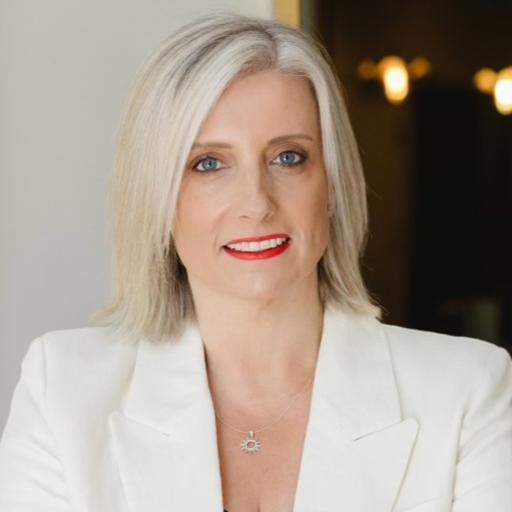
Founder Freedom Consultant: Helping Business Owners Gain Invaluable Time, Freedom, and Control
25+ years Senior operational leadership experience£50m+ Portfolios managed150+ Team members ledFounder Capacity to Grow
Nicola Anderson is a Founder Freedom and Business Growth Consultant who helps founders of scaling SMEs remove founder dependency across structure, team, systems and processes.
After 25 years in senior operational leadership roles inside real businesses, Nicola founded Capacity to Grow because she kept encountering the same pattern - successful businesses that still required the founder to be the decision point. Those repeated experiences of stepping into organisations where ownership was unclear and work kept returning to one person drove her to build a service focused on creating operational independence for founders.
Her credibility is rooted in the numbers she brings to the table: 25 years of leadership, responsibility for portfolios of more than £50m, and management of teams of 150+ across construction and the built environment. She works primarily with founders and CEOs across the UK, and also operates as a Business Growth Partner and fractional leader supporting scaling businesses and exit-ready CEOs.
On a practical level Nicola identifies exactly where founder dependency sits across leadership structure, decision ownership, team capability, systems and processes, and automation. She delivers diagnostics and structured interventions, supports hiring through a fixed-fee Recruit to Grow™ process to ensure new hires reduce dependency, and provides fractional leadership and non-executive direction so founders can step back with confidence.

