Leadership
Your team's biggest cultural divides are not about nationality
Csaba Toth explains why country, gender and generation predict so little about how people work, and why leaders should measure the mindset gap instead.
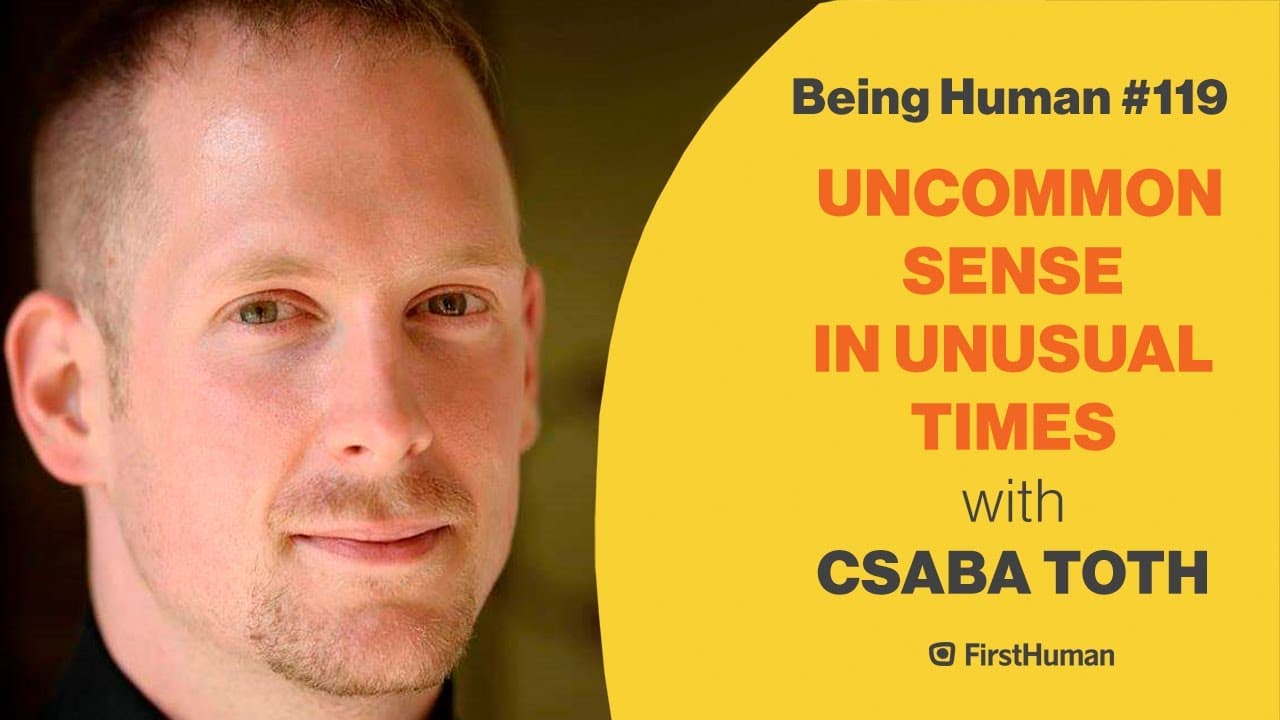
#119 UNCOMMON SENSE IN UNUSUAL TIMES - CSABA TOTH | Being Human
Video from The Being Human Podcast with Richard Atherton.
Generated from the canonical interview transcript and validated against source data by Guests on Air.
Why do cultural differences in a team often have little to do with nationality?
Most cultural differences sit inside countries rather than between them. Country of origin, gender and generation are groups people never chose, so they show how people conform, not what they prefer. The groups people choose, such as a profession, say far more. Leaders who measure the gap between what is natural to each person and what is normal around them can turn friction into performance.
Many organisations still treat culture as a question of passports. They brief managers on the typical British, American or German colleague, then feel confused when real people do not behave to type. Csaba Toth, founder of ICQ Global, argues that this habit hides the differences that actually shape how a team thinks, decides and gets along.
On the Being Human podcast with Richard Atherton, Csaba Toth traced the idea back to his own research and to a business he lost. Comparing Hungarian and Western European managers, he found that age mattered more than country. Older and younger Hungarian managers differed more from each other than the younger group differed from managers in Western Europe.
That finding contradicted the country briefings most cross-cultural training still relies on. The conversation that followed covered why nationality, gender and generation predict so little, why the diversity that matters is cognitive, and why inclusion has to begin with understanding yourself before you try to understand anyone else on the team.
Key takeaways
- Most cultural differences exist within countries rather than between them, so country briefings mislead managers.
- Country, gender and generation show how people conform to norms, not what they naturally prefer.
- The only layer of diversity with proven benefit is cognitive diversity, the way people think and see.
- Inclusion starts with self-awareness, because leaders who cannot lead themselves struggle to lead anyone else.
1. Why nationality predicts so little
Csaba Toth defines culture as a group habit driven by values and needs. In his words, culture describes what people are used to rather than who they are. A manager raised in one country learns its unwritten rules and follows them, but that tells an observer about the norm, not about the person underneath the behaviour they see at work.
He points to research that compared seventeen cultural groups for how practical they are as predictors. Country of origin, gender and generation came bottom of the list. People do not choose those groups, so they mostly show how well someone has learned to navigate an environment. He adds that, statistically, at least 70 percent of people in any country differ significantly from its norm.
The groups people choose tell a different story. A profession, a level of education or a hobby usually reflects personal preference, because people drift towards what feels comfortable. Someone who loves interaction will rarely stay long in a role spent alone with spreadsheets. He agreed with the host that an estate agent in London may share more with one in Nigeria than with a London accountant.
2. Diversity that looks different but thinks the same
Csaba Toth warns about what he calls homophilic diversity. A team can look varied in ethnicity, gender and age while everyone in it thinks in much the same way. Hiring managers naturally pick people they trust and hit it off with at once, and those people are often similar inside, however different they appear on a website.
He is clear that the visible layer still matters, above all for equal rights and opportunities. His point is that cognitive diversity, the way people think and see the world, is the layer with proven benefit for decisions. When everyone in a meeting shares the same tunnel vision, agreement feels right without being right, and the team simply confirms its own beliefs.
The difficulty is that real cognitive diversity is uncomfortable. People who think differently disagree, and disagreement feels like a challenge to identity. Without psychological safety, the energy goes into proving the other person wrong. With it, the question changes to what the other person can see that you cannot, and that shift is where innovation becomes possible for a team.
3. Inclusion starts with understanding yourself
When Csaba Toth works with senior leaders, the first day is about them rather than their teams. Most of what people do is driven by values and beliefs they are not aware of, so a leader who cannot read their own mindset will misread everyone else. He calls this self-inclusion, the step that has to come before being inclusive towards others.
Csaba Toth sets out these ideas in his book Uncommon Sense in Unusual Times: How to stay relevant in the 21st century by understanding ourselves and others better than social media algorithms and people trained in taking advantage of us. In the interview he argues that common sense rests on the golden rule of treating people the way you would want to be treated, and that this often backfires.
His alternative is to treat people the way they need to be treated, which means learning what they need first. Tools such as Global DISC make the gap between what is natural to a person and what is normal around them measurable. Leaders can then change how a message is delivered without changing the message, and build teams whose differences complement one another.