Sustainable hospitality
Why Zero-Carbon Luxury Resorts Should Bring Guests Together
Architect Kevin Kennon says remote eco resorts should pair off-grid power with five-star service and a real social life, not a field of scattered bungalows.
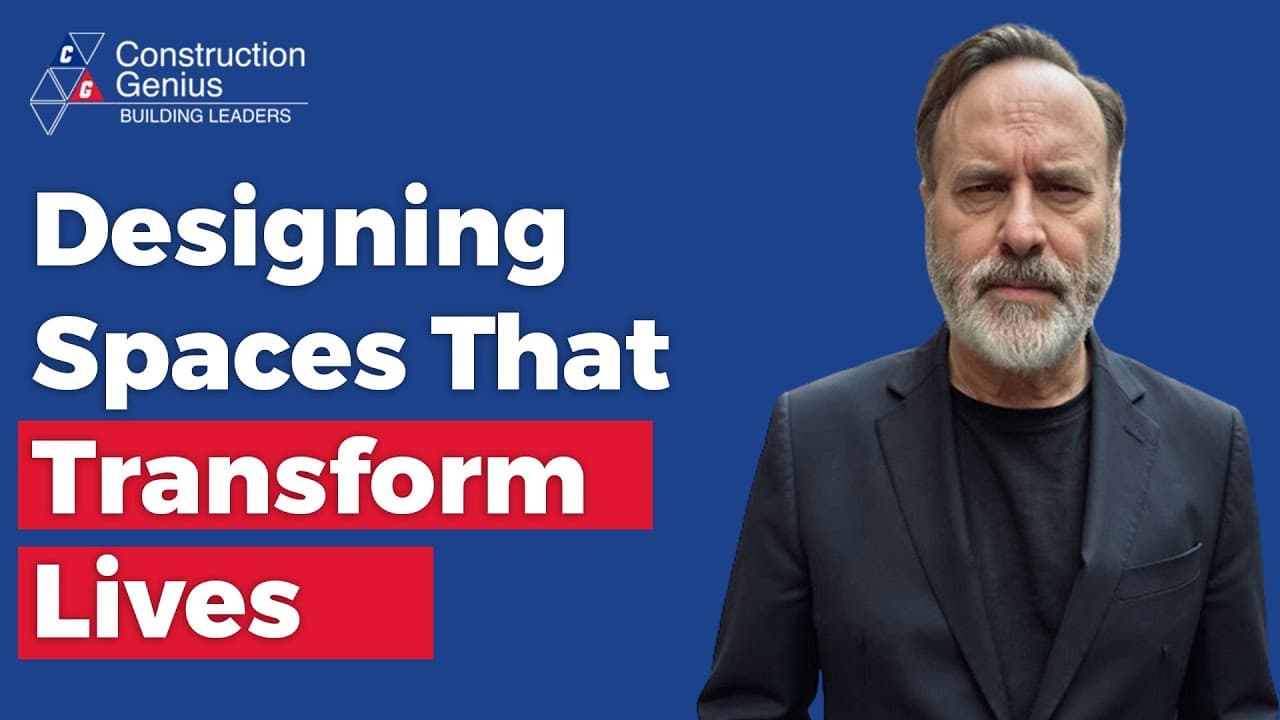
From Ground Zero to Luxury Resorts: Designing Spaces That Transform Lives
Video from Construction Genius Podcast, Eric Anderton.
Generated from the canonical interview transcript and validated against source data by Guests on Air.
How can a zero-carbon luxury resort still deliver a five-star guest experience?
Kevin Kennon argues that a zero-carbon resort works when it runs entirely on renewable, off-grid systems yet keeps a compact, low-footprint plan with few rooms and five-star service. Rather than scattering bungalows across a site, it should gather guests so they can meet people, share the experience and feel the power of nature together.
Zero carbon and luxury can sound like a contradiction. On the Construction Genius podcast, host Eric Anderton put that tension to Kevin Kennon, an architect with more than 40 years of practice and the founder and CEO of Beyond Zero DDC Inc., which develops zero-carbon luxury eco resorts in remote wilderness locations. Kennon accepted the point and then explained why the two belong together.
His answer starts with personal experience rather than a market forecast. The neighbourhood where he grew up, on a peninsula outside Los Angeles, is sliding into the ocean. For Kennon, that is where climate change stopped being abstract, and it shapes how he approaches hotels in places where nature is the main attraction.
This article covers three ideas from the conversation: why remote resorts can now run entirely off the grid, why the usual eco resort model of small scattered bungalows often fails guests, and why real sustainability means far more than covering a building in plants.
Key takeaways
- Renewable technology now lets a remote luxury resort run entirely off the grid without giving up comfort.
- Scattered eco bungalows look appealing but often fail as a hotel the moment guests want room service.
- The best resorts are social places where guests arrive with friends or come to meet new people.
- Real sustainability is about shape, material and time, not vegetation added to make a building look green.
1. Off-grid power changes what a remote resort can be
Kennon describes his resorts as more than exclusive retreats. He sees them as catalysts for green technology and for new ways of putting buildings together. The reason is practical: the technology now exists to place a project in a remote setting and power it entirely from renewable systems, so the whole operation sits off the grid.
That matters for luxury hospitality because the setting is the product. The aim, as he puts it, is to bring people into rather remote places while giving them the ability to experience the power of nature. Clean power keeps the operation in step with the landscape that guests travel so far to see.
His motivation is personal. He grew up in an area outside Los Angeles that is now sliding into the ocean, and he says that experience made climate change hit home. For hotel developers, the lesson is that a zero-carbon resort is no longer a compromise on comfort but a design brief that current technology can meet.
2. Why scattered bungalows fail as a hotel
Kennon is blunt about the standard eco resort. Many follow a similar model, a cluster of small bungalows spread across a site. The trouble, he says, is that as a hotel proposition they are very interesting until you try to order room service. Spreading guests out in the name of nature can make good service slow and hard to deliver.
His alternative grew from a childhood memory. As a young boy living in Santiago, Chile, he travelled to Machu Picchu in the early 1960s, where an old Swiss hotel at the top was full of visitors from all over the world. That stay left a mark, and he came away believing hotels and resorts should be places people want to go, with friends or to meet others.
The resort he is working on now follows that thinking. It has few rooms but aims for five-star service, and he stresses that it is not glamping. Instead of scattering everything around, the design keeps the buildings compact with a very low footprint, while still giving guests the sense of being right on the edge of the world.
3. Sustainability is more than a green facade
Kennon warns against what he calls greenwash, where a building displays its sustainable credentials by covering its exterior in vegetation. He grew up in an era when the joke was that architects put trees in front of buildings because they did not like their own design. Now the same trees are planted to showcase that a project is green.
His point is that greenery is not the same as nature. Real sustainability, in his view, rests on understanding shapes, materials and the way a place changes over time, and on appreciating not just the land but the sky as well. For a wilderness resort, that means reading the site itself rather than decorating the building.

He also argues that sustainability should be treated as a basic fact of building, in the same way as codes and physics, and he cautions that the industry has grown lazy about accepting anything that merely looks sustainable. The best architecture, he says, does not try to speak; it creates the space for people to find meaning for themselves.