Outdoor gear
Why the Classic Three Layers Are a Marketing List, Not a System
Outdoor gear expert Mike Parsons explains why staying warm and dry depends on how you layer, not on buying a pricier waterproof jacket.
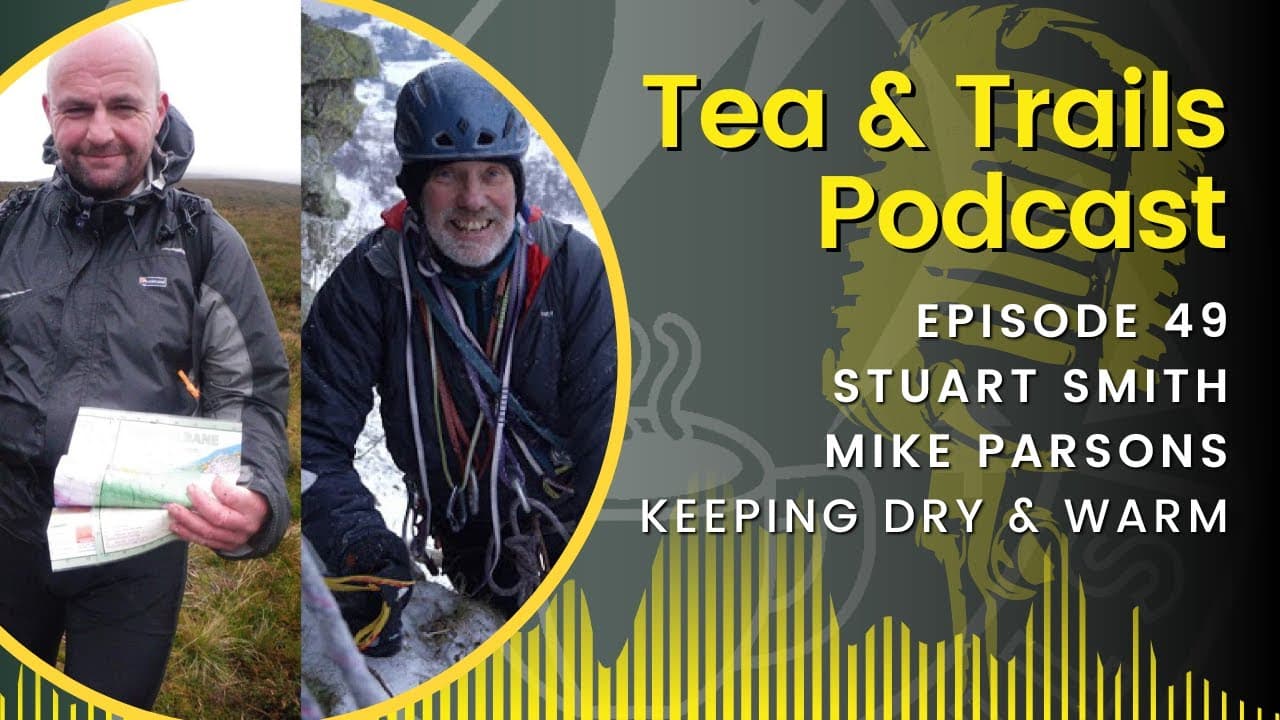
Stuart Smith & Mike Parsons - Keeping Dry & Staying Warm - Tea & Trails - Episode 49
Video from Tea & Trails.
Generated from the canonical interview transcript and validated against source data by Guests on Air.
How should you layer clothing to stay warm and dry outdoors?
Mike Parsons says layering works when you understand what each garment does. Clothing does not create warmth; it slows heat loss, and dry air is the best insulator. Add a windshell before reaching for the waterproof, keep base layers covered so they cannot wick rain inward, and switch to a loose woven shirt when the weather turns hot.
Most runners and hikers facing a cold, wet day reach for the same answer: a better waterproof jacket. On an episode of the Tea & Trails podcast, outdoor gear expert Mike Parsons and international mountain leader Stuart Smith argued that the jacket is rarely the problem. The real gap, they said, is how little most people understand about the garments they already own.
Mike Parsons spent around 30 years in a British outdoor equipment business that supplied major Himalayan expeditions, then co-wrote a history of outdoor clothing and taught innovation at university. He later co-founded Outdoor Gear Coach, an operation built to give walkers, runners and climbers clear, independent facts about their kit instead of brand marketing.
His approach, which he calls performance layering, treats clothing as a set of decisions rather than a shopping list. It starts with physics most people last met at school, then applies it to the activity, the location, the season and the weather forecast. The result is a way of dressing that keeps you drier, warmer or cooler for longer, often without buying anything new.
Key takeaways
- Garments do not create warmth; they slow heat loss, and dry air trapped close to the body is the best insulator.
- Add a windshell when the wind picks up, and keep the waterproof jacket in your pack unless it is raining.
- Wicking is capillary flow that moves water in every direction, so an exposed base layer cuff can pull rain inward.
- In hot weather, take the base layer off and wear a loose woven garment that lets the body cool by evaporation.
1. Clothing slows heat loss rather than creating warmth
Mike Parsons opened with a correction that reframes every kit decision. Garments do not provide the warmth, he said; they prevent its loss. The heat comes from the body itself, fuelled by food and drink, so a runner who is short on calories or fluids will feel cold however good the jacket is. Clothing can only hold on to what the body produces.
That is why he keeps returning to dry air. Water conducts heat around 24 times faster than air, which explains why a sweaty back turns cold the moment a rucksack comes off, even though the sweat left the body at core temperature. The aim of any layering system, he explained, is to keep the layers free of moisture so that trapped air can do its job.
He also asked listeners to understand their own metabolism. When the body senses its core is at risk, it narrows blood flow to the hands and feet to protect the vital organs, which is why some runners wear a singlet and gloves together. Everyone responds differently, so the right layers depend as much on the person as on the forecast.
2. The windshell does the job people give their waterproof
The best-known advice in outdoor clothing is the three-layer system of base layer, insulation and waterproof shell. Mike Parsons called it a marketing list of three essentials rather than a working system. The flaw shows up on the hill, where people pull on their waterproof jacket the moment they meet a strong, cold wind, then overheat and soak their layers from the inside.
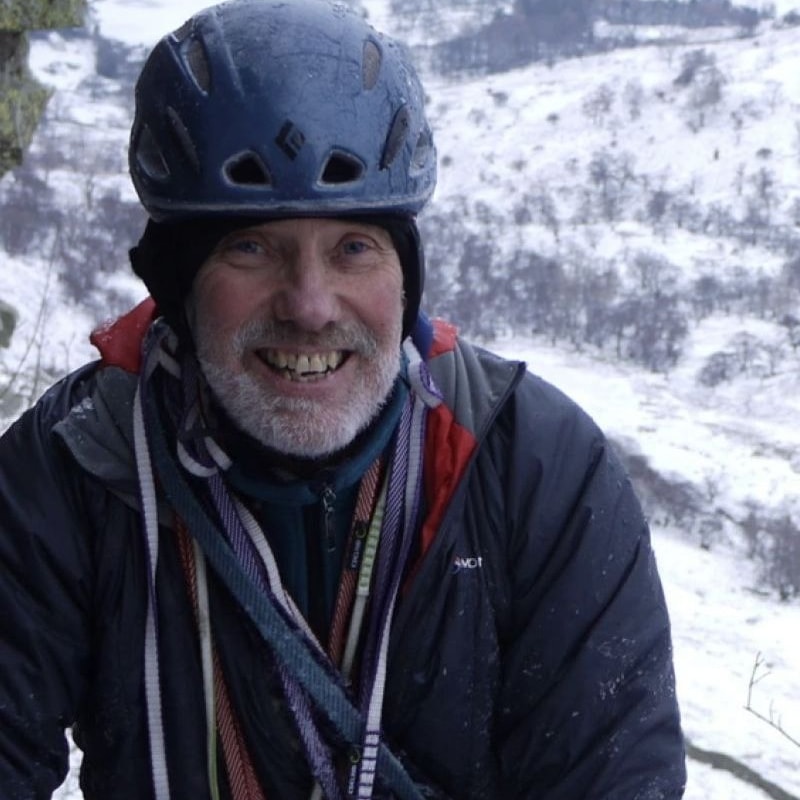
His fix is a windshell, a light water-repellent layer that usually costs under £100. Adding one means the waterproof comes out far less often and the wearer runs cooler. It also protects a garment that can cost several hundred pounds and needs regular washing and reproofing, care many owners overlook. His simple rule is to keep the waterproof jacket in the pack unless it is raining.
These ideas run through the book he wrote over three years with a team of five contributors, including a retired chemical engineer who checked the science of heat loss. Keeping Dry & Staying Warm (Part 1): How to stay dry, warm or cool in the outdoors. You, the environment, your garments and layering techniques. (part of series of 3) is presented as the first independent book on outdoor garments, written apart from any brand.
3. Wicking, hands and hot days each need their own approach
Wicking is one of the most misunderstood words in outdoor clothing, Mike Parsons said. It is not absorption but capillary flow, the same process that draws water up through a tree, and finer microfibres create stronger flow. Crucially, it works in every direction. He described a friend soaked inside a brand new jacket because his base layer cuff was exposed and drew rain up his arm.
Hands follow the same rules as the body. Shoppers often ask for a thin, warm glove, but warmth comes from trapped air and thickness, so he recommends layering instead: a simple knitted glove under a thin, single-ply waterproof overmitt. On wet, cold and windy days he also carries several pairs, so damp gloves can be swapped for dry ones as conditions change.
Heat needs its own plan too. Rather than trusting base layers marketed as cooling, Mike Parsons advises taking the base layer off in hot conditions and wearing a loose woven garment that stands away from the skin and lets evaporation work. Stuart Smith added that the sound judgement to change layers early, before the weather turns, matters as much as any piece of kit.
