Wellness
Why lasting change works best when the person changing stays in charge
PSYCH-K instructor Rosemarie Pletzer explains why she facilitates belief change rather than fixing anyone, and how a simple four-step session keeps the partner in the driver's seat.
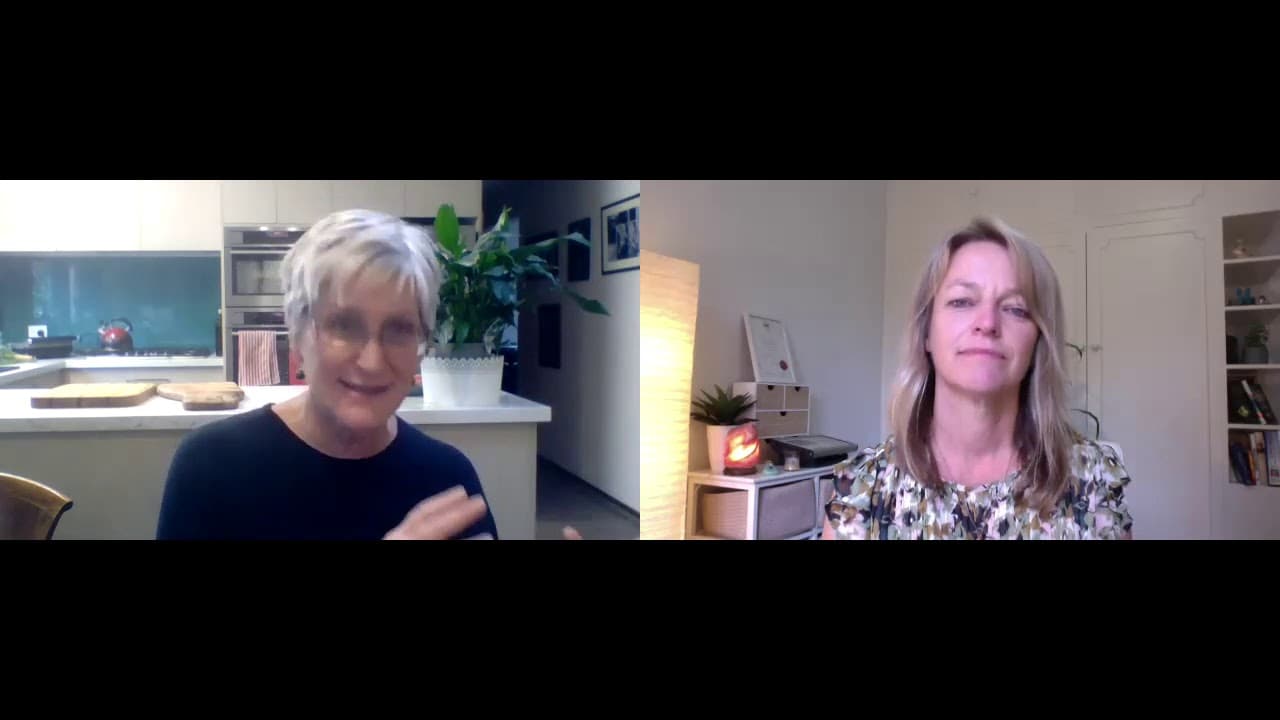
Rosi Pletzer PSYCH-K Instructor. Interview with Michelle -May 19th 2020
Video from Michelle Rehberg Naturopathy.
Generated from the canonical interview transcript and validated against source data by Guests on Air.
Why does lasting personal change work better when the person making it stays in charge?
Rosemarie Pletzer argues that no facilitator can heal or fix another person, because each person is responsible only for their own growth. In a PSYCH-K session the partner names how things are and how they want them to be, while the facilitator guides a simple process. Change that the person has chosen for themselves tends to hold.
Many people arrive at a workshop or a therapy room hoping someone else will fix them. Rosemarie Pletzer, a certified PSYCH-K instructor based in Australia, starts from the opposite view. In a conversation with a naturopath who has trained with her for years, she explains why the person making a change has to stay in charge of it.
Her own path into the work began with a long health career that took in nursing, nutrition, biochemistry, energy medicine and biofeedback. When her life hit a hard stretch, she realised she lacked the tools to change how she perceived stress. Hearing cell biologist Bruce Lipton name PSYCH-K as his favourite form of energy psychology sent her to her first workshop soon after.
What convinced her was not her own sense of progress but what other people noticed. Friends, colleagues and family members began asking her what had changed. That experience still shapes how she teaches today: the facilitator guides a simple process, while the partner sets the goal, does the work and owns the result.
Key takeaways
- A facilitator cannot heal or fix anyone, because each person is responsible only for their own growth and life experience.
- Change tends to hold when the person creating it has put their hand up for it, rather than having it done to them.
- A PSYCH-K session follows four steps: how things are, how they should be, a balance process, then action in daily life.
- Releasing the stress tied to an old experience frees a person to respond with their full potential instead of an old reaction.
1. Facilitating change instead of fixing people
Rosemarie Pletzer is clear about the limits of her role. In her words, the facilitator is not healing anybody or fixing anybody, because that is not possible. A person can be responsible for their own growth and life experience, but never for someone else's. Nobody else is inside another person's head or living their experience.
That is why she calls the person in a session a partner rather than a patient to be treated. The facilitator meets the partner where they are, asks how things are for them and what they want, and helps them get there. The session closes with a talk about practical action steps the partner can take to carry the change forward.
She sees this as one of the main reasons the approach is effective. Plenty of methods work, she notes, but few step back and leave space for people to do the work for themselves. When the person creating the change has put their hand up for it, that choice is powerful in its own right.
2. A simple four-step session
Simplicity is another reason she values the method. She describes a session as a four-step process. First, the facilitator asks the partner how things are. Next, they identify how the partner wants things to be and phrase that new destination in language the subconscious mind can understand.
The third step is what PSYCH-K calls a balance, a process in which the subconscious mind engages with the new destination. Finally, the change is saved and the partner talks about how to activate it in everyday life. A one-to-one session can run for around 20 to 40 minutes, and children can take part too.
Safety is built in as well. Before any change, the process invites the superconscious mind to act as a gatekeeper, checking that the new belief is appropriate in the bigger picture of the person's life. Rosemarie Pletzer describes this as honouring mind, body and spirit, which makes the work holistic rather than a quick fix.
3. Why releasing stress changes how people respond
She illustrates the effect with a story from her own life. After an accident on a dirt road when she was younger, every later drive on a dirt road put her whole body on alert. Once she transformed that perception of stress to a state of peace, the same roads became a new experience she could meet with curiosity.
Her explanation is that people in distress are not at their full response potential. They react from past experience, along a well-worn groove. At peace with a situation, they bring their full ability to respond, and possibilities that stress had hidden become visible. She calls this the flow, and she sees it as the real gift of the work.
For people who want to learn the processes themselves, the starting point is a three-day Basic workshop, where participants are changing beliefs from the first day. Advanced Integration and Master Facilitation workshops follow for those who want more. She keeps in touch with new facilitators through regular online calls, so nobody is left to work it out alone.