Leadership
Why Indecision Costs Leaders More Than a Wrong Decision
A World War II bombing raid, and one airman pushed from a burning plane, show why waiting for perfect conditions is the riskiest choice a leader can make.
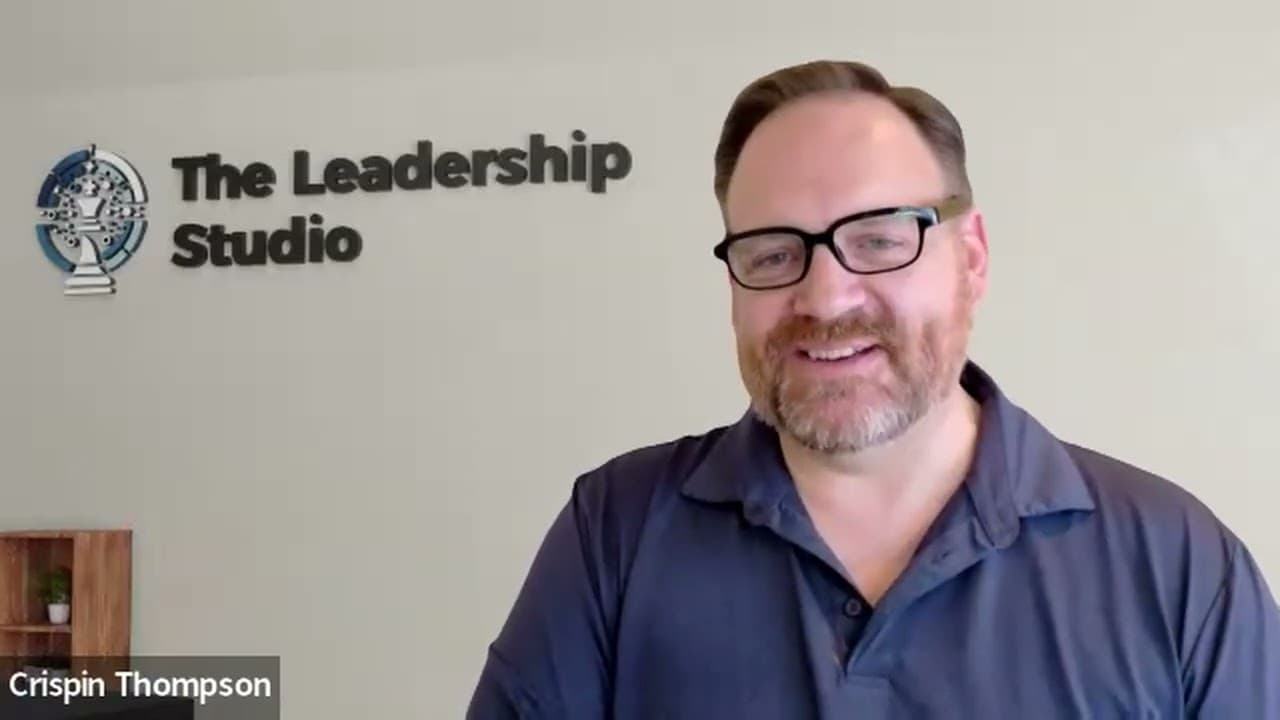
Crispin Thompson, Indecision is the Silent Killer of Leadership
Video from Profiles in Leadership Podcast.
Generated from the canonical interview transcript and validated against source data by Guests on Air.
Why is indecision so costly for leaders?
Indecision is costly because the cost of waiting keeps growing while a leader hesitates. Options shrink, support runs out and the team pays for the delay. Crispin Thompson argues that a timely decision, even an imperfect one, nearly always beats holding out for perfect conditions, because acting keeps choices open and waiting quietly closes them.
Crispin Thompson has spent more than 25 years leading large international teams at Hewlett Packard Enterprise, TaskUs and QSC, and now coaches leaders through The Leadership Studio. On the Profiles in Leadership podcast with Steve Anderson, Thompson made the case that indecision is the silent killer of leadership.
It is the keynote Thompson most loves to give. It rests on a true story from October 1943, when a formation of bombers took off from England for a daylight raid over Germany, and on two choices made that day that ended in very different ways. Both choices still shape how Thompson coaches leaders.
The lesson reaches well beyond wartime. Managers, directors and new vice presidents face the same pull to wait for clearer skies before acting. Thompson's argument is that the wait itself is often the most expensive decision on the table, because its costs stay hidden until it is too late.
Key takeaways
- Hesitation is a decision too, and its costs keep building quietly while a leader waits for better conditions.
- Delay shrinks the support around a team, the way burning fuel shrank the range of the fighter escort in 1943.
- A timely decision that turns out imperfect is usually better than waiting for perfect conditions that never arrive.
- After a promotion, a leader's words carry more weight overnight, so clear and decisive messages matter even more.
1. The hesitation that left the bombers exposed
Thompson tells the story of a flight leader on a first mission in command. Low cloud hung over England, which was common that autumn, and the leader chose to wait. The bombers climbed and circled over the English countryside, holding their position until the clouds finally broke and the formation could set off.
Circling costs fuel. Every minute spent waiting reduced how far the fighter escort could fly with the bombers. By the time the formation left, the fighters could no longer cover the full route to the target and back. They had to turn for home early, leaving the bombers alone for the most dangerous stretch of the raid.
The bombers reached the target and dropped their loads, but on the long return they were cut down by German fighters. Thompson is clear that the cost of that single moment of indecision was measured in lives. Nobody chose to abandon the crews, yet the delay did exactly that, through a cost that stayed invisible until it landed.
2. The split-second call that saved one airman
The second half of the story is about a decision made under fire. One bomber was badly hit over Holland, and a young crewman was wounded so seriously that the pilot judged he would not survive the flight back. The crew strapped the unconscious man into a parachute and pushed him out of the aircraft.
The Dutch underground found him but judged him too badly hurt to hide, so they left him for the Germans. He spent a month in a German hospital and the rest of the war in a prison camp. He survived, served 30 years in the Air Force and later worked at NASA. The bomber never made it home, crashing into the English Channel with everyone else still aboard.
The wounded airman was Thompson's grandfather. That pilot's decision is the reason Thompson exists at all, and it shapes how Thompson teaches leadership today. Leaders have to decide and act, Thompson says, and a wrong call in the moment is still better than waiting for perfect conditions that may never come.

3. Why new leaders feel the weight of every choice
Thompson sees the same pressure in modern careers. When people move from manager to director, or from director to vice president, companies often assume they will know what to do from the first hour. In reality most leaders spend roughly their first two years in a bigger role working out how they will lead, and every mistake now carries further.
A former boss at HP, Lance Sinclair, taught Thompson an early lesson about this. Between the day before an executive promotion and the day after it, Thompson's voice got louder, whether that was accepted or not. Words that carried little weight one day carried real weight the next, so clarity and timing suddenly mattered far more than before.
That is why Thompson ties decisiveness to presence. Leaders with strong presence deliver messages clearly, connect with their audience and are trusted, and people seek them out when something is uncertain. Thompson adds that presence depends on confidence, built through honest introspection about where a leader is strong and where there is still work to do.