Leadership
Why High Achievers Mistake Trauma for Personality
Amar Dhall, a trained lawyer turned trauma therapist, explains why lawyers and leaders need to be trauma-wise, not just trauma-informed.
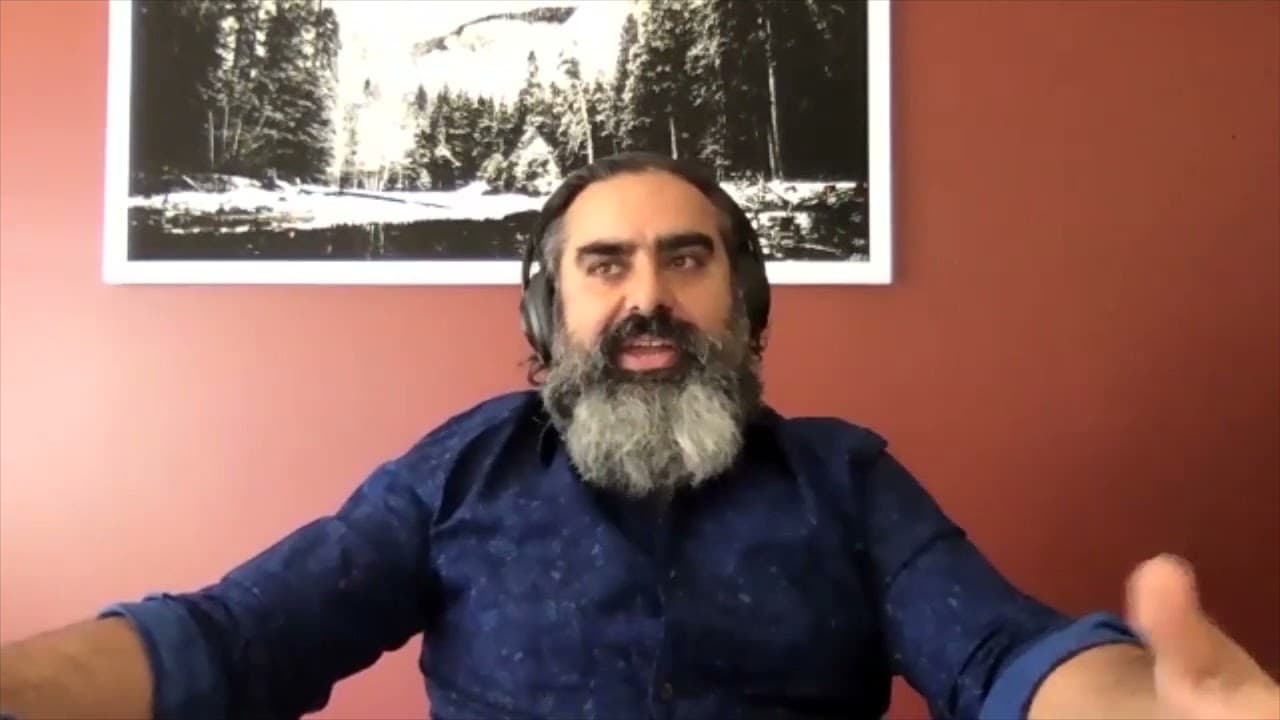
Dr. Amar Dhall, Australia- Integrative Lawyers of the World, Series 1 Episode 2
Video from Integrative Law.
Generated from the canonical interview transcript and validated against source data by Guests on Air.
What is the difference between being trauma-informed and trauma-wise?
Being trauma-informed means knowing the basics: how to spot a trauma response and steer around what triggers it. Being trauma-wise goes further. It means a professional has worked through their own trauma, understands how common it is, and can meet a distressed client without the process making things worse. Amar Dhall argues the second standard is the one lawyers and leaders need.
Amar Dhall spent almost a decade on a law PhD, taught at the University of Canberra's school of law and was offered a partnership at a small firm before he walked away from legal practice. He retrained as a therapist and counsellor specialising in trauma, and he now works in what he calls a fairly liminal space between the two professions.
In a conversation with host Carrie Raleigh on Integrative Lawyers of the World, he explained why he wants lawyers trained to recognise trauma, both in the clients who come to them and in themselves. His argument is that people who enter the legal system often carry trauma before, during and after it, and so do many of the lawyers serving them.
The larger point reaches well beyond law. Dhall sees high achievers in every field who have learned to turn anxiety and fast thinking into output, and who then mistake those trauma responses for who they are. Untangling that, he says, is slow and personal work that no single course can do on its own.
Key takeaways
- Trauma-informed training teaches the basics; real healing needs someone who has worked through their own trauma.
- Many high achievers channel anxiety into work because it pays off, which hides the underlying problem.
- Command-and-control and pace-setting management styles are linked to burnout and falling morale in firms.
- Good boundaries create freedom, because avoiding one hard conversation quietly builds long-term resentment.
1. Trauma-informed is the floor, not the standard
Dhall draws a clear line between two levels of skill. Trauma-informed training, he says, teaches people the basics of navigating someone who may have a trauma response and keeping them away from what triggers them. That has value, and it is the base level he would expect of any lawyer. But it is mostly a way of managing distress, not resolving it.
The higher standard is being trauma-wise. In a paper he wrote for the American Bar Association, he described it as understanding how prevalent trauma is and looking honestly at your own. His view is blunt: unless you have touched, metabolized and integrated your own trauma, handling someone else's remains a cognitive exercise, and that is not where people are actually troubled.
He also pushes back on the language itself. He has a problem with the label PTSD, arguing that it would be more disordered for someone to go through trauma and develop no symptoms at all. People with those responses are healthy human beings whose nervous systems were affected by an experience, and the work is decoupling the nervous system from those events.
2. Why lawyers and high achievers carry so much
Dhall cites figures suggesting lawyers tend to score higher on IQ and lower on emotional intelligence than average. He links that to a lesson taught in law school, that emotion is the death of reason in legal thinking, which he calls absurd. Removing a key part of what makes people human, he argues, will not make anyone better at producing just outcomes.
Law firm management adds to the load. Dhall describes the common styles as command and control or pace setting, which the emotional intelligence and leadership literature calls dissonant styles because they lead to burnout and destroy morale. Lawyers are often high achievers prone to overwork, and he sees them bringing their own trauma into firms that reward exactly those habits.
The pattern is hard to see from the inside. One sign of trauma, he explains, is that people spend less time aware of their bodies and more time in their heads. Some learn to channel that dysregulation and fast thinking into work because it is productive and pays off. The result is a cycle in which trauma is normalized and becomes the foundation of a career.
3. Change has to be embodied, not just taught
For Dhall, the first step is awareness. Real growth means noticing choices you have been making automatically, and the signs are usually already there: dissatisfaction, anxiety, a sense that life is not meaningful. He works with high achievers who arrive wound tight, helping them untangle their identity from high-functioning anxiety without the existential terror of losing everything they built.
He is wary of the course treadmill. It is easy, he says, to produce course after course and for people to feel they are bettering themselves simply by completing them, but real change needs to be embodied, and that usually requires more support and holding. That is why the centre he was building with colleagues in the United States pairs online courses with coaching and one-on-one work.
He sees boundaries as part of the same work. Good boundaries create freedom, he says, because not setting one means choosing long-term resentment over the short-term discomfort of a difficult conversation. Underneath it all is his view that meaning, not happiness, is the ultimate currency for a well-lived life, and that helping people get clear on what matters to them comes first.