Wellbeing
Why high achievers in law mistake control for safety
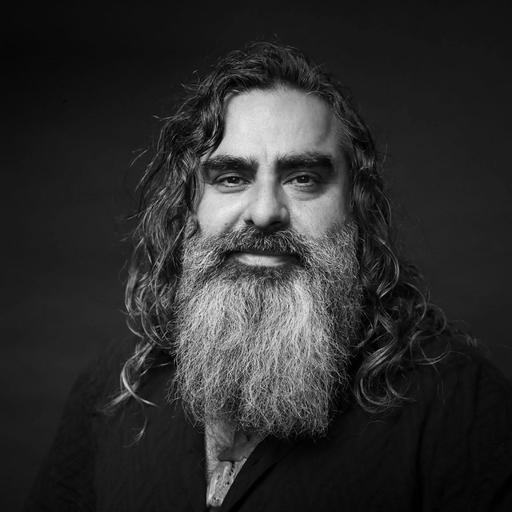
Amar Dhall, a former law lecturer turned psychotherapist and coach, explains how achievement can work as a trauma response and why the legal profession pays for it.

Amar Dhall - The quantum properties of law | S1 E37
Video from New Earth lawyer.
Generated from the canonical interview transcript and validated against source data by Guests on Air.
Why do high-achieving lawyers burn out?
Amar Dhall argues that many lawyers learn to channel anxiety into work, so achievement becomes a trauma response that offers a feeling of control. Because the profession rewards intellect over emotional intelligence and teaches students to set emotion aside, the pattern goes unexamined until health suffers, which helps explain why so many lawyers leave practice within a decade.
Amar Dhall has lived several careers. He renovated and resold property, studied law as a mature student at 28, wrote a doctorate on quantum mechanics, human consciousness and law, and taught at university for about nine years. Today he works as a psychotherapist and coach, much of it with lawyers who feel the cost of their profession.
In a long, unhurried conversation on the New Earth Lawyer podcast, he connects those threads. His central claim is that the legal system often treats people as if feeling had no place in reasoning, and that this belief harms lawyers, the people they serve and the quality of the law itself.
The discussion moves between the big picture and the individual. It starts with what law is really trying to regulate, turns to why bright students struggle once they reach law school, and ends on how people can rebuild a meaningful relationship with work that once defined them.
Key takeaways
- High achievement can be a trauma response, where work becomes a clever way to channel anxiety and feel in control.
- Teaching law students that emotion kills reason is flawed, because the limbic system is central to every decision.
- Lawyers who over-identify with their professional role risk being worn down by it from the inside out.
- Leaving law is not the only answer, since some lawyers find a healthier and more meaningful way to stay in practice.
1. Achievement that works as a survival strategy
Dhall describes trauma in simple terms: automatic behaviours that help a person survive. One pattern he sees often is people who learn that work is a smart way to channel anxiety. Achievement feels good, it can be measured and it can be framed and hung on a wall, so it is easy to mistake for wellbeing.
The difficulty, in his view, is that the sense of control it offers is not real. He calls this the rock in the shoe. High achievers organise their lives around staying in control, yet there is no control to be had. Sooner or later the plan unravels, and the questions they have avoided arrive anyway.
He saw an early version of this while teaching first-year law students. Most had been at the top of their schools and suddenly found themselves average. Many responded by working harder, and that effort extracted a price. Dhall links the same pattern to the number of lawyers who leave the profession, often for their health.
2. Why the profession needs emotional intelligence
Dhall says lawyers as a group tend to have above-average intelligence and below-average emotional intelligence. When a profession shares the same blind spots, such as an addiction to achievement, he asks what that does to the clients it is meant to serve. For him, that question links individual wellbeing to the health of the whole legal system.
He is critical of the idea, taught in many law schools, that students must surrender their emotions to become good lawyers. The claim that emotion is the death of reason does not hold up, he argues, because neuroscience shows the limbic system sits at the centre of how people make decisions and cannot simply be cut away.
The cost shows up in identity. Dhall has seen lawyers cling so hard to being a lawyer that the role wears them down, while others push so hard to reach the top that their health suffers. Spotting this earlier, he suggests, would let the profession keep more of its experienced people and build a deeper reservoir of eldership.

3. Finding a meaningful relationship with the law
His own path shows the alternative he recommends. He chose an honours topic that the head of the programme warned might cost him a first-class result, faced bullying from some academics over his doctoral work, and waited about eighteen months for examiners. Choosing the meaningful path exposes a person to judgment, he says, and learning to hold that is part of life.
His doctorate asked what law is really regulating. He reduced it to two questions: what is the deepest nature of the thing being regulated, and what is the deepest nature of the one perceiving it. Good law, he argues, looks past appearances to the essence, and quantum mechanics shows that measurement is not the only defensible way to picture reality.
For lawyers who feel stuck, he does not prescribe walking away. Some of the people he works with put law down and repurpose their skills, while others stay. The work is the same either way: find what is meaningful, name the obstacles, and reintegrate the parts of the self that a demanding career pushed to the margins.