Sustainability
Why Group 3 Companies Should Start Sustainability Reporting Two Years Early
Australia's mandatory sustainability reporting now reaches thousands of mid-sized firms. Jim Allenby explains why starting 24 months out keeps cost, pressure and risk down.
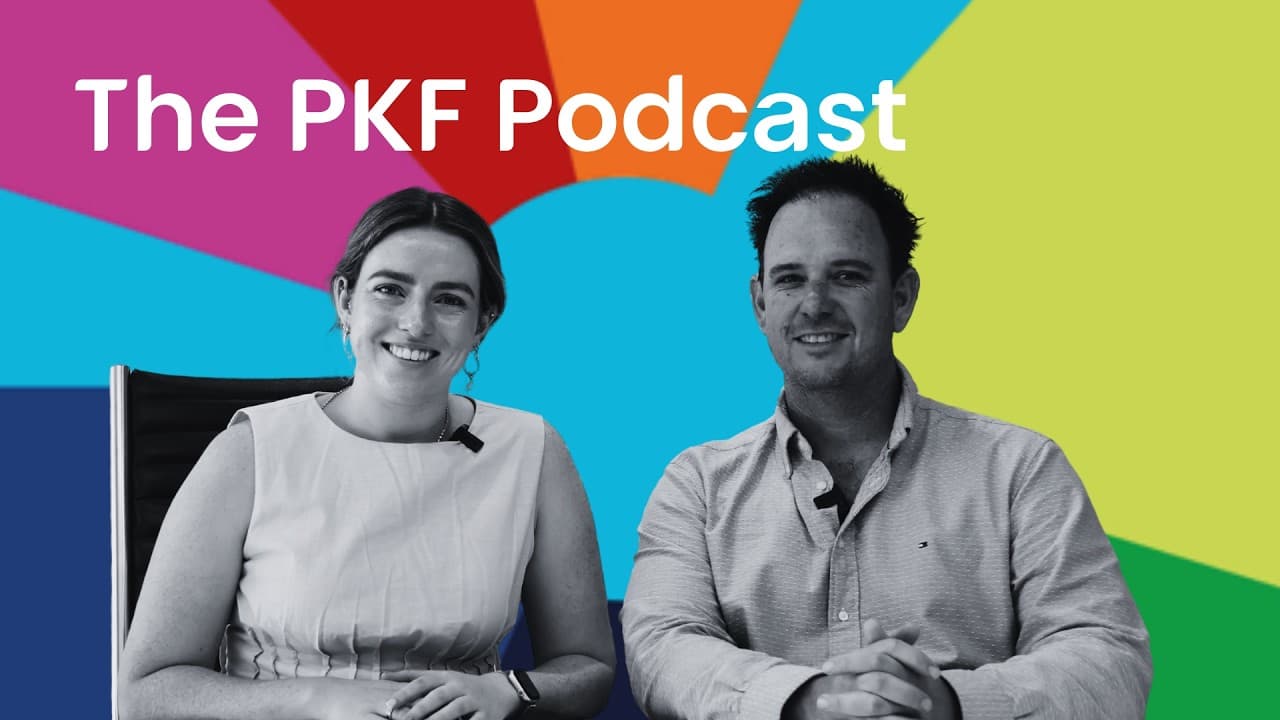
The PKF Podcast | S2, Ep 4: Sustainability reporting: Start early, start small
Video from PKF Sydney & Newcastle.
Generated from the canonical interview transcript and validated against source data by Guests on Air.
How early should a Group 3 company prepare for Australian sustainability reporting?
Jim Allenby advises Group 3 businesses to allow 24 months before their first sustainability report is due, starting about a year before the reporting year begins. That runway lets a company engage its auditor early, build data systems and internal capability, and spread the workload, which lowers cost and avoids the last-minute scramble when mistakes happen.
Australia's mandatory sustainability reporting regime is no longer a distant proposal. The largest companies are already lodging, and the next two groups are being drawn in behind them. On The PKF Podcast, Jim Allenby, speaking as managing director of PKF Parvate Sustainability, set out what the rollout means for mid-sized businesses and why the timing of their first steps matters so much.
His message to the smaller reporters was consistent across the conversation. Start early, start small and spread the work over a longer runway. Leave it late and the same report costs more, leans harder on outside consultants and leaves stretched internal teams scrambling at the point when mistakes are most likely to happen.
This article draws on that episode, hosted by Courtney Charleson. It walks through who is caught by the thresholds, how far ahead a business should begin, what drives the cost, and why directors cannot treat the new report as a one-off compliance exercise that disappears once the first submission is filed.
Key takeaways
- Australian businesses report in Group 1, 2 or 3 once they meet two of three thresholds on staff, assets and revenue.
- Far more businesses qualify than expected: the government estimated about 1,500 to 2,000 Group 3 entities, but there are over 6,000.
- Allow 24 months before the first report is due, which means starting a year before the reporting year begins.
- The earlier a business starts and the more internal capability it builds, the lower the cost of each yearly report.
1. More businesses are in scope than expected
Allenby explained that companies fall into one of three reporting groups based on employees, consolidated assets and gross revenue, and a business that meets two of the three thresholds reports in that group. Group 1 covers the largest entities, with more than 500 employees, a billion dollars or more in assets, or $500 million or more in revenue. Each later group roughly halves those figures.
Group 3 sits at 100 or more employees, $25 million or more in consolidated assets, or $50 million or more in revenue. Allenby said the employee test often surprises owners, pushing businesses that see themselves as mid-sized into a higher group than they expected. A growing headcount, which most owners celebrate, can quietly change a company's reporting obligations and its timeline.
The bigger surprise is the size of the third group. The Australian government expected roughly 1,500 to 2,000 entities to fall into Group 3, he said, but more than 6,000 do. Many of them learn they are in scope only when an adviser walks them through the thresholds, which leaves less time to prepare than they would have chosen.
2. Why a 24-month runway changes the cost
For Group 3 businesses, Allenby's simplest answer is to start small and start early. Most companies of that size are already stretched thin, with growing teams working at full capacity. Their staff usually have the technical ability to do the work, he said, but not the spare time, especially in the early stages when systems, data and processes still need to be built.
His firm's guidance is to allow 24 months before the first report is due to be lodged, which is 12 months before the start of the reporting year. That runway gives time to engage the auditor, ask what they expect to see, and put data collection, internal frameworks and processes in place so reporting is close to automated when the year begins.
Cost follows the same logic. The largest miners and supermarkets are spending tens of millions of dollars, Allenby noted, while smaller companies will spend far less. He would not give one figure, because the gap between fully outsourcing the work and doing it in-house is significant. What he was clear on is that time and internal resources bring the cost down.
3. A yearly report that directors must sign
Allenby urged businesses to build internal capability rather than lean entirely on consultants. Some clients are adding the work to an existing function or hiring for it, and their teams are often keen to be involved. That matters because the report is not a one-off. It will be expected and lodged every year, so a team that can produce it again has lasting value.
He also expects the regime to stay as it is. Australia took its time and consulted widely before legislating, Group 1 reporters have already lodged, and ASIC is regulating the reports. The best hope for Group 3, in his view, is a lighter requirement on scope 3 emissions in future, not a reversal of the obligation itself.
The stakes are real. Directors sign off on the sustainability report as they would any other statement, auditors sign it too, and a business cannot lodge its financials without it. Allenby said ASIC has signalled a pragmatic and proportionate approach that takes company size into account, provided the business makes a genuine effort and can show its workings.