Mental Health
Why Executive Loneliness Hides Behind the Fear of Seeing a Therapist
In a keynote for EuroCham Singapore, Nick Jonsson explains how stigma keeps leaders away from counselling, and the steps that helped him recover from depression and isolation.
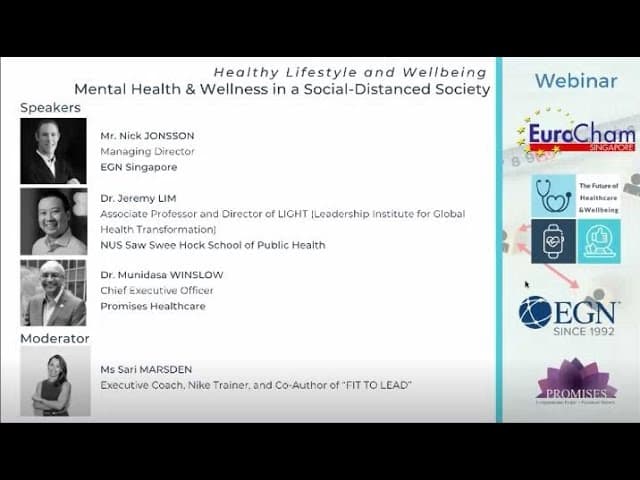
Nick Jonsson - Keynote Executive Loneliness. Mental Health & Wellbeing at EuroCham Singapore 17/8/20
Video from EGN - Executives' Global Network.
Generated from the canonical interview transcript and validated against source data by Guests on Air.
Why do so many executives avoid therapy or counselling when they feel lonely?
Nick Jonsson says stigma is the main barrier. Leaders fear being seen as weak, so they hide loneliness, stress and depression and stay away from therapists, even though nobody hesitates to see a doctor for a broken arm. His own recovery began when he spoke up, then worked with a family therapist, a counsellor and a fitness coach.
Nick Jonsson opened his keynote at a EuroCham Singapore session on mental health and wellbeing with a simple comparison. People are not shy about seeing a doctor for a broken arm, yet many feel scared or ashamed to see a therapist or a counsellor. For leaders, he argued, that gap can decide whether a hard season turns into a crisis.
His interest is personal. In 2018 he had been through a divorce, his son had moved to Sweden, and he had moved from job to job and through three countries in six months. He stopped exercising, gained 20 kilos and started drinking after work. Lying in bed with a swollen foot, he wrote his will because he did not think he would survive the year.
What turned things around was honesty. He began telling the people around him how he really felt, and he improved quickly. Soon after, a colleague and friend who seemed to have everything took his own life. That loss convinced Jonsson that speaking up can save lives, and it shaped the research, the writing and the talks that followed.
Key takeaways
- Stigma, not a lack of need, is what keeps many lonely executives away from therapists and counsellors.
- You can feel deeply lonely in a room full of family and friends once your inner connection is lost.
- Jonsson's survey of Singapore executives found depression at roughly six times the global rate of five percent.
- Recovery came from speaking up, then building support: a family therapist, a counsellor, a fitness coach and better sleep.
1. Why Stigma Keeps Leaders Out of the Counselling Room
Jonsson told the audience that executive loneliness, stress, anxiety and depression can be a matter of life and death, which is why he refuses to treat the subject as off limits. He had recently given three radio interviews and more than 20 newspaper and magazine interviews in Singapore, and each time the same thing struck him: people simply do not want to talk about it.
The numbers he gathered explain why. Research from the UK shows that three in four people who need help never seek it because of stigma. In his own survey of senior executives in Singapore, 82 percent said they found it difficult to talk about executive loneliness inside their organisation, worried that a boss or colleague would see them as weak.
He saw the same fear in a small detail. After visiting a therapist as part of his own recovery, he went to check in on Facebook, as people do at a gym or a restaurant. Only three people had ever checked in at that practice. For Jonsson, that silence shows how hard it still is for professionals to admit they are working on their mental health.
2. What Loneliness Looks Like From the Inside
Writing about the subject forced Jonsson to define loneliness, and his answer surprised him. You do not have to be alone to feel lonely. During 2018 he could sit in a room full of family and friends and still feel no connection, because he had lost the connection inside himself. That, he said, is why healthy people struggle to spot someone who is quietly suffering.
His survey added hard evidence. Globally, around five percent of people live with depression, yet 30 percent of the Singapore executives he surveyed said they had suffered from it, roughly six times the average. Expatriates working far from home stood out as a higher risk group, and so did men, especially single men, a pattern he recognised from his own life.
Because many people can act connected while feeling the opposite, Jonsson urges leaders not to rely on appearances. The only way to know how a colleague or friend is really doing is to have a deep conversation and give them room to speak up. His friend's death, after a cheerful post saying he had never been happier, made that lesson impossible to ignore.
3. The Support Plan That Helped Jonsson Recover
Jonsson's recovery started with honesty and vulnerability. He decided to seek help, to speak up and to read widely, and when books could not answer his questions he turned to experts. He saw a family therapist to repair communication after his divorce and with his son, and a separate counsellor to work on himself and get back on track.

He also rebuilt the basics. A fitness coach helped with nutrition and exercise, and he tracked his sleep, catching up whenever his seven day average slipped. He then repaired relationships with family and friends, telling them honestly how he felt and apologising where he had done wrong, before strengthening his professional network so he had trusted peers at work.
The final steps were about meaning. He found a purpose beyond his job, built a plan B by training as an ICF certified coach, and gave back through service, volunteering at the time with the Samaritans of Singapore. His book, Executive Loneliness: The 5 Pathways to Overcoming Isolation, Stress, Anxiety & Depression in the Modern Business World, is related reading for leaders facing the same struggles.