Artificial Intelligence
Why AI companions cannot give people the friction they need to grow
A technology executive who has meditated for two decades explains why chatbots and robot partners feel easy, and why that ease costs people the growth that only other humans provide.
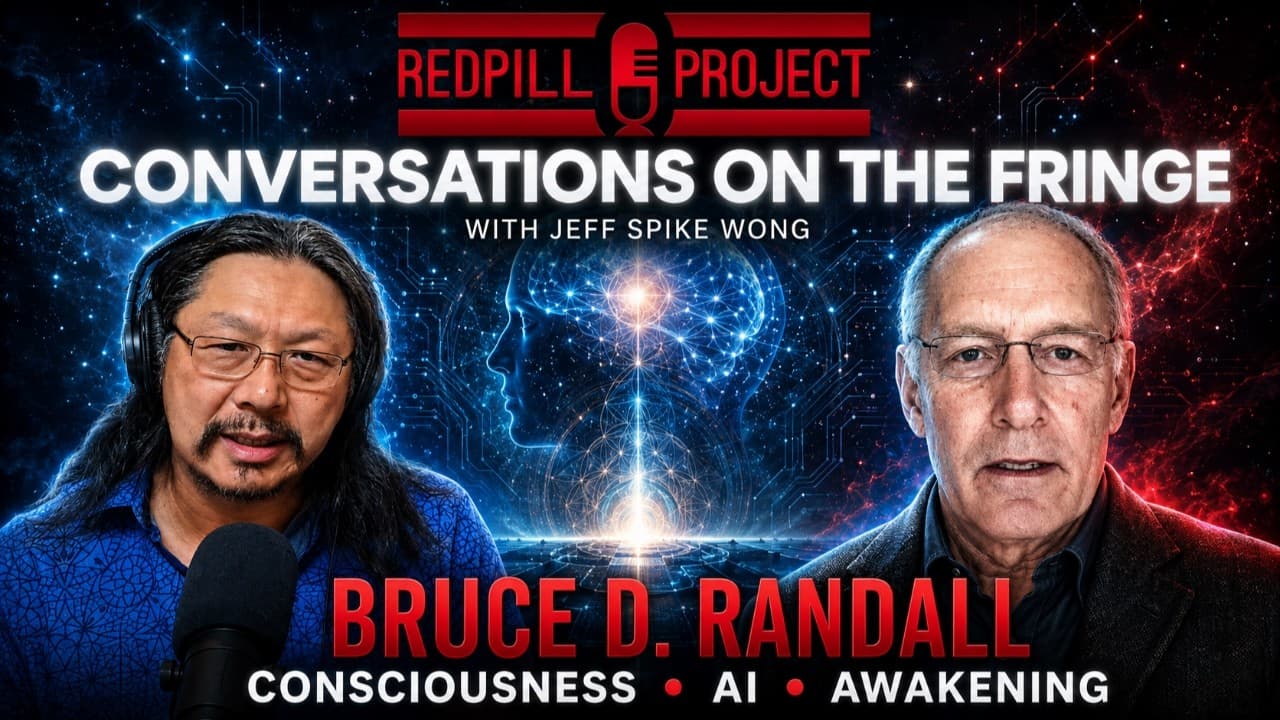
Conversations on the Fringe with Jeff Spike Wong | Bruce D. Randall – Consciousness, AI & Awakening
Video from Redpills TV.
Generated from the canonical interview transcript and validated against source data by Guests on Air.
Can AI companions replace real human connection?
No. Bruce Randall argues that AI companions make people feel good in a way that dealing with people often does not, but that comfort removes the friction real relationships supply. Human interaction is a growth experience, and people are built to be with other people. Leaning on machines for comfort trades away the expansion that comes from dealing with real people.
Bruce Randall has spent decades in technology, from early hardware through cloud computing to artificial intelligence and quantum systems. Randall has also meditated for twenty years and practised Reiki for just as long. On Conversations on the Fringe, host Jeff Spike Wong asked how those two lives fit together.
Randall admitted the pairing looks unlikely. Advanced technology and inner work are usually treated as opposites, one built on code and data, the other on silence and attention. Randall described it as oil and water that somehow mix, and returned throughout to one habit that keeps the mix stable: going inside and staying centred.
The sharpest part of the conversation turned to AI companions. Randall is writing a book for young adults who feel lonely and isolated, many of whom now lean on chatbot partners. The message is direct: machines can make people feel good, but they cannot give people the friction that growth requires.
Key takeaways
- AI companions mirror back what a person wants, which feels comforting but quietly replaces the growth real relationships bring.
- Human interaction is a growth experience, and Randall argues people are built to be with others rather than alone.
- Quantum systems will produce more data points than any person can review, so AI will be needed to filter them down.
- Stepping away from screens at set times of day and learning to quiet the mind keeps technology a tool, not a trap.
1. A technologist who goes inside
Randall's career tracks the arc of modern computing. Randall was working in hardware before cloud technology arrived, followed it through the cloud era, and then watched artificial intelligence and quantum computing take over the conversation. The fascination, Randall explained, was always with what happens in the background that most people never see.
That curiosity runs alongside a long inner practice. Randall described starting meditation and needing more than three months to learn to quiet the mind, mostly because an analytical brain that solves problems all day resisted the idea of stopping. Changing the framing, rather than forcing the silence, is what finally made the practice work.
For Randall, the balance between the two worlds is not a contradiction to resolve but a discipline to keep. The host noted that a career built on artificial intelligence and quantum computing looks like the opposite of consciousness work. Randall called it a trick, like putting oil and water together and finding that it mixes when it is not supposed to. Staying centred, a theme Randall returned to again and again, is what holds that mix together.
2. Why quantum computing will need AI
Randall explained quantum computing in plain terms. Instead of reading flat code line by line, a quantum system looks at a problem from every side at once, surfacing the problems, the solutions and the challenges together. The result is a flood of data points, far more than any person could sensibly review on their own.
That is where artificial intelligence earns its place. Randall said people will need AI to filter that flood down to a manageable amount, so humans can make decisions on what matters. In this view the machine does the sorting, so that people are left with a picture small enough to understand and act on.
Randall also pointed to brain computer interfaces as a sign of how strange the frontier is becoming. A patient using an implanted chip described the cursor sometimes moving before the patient had thought about it, yet always going where intended. Randall connected that remark to precognition, a reminder that consciousness may still hold surprises for the engineers building these systems.
3. Friction is what makes people grow
The conversation's most practical warning concerned AI companions. Randall described young people turning to computer boyfriends, girlfriends and companions because talking to a machine feels good while dealing with people often does not. It works as an escape, Randall said, but it will not last, because the comfort comes without the challenge that relationships bring.

The host shared his own experience of naming a chatbot and sliding into daily friendly exchanges, before realising within a month that it was simply reflecting back what he wanted. Randall agreed and widened the point to implanted chips and robot partners. People chasing an edge or an easy companion do not realise how much of themselves they lose along the way.
Randall's answer is a path back to people and to the self. Randall steps away from technology at set times of day, recommends sitting quietly for five to fifteen minutes to begin, and plans a virtual men's group once the new book is finished. Readers who want the longer argument can turn to The Quantum Human Paradox: When Quantum Computing Changes Everything: The Human Questions Machines Can't Answer, which its description says blends technology strategy with decades of meditation practice.
