Books and Writing
Why a Nurse's Eye Changes the Medical Thriller
Jennifer White spent more than 30 years as a nurse before a brain tumor erased her memories. Writing brought them back and shaped a thriller series built from the bedside.
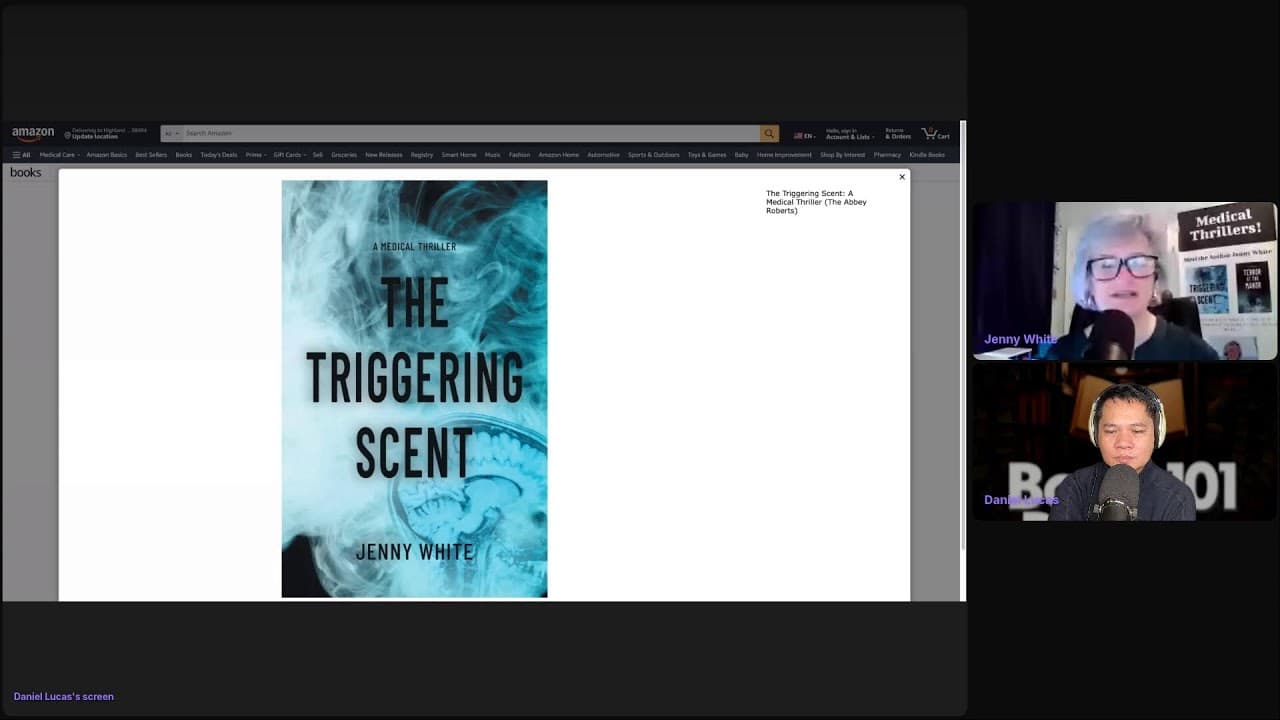
Book 101 Review, in its sixth season, features Jenny White.
Video from Universal Podcast Network.
Generated from the canonical interview transcript and validated against source data by Guests on Air.
How does a nurse's experience change the way a medical thriller is written?
A nurse writes from the bedside rather than the chart. Jennifer White says nurses see the subtle changes in patients, advocate for them and comfort their families, so a thriller written by a nurse covers the emotional and spiritual side of care as well as the medical detail that doctor-authored thrillers tend to focus on.
Jennifer White worked as a nurse for more than 30 years across a variety of hospital settings. During her retirement she fell ill, learned she had a brain tumor and needed surgery. When she woke from a coma afterwards, she did not know who she was, where she was, or who the man standing at the end of her bed was.
That man was her husband. As her recovery began, White found that writing helped her memories return. Her first attempts were single words, then sentences, then paragraphs and pages. Over time the practice grew into something larger: a medical thriller that drew on what she had lived through and on the clinical knowledge from her long nursing career.
In a conversation on the Book 101 Review, White explained why a nurse tells a medical story differently from a doctor, how her own brain surgery shaped her heroine, and what recovery from a brain injury feels like on a hard day. Her answers give readers and patients a view of hospital life from the side of the bed that rarely makes it onto the page.
Key takeaways
- Nurses see the whole patient, including emotional and spiritual needs, which gives their medical thrillers a different lens.
- Writing after brain surgery helped White recover memories, starting with single words and growing into full pages.
- Exhaustion after a brain injury is overwhelming, and survivors often need rest after even short bursts of activity.
- Recovery from a brain injury takes patience because the brain has to build new pathways over time.
1. Why nurses write medical thrillers differently
White points out that most medical thrillers are written by doctors, and doctors look at life through a different lens. Their training and daily work center on diagnosis and treatment. Nurses spend their shifts at the bedside, where they notice the subtle changes in a patient long before anyone else, and where they become the patient's advocate when something is not right.

That constant presence shapes the stories a nurse can tell. Nurses comfort patients and families, and they deal with the whole person rather than only the illness. White describes the emotional and spiritual side of care as part of everyday nursing work. When a nurse writes a medical thriller, she argues, those elements find their way into the plot and the characters.
For readers used to fast-paced emergency department dramas on television, White adds a quieter correction. Intensive care units and trauma units are just as busy as any emergency room. Her novel draws on the atmosphere of those units, the way different professionals interact with each other, and small details that only someone who has worked there would recognize.
2. Turning her own brain surgery into fiction
White modeled her heroine, Abby Roberts, on herself during her years working in an intensive care unit and a trauma unit. She then gave Abby the experience of brain surgery. The character goes through slightly different events than White did, but her return to work shows the challenges of memory loss, personality change and triggers that most people never consider.
The title of her first thriller, The Triggering Scent, comes from the same place. White explains that people with brain injuries can become more sensitive to sounds, smells and tastes. A smell that means nothing to most people can carry real weight for a survivor, and leaving readers unsure what the scent represents gave her a way to build tension and suspense.
Fiction was new territory for her. As a nurse she had written academic papers, a very different kind of writing, so she took self-paced online classes that let her work around her exhaustion. As the stories began to flow, they triggered memories of the places she had worked, which showed her that her brain was starting to rewire and that she was growing.
3. What recovery from a brain injury really asks
White is candid about the parts of recovery that do not show. She still lives with depression, trouble finding words and exhaustion. The exhaustion, she says, is not ordinary tiredness. It feels as if life has been drained out of her, and she has to lie down straight away. She expected to need rest after the podcast recording itself.
Her nursing background helps her speak openly about those limits. If she is struggling to process what someone is saying, she tells them and asks them to try a different approach. She also warns people that she may pause to find a word. The comment that hurts most is being told she looks great and should be fine two years after surgery.
Her advice to anyone facing a devastating diagnosis or a brain injury is patience. A broken bone heals in a cast while life goes on, but a brain injury asks the brain to build new pathways, and that takes time. A short daily meditation with positive affirmations helps her keep moving, and she reminds herself that the hardest days are temporary.