Skin health
Why a laser result depends on healing and readiness
Skin specialist Lisa Harris explains why flaking after a cool laser is normal healing, and why she postpones a session when a client's skin or energy is not ready.
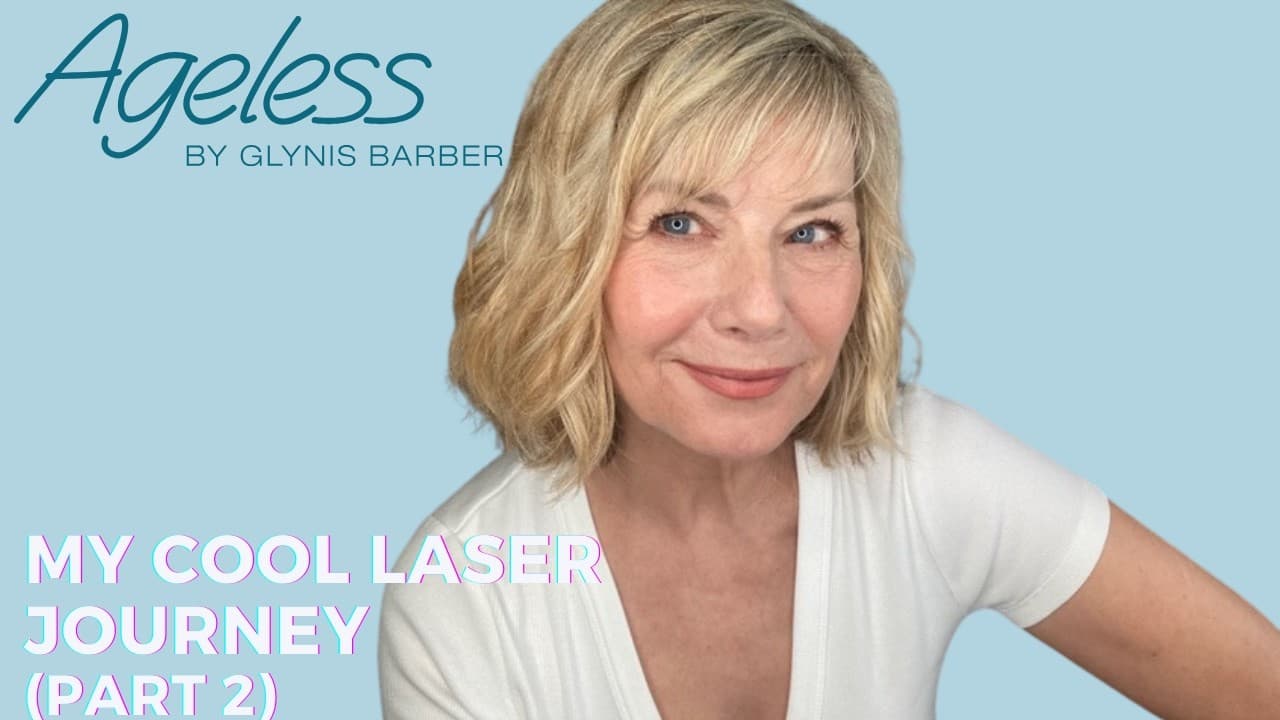
Video from Ageless by Glynis Barber.
Generated from the canonical interview transcript and validated against source data by Guests on Air.
Is peeling after a cool laser treatment normal?
Yes. Lisa Harris says flaking after a cool laser is normal healing, which she calls micro peeling. It usually lasts about two weeks and can run to four, depending on the strength used. The skin is shedding dead layers so new skin can come through. Balms, hydration from inside and enough rest before the next session all help the result.
Lisa Harris, a skin specialist with a clinic in Weybridge, Surrey, gave Glynis Barber a course of cool laser treatments, and Glynis Barber filmed the later visits for her Ageless channel. The footage shows less of the laser itself and more of what happens between sessions, when the skin heals and the plan has to bend around the person in the chair.
At the second visit, Glynis Barber described skin that felt taut and dry, then flaked for one to two weeks. Lisa Harris told her this was absolutely normal. She calls it micro peeling, and she sees it as the skin shedding its dead layers so that brand new skin can come through, which is where the rejuvenation shows.
By the third visit, Glynis Barber was tired from performing in a theatre play, and Lisa Harris postponed the laser. Her view is that results depend on more than the device. Hydration, the client's energy on the day and patience during healing all shape the outcome, and a skilled practitioner adjusts the plan when any of them is missing.
Key takeaways
- Flaking for up to two weeks after a cool laser is normal healing, and some people take up to four weeks.
- Lisa Harris sees micro peeling as the skin shedding dead layers so fresh, rejuvenated skin can come through.
- She postpones a laser session when a client is tired, because the treatment works best on someone fully energised.
- Hydrated skin responds better to a laser, and that hydration has to come from inside the body as well as from balms.
1. Peeling is part of the healing
Glynis Barber arrived for her second session with a question many first-time laser clients ask. She had barely gone red after the first treatment, but within a few days her skin felt taut and dry, and it flaked lightly for at least a week. She wanted to know whether that was normal or a sign that something had gone wrong.
Lisa Harris said it was absolutely normal. She had deliberately started with a very gentle laser to see how Glynis Barber's skin responded. Redness is common straight after treatment, and then the healing begins. That healing takes the form of what she calls micro peeling, which can last about two weeks, or up to four weeks depending on the strength used.
She explained the peeling as a sign the treatment is working. The skin is shedding its dead layers, and brand new skin is coming up underneath, which is where the rejuvenation appears. She admitted the flaking can be annoying, but said the results are worth it. In the meantime, the job is simply to use balms and keep the skin hydrated.
2. Changing the plan when the client is tired
When Glynis Barber came back for her third session, she was in the middle of a theatre run and felt exhausted. Her skin had recovered from the earlier flaking but still felt a little dry. Lisa Harris decided not to do the laser that day. In her view, a client needs to be fully energised before having this kind of treatment.
She said that if a client is not feeling one hundred percent, the practitioner needs to change course. Instead of the laser, she chose a more relaxing session focused on hydrating the dry skin, with some energy healing to lift Glynis Barber's spirits. She still used radio frequency and mesotherapy to keep encouraging collagen during the visit.
Delaying the laser by a couple of weeks did not set the course back. Lisa Harris explained that a cool laser reacts better on well hydrated skin, so the extra time and the hydrating treatment improved the conditions for the next session. The lesson for anyone booking a course is that the date in the diary matters less than the state of the skin.
3. What the stronger final session asked of the skin
For the final cool laser, Lisa Harris prepped the skin with radio frequency and then raised the laser setting, because Glynis Barber's skin had built up a tolerance over the earlier sessions. Rather than one intense blast, she added two extra passes, going over the skin four times instead of twice, and warned that this would mean two to three more days of healing.
She also treated the delicate eye area separately, using a mild mode at a low frequency to resurface the skin just enough to build collagen and elastin. She said this cool eye lift can tighten the skin around the eyes and also work on pigmentation and dark circles, building up slowly rather than all at once.
About four weeks later, Glynis Barber reported five days of intense peeling, then skin that felt soft and normal after around ten days, a quicker recovery than before. She said her skin looked plumper and a little tighter. Lisa Harris had told her to expect results to keep improving for six months or longer as new collagen forms.