Philosophy and religion
Tom Jump on when a person's word is enough evidence
The atheist debater explains why a report of a dog is easy to trust, why a unicorn sighting is not, and what that test means for the historical Jesus.
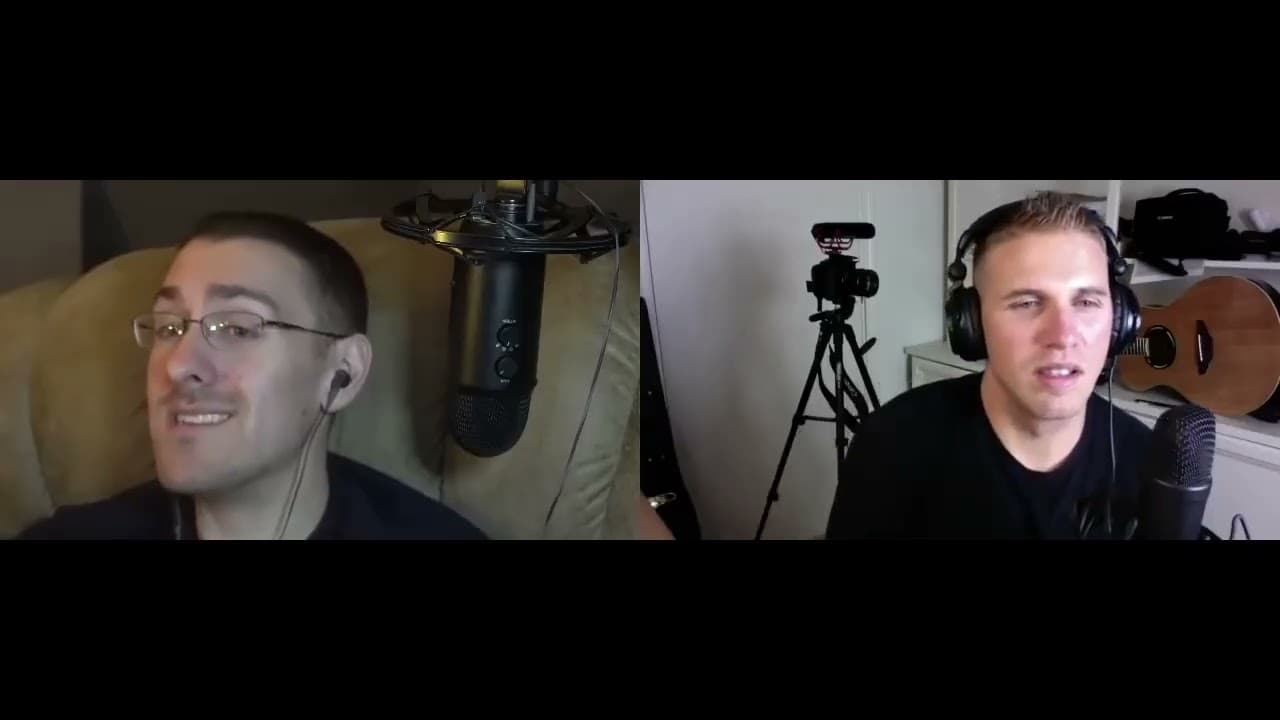
TJump & MythVision Atheism vs Theism Did Jesus Exist Consciousness produced by the brain
Video from TJump.
Generated from the canonical interview transcript and validated against source data by Guests on Air.
When is testimony enough evidence to believe a claim?
Testimony is enough when the claim fits things already backed by strong empirical evidence, Tom Jump argues. A report of a dog, or of a person living at a certain time, is reasonable to accept on someone's word. A claim with no empirical basis, such as a unicorn or a miracle, needs independent evidence and testable predictions before it deserves belief.
Tom Jump, the atheist philosopher and debater behind the TJump YouTube channel, joined the MythVision podcast for a conversation about faith, evidence and the historical Jesus. Raised Christian and taught in Catholic schools from kindergarten through high school, Jump stopped believing after years of prayers that went unanswered, and only later turned to philosophy to test the arguments on both sides.
The conversation kept returning to one practical question. When is a person's word enough to believe something, and when does a claim need more? Tom Jump answers with a simple test drawn from everyday life. A report of seeing a dog is easy to accept, while a report of seeing a unicorn is not, because only one has evidence behind it.
That test shapes how Jump reads history, science and religious claims alike. It explains why the debater accepts that a man named Jesus probably lived while rejecting the miracles attached to the story. It also explains why Jump prefers polite, open debate with believers, a style that draws support and viewers from Christians and atheists at the same time.
Key takeaways
- Ordinary testimony is reasonable to accept when the claim rests on things we already have strong evidence for.
- Extraordinary claims, such as miracles, need more than someone's word because nothing empirical backs them up.
- Science separates imagination from reality by making new predictions that can be tested and confirmed later.
- Respectful debate with believers builds trust on both sides and keeps difficult conversations open.
1. The dog and the unicorn
Tom Jump begins from a point many listeners find surprising. Historiography, the study of how history is written, sets a much lower bar for truth than physics or biology. Most figures from the ancient world left almost no direct evidence. Socrates left no writing of his own that survives, and nearly everything known about the philosopher comes from Plato, yet historians still accept that Socrates lived.
According to Jump, that acceptance is reasonable for the same reason a friend's story about a dog is reasonable. Dogs have a known taxonomy, genetic makeup and chemical composition, so a report of one fits everything already known. A person existing at a certain time is the same kind of claim, because there is a huge body of evidence that people exist.

A unicorn is different. There are no bones, no genetic record and no chemistry to support it, so a report of one should not be believed on testimony alone. Tom Jump applies the same rule to the Gospels. A person named Jesus probably existed, but the miracle stories told about that person do not inherit the same credibility.
2. Why prediction beats explanation
The test comes from a wider theory of knowledge that Jump built after leaving belief. Starting from the idea that the only certain thing is one's own existence, the next step is noticing a gap between imagination and experience. Imagining a unicorn is not the same as seeing one, so any claim about the world needs a method that tells the two apart.
For Tom Jump, that method is science, built on novel and testable predictions. A cup knocked over could be blamed on the wind, a squirrel, psychic powers or invisible aliens, and each story explains the past equally well. The better explanation is the one that predicts something not yet known and turns out to be right when people go and look.
The same standard settles questions about consciousness. Jump points out that the physical world clearly shapes the mind, since an electrode can make a person see, taste or feel things that are not there, while the mind cannot move objects outside the body. Every known example of consciousness comes from a brain, so the idea of a separate mental realm lacks support.
3. Debating believers without contempt
Tom Jump has made debate a full-time job, scheduling roughly one debate a week and accepting two or three interview invitations on top. Opponents range from young earth creationists to fellow atheists, including a debate in which Jump argued that Jesus existed against a guest defending the mythicist position. Topics span physics, cosmology, philosophy, morality and biology.
The tone matters as much as the arguments. Jump believes a positive, non-demeaning approach brings Christians to the channel as viewers, subscribers and donors, because both sides value an honest exchange. Christian Rick Mattson is one believer who paused to think about the argument from involuntary suffering, and the two friends also debate the basis of morality in the book Objective Morality Without God? A Friendly Debate between an Atheist and a Christian.
That is also why Jump steers away from arguments over Gospel dates and authorship. Interpreting ancient texts depends on training most audiences do not have, and people tend to side with whichever expert agrees with them. Philosophical questions, such as whether the universe needs a cause, are easier for anyone to grasp and test, so they make better ground for changing minds.