Leadership
Nick Jonsson on Breaking the Cycle of Executive Loneliness
Success can leave senior leaders isolated and silent. Nick Jonsson explains why it happens and the five steps he used to reconnect after hitting rock bottom.
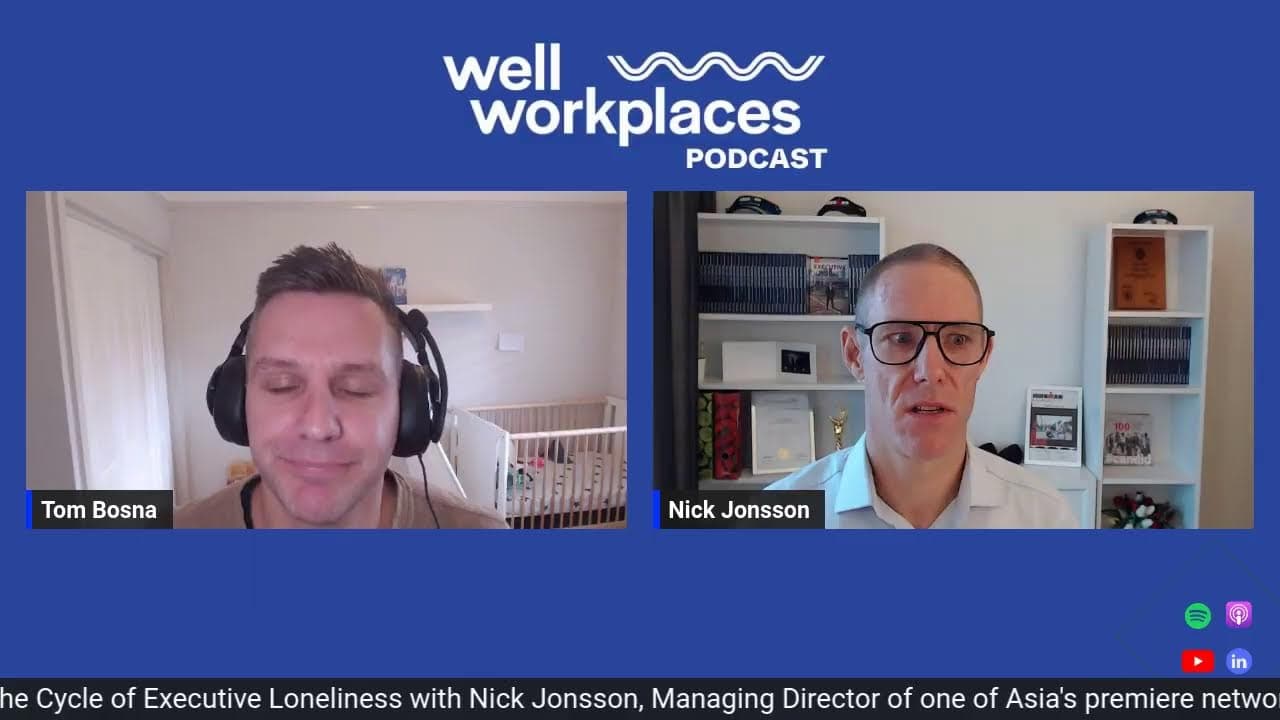
Breaking the Cycle of Executive Loneliness with Nick Jonsson
Video from Tom Bosna.
Generated from the canonical interview transcript and validated against source data by Guests on Air.
Why do senior executives become lonely at the top, and how can they reconnect?
Senior executives often become lonely because they carry pressure alone, avoid showing weakness at work, and rarely have peers they can be honest with. Nick Jonsson says leaders reconnect by taking an honest inventory of their lives, asking for help early, rebuilding their health, repairing damaged relationships, and only then turning to purpose and service.
Nick Jonsson spent years climbing the corporate ladder in several countries, earning senior roles that looked like the reward for hard work. When he finally reached the top, he found it was a very lonely place. His story, he says, is not unique: he hears the same account from the most senior executives he interviews.
In a conversation with host Tom Bosna, Jonsson describes how that isolation built up quietly. Resentments and pressure stayed inside him, drinking after work became the release, and eventually he resigned from a job where he was delivering good results. He was burnt out, and nobody in his office knew why.
Today he runs confidential peer groups for senior executives and business owners across Singapore, Malaysia and Indonesia. His survey work, his own recovery and the five steps he now teaches all point to one lesson: leaders who try to handle everything alone make the problem worse.
Key takeaways
- Executive loneliness often hides behind success, and many senior leaders feel it most once they reach the top.
- Jonsson's survey found loneliness among Southeast Asian executives doubled during the pandemic, from 30 to 60 percent.
- Most executives in his survey would not raise stress or isolation with their boss or HR team.
- His five steps run from taking stock and asking for help to getting healthy, making amends and finding purpose.
1. Why success isolates senior leaders
Jonsson traces his own isolation back to university on the Gold Coast, where he watched other students collect awards and decided he had to be the one at the top of the class. That drive carried into his career. He felt he constantly had to prove to himself that he was good enough. He worked to impress bosses and deliver results, and it came at a cost to his relationships with colleagues.
In 2019 he surveyed senior executives in Southeast Asia. About 30 percent said they felt lonely at work, in line with global figures. When he returned to the same group during the pandemic in 2020, the share feeling isolated had doubled to 60 percent. A further question showed how hidden the problem is: 84 percent would not feel comfortable raising it with their boss or HR.
He also sees a gender pattern. The men he interviewed tended to have good friends, but they met to watch sport or play golf and avoided talking about bad times. The women were more likely to have one or two close friends they could call, who would then help them find a doctor or therapist.
2. Five steps from rock bottom to reconnection
Jonsson hit rock bottom in 2018 after a divorce, a resignation, a move to another country and heavy drinking. He was hospitalised, admitted he had an alcohol problem, and joined a support group for problem drinkers. Hearing others describe the same struggles showed him he was not alone and gave him hope.
He distilled what helped him into five steps, which he sets out in his book Executive Loneliness: The 5 Pathways to Overcoming Isolation, Stress, Anxiety & Depression in the Modern Business World. The first is taking stock: writing an honest inventory of health, habits, debts and broken relationships. The second is asking for help, starting with a few easy wins.
The third step is getting healthy through sleep, food and exercise, which he calls the natural happy pill. He began by walking four kilometres a day. The fourth is making amends, from reconciling with his sister to repaying an old credit card debt. He now reviews each day before bed and corrects a wrong message straight away. The fifth is finding purpose, which for him now means volunteering to support others in recovery.
3. Vulnerability has to start at the top
Jonsson argues that leaders cannot build real connection with their teams until they have cleared their own baggage. Once they have, the starting point is vulnerability. A leader who expects openness from a team has to show it first, even in small ways such as sharing something personal before the business conversation begins.

He believes many Western leaders jump straight into business because they are uncomfortable disclosing anything about themselves. During the pandemic, he saw that teams stayed connected when the leader was open with them, even through a screen. People who knew each other's stories could keep a human connection while working apart.
He practises this himself. When he interviews a job candidate, he sends them a copy of his book first, so they already know about his lowest point and his recovery. That openness, he says, sets the tone for honest conversations from the very first meeting, and it makes him a stronger leader rather than a weaker one.