Mindfulness
Masati on Making Everyday Life the Meditation
In a short guided meditation, Masati teaches a breathing and body awareness practice designed to carry presence out of the session and into ordinary tasks.
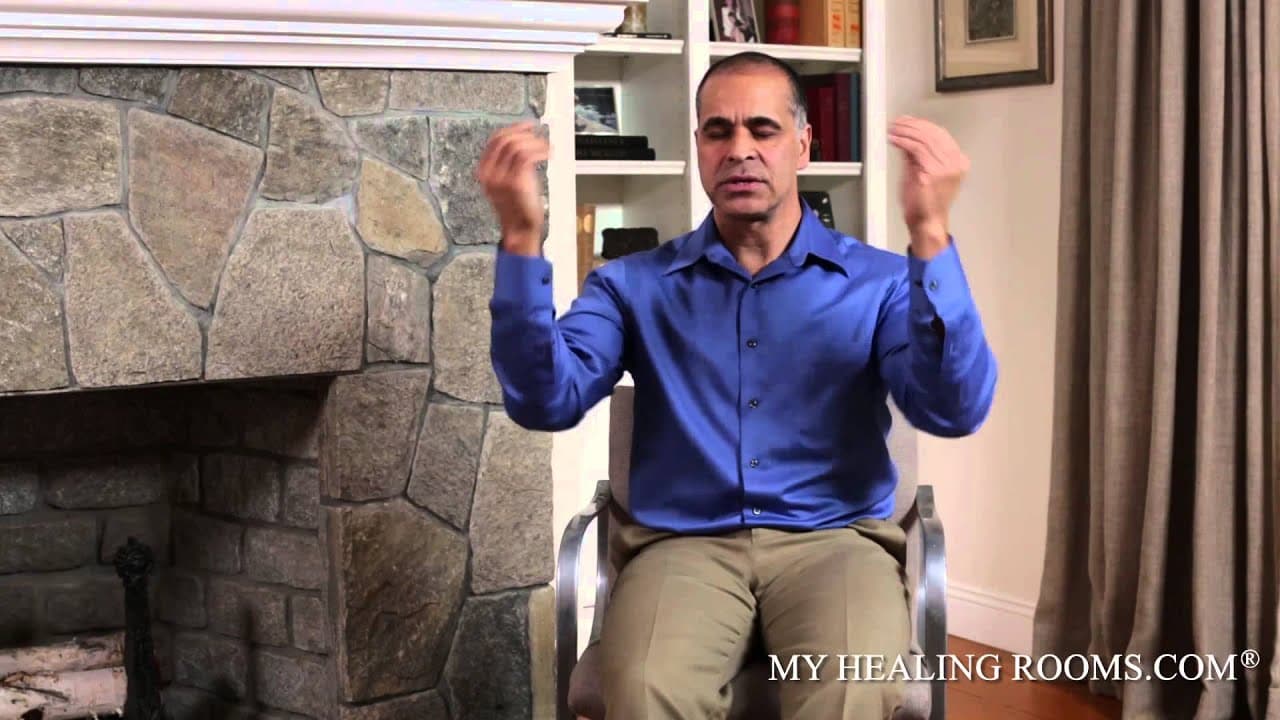
Mas Sajady Meditation on Human Be-ing
Video from My Healing Rooms.
Generated from the canonical interview transcript and validated against source data by Guests on Air.
How can you stay present outside of meditation?
Masati's answer is to treat daily life as the meditation. Train awareness with slow nose breathing and a body scan from head to feet, then carry the same attention into chores and tasks by noticing how your hands and feet move. Presence becomes a habit that runs through the whole day rather than a feeling kept for a formal sitting.
Most people treat meditation as an appointment: a quiet ten minutes, then back to the rush. In a short guided session on being present, Masati, the consciousness teacher behind Xponential Intelligence, argues that this split is the problem. Presence that only shows up during a sitting fades the moment the day starts, so he teaches a way to carry it into everything else.
The session itself is simple. He asks listeners to sit, stand or lie down, whichever suits them, and to breathe slowly through the nose into the belly. From there he moves attention through the body from the crown of the head to the feet, pairing each exhale with a question about connecting more strongly to what he calls Pure Source.
What makes the practice worth studying is the goal he sets for it. He is not chasing a pleasant break. He wants the awareness built in the meditation to become the default state for chores, tasks and daily routines, so that the spirit, in his words, integrates with the physical form and starts guiding a person through the whole day.
Key takeaways
- Presence that only happens during meditation fades fast, so Masati aims to make daily life itself the meditation.
- Slow belly breathing through the nose, with a short hold before each exhale, is the entry point to the practice.
- Noticing small physical details, like the movement of your hands and feet, anchors the mind in the present moment.
- Ending a session by noticing what you notice, whether relaxation or a detox feeling, keeps judgement out of it.
1. Why presence cannot live only on the cushion
Masati opens with an observation many meditators will recognise. People talk constantly about being present, he says, yet for most of them presence arrives only during a formal sitting. Once the session ends, attention slides back into planning, worrying and replaying the past. That pattern turns meditation into a brief escape rather than a skill, and it leaves the rest of the day running on autopilot.
He also points to a quieter mistake. Many people search for presence outside themselves, as if it were a place to reach or a feeling someone else could hand over. His guidance turns the search inward. Each breath and each stage of the body scan brings attention back to what is already happening physically, which is where he believes presence has been available all along.
The aim he names is ambitious. If life itself becomes the meditation, he says, a person can stay present around the clock, and that is when spirit begins to integrate fully and offer guidance at all hours. Whatever a reader makes of the spiritual language, the practical point is clear: awareness is meant to be trained for ordinary moments, not saved for special ones.
2. Breath, body and the question that guides the session
The breathing pattern is the backbone of the practice. Masati asks for a deep inhale through the nose into the belly on a slow count of four, a hold of a second or two, and a long exhale that lets go of tension. He repeats this cycle throughout, using each exhale to move attention to a new part of the body and to settle a little deeper.
The body scan runs from the top down. Attention travels from the back and top of the head through the face, neck, throat and shoulders, down the arms to the fingertips, then through the chest, spine, hips and legs to the feet. By the end, listeners are asked to feel the body as complete, a single connected whole from the tailbone up to the head.
Alongside the breath he offers one question to hold: how do I connect to Pure Source even stronger? He also describes a central communication point between the two halves of the brain, which some people call the pineal gland, and frames the practice as improving the link between body and mind. Throughout, he stresses that listeners stay in total control and may keep their eyes open or closed.
3. Bringing the meditation into everyday tasks
The final stretch of the session shifts from stillness to daily life. Masati invites listeners to start treating everyday tasks and chores as if they were done from a meditative position. The instruction is not to slow everything down, but to keep the mind from wandering off while the body works, so that attention stays where the activity is actually taking place.
His method for this is physical. Pay attention to the movement of your hands and your feet, then let awareness spread to the rest of the body as you go about the day. He describes this attention to movement as the way a person connects to the present moment, and as the doorway through which spirit enters and begins guiding them towards a more abundant life.
He closes the session with gentle instructions. Listeners take a last deep breath, open their eyes, and simply register how they feel, whether relaxed, refreshed or going through something closer to a detox. Any of those is fine, he says. The important thing as the practice ends is to notice what you notice, a habit that turns awareness itself into the lesson.
