Addiction Recovery
How recovery coaching differs from addiction counselling
Maria Power argues that addiction workers help clients most by focusing on goals, wellness and lived experience rather than on the illness.
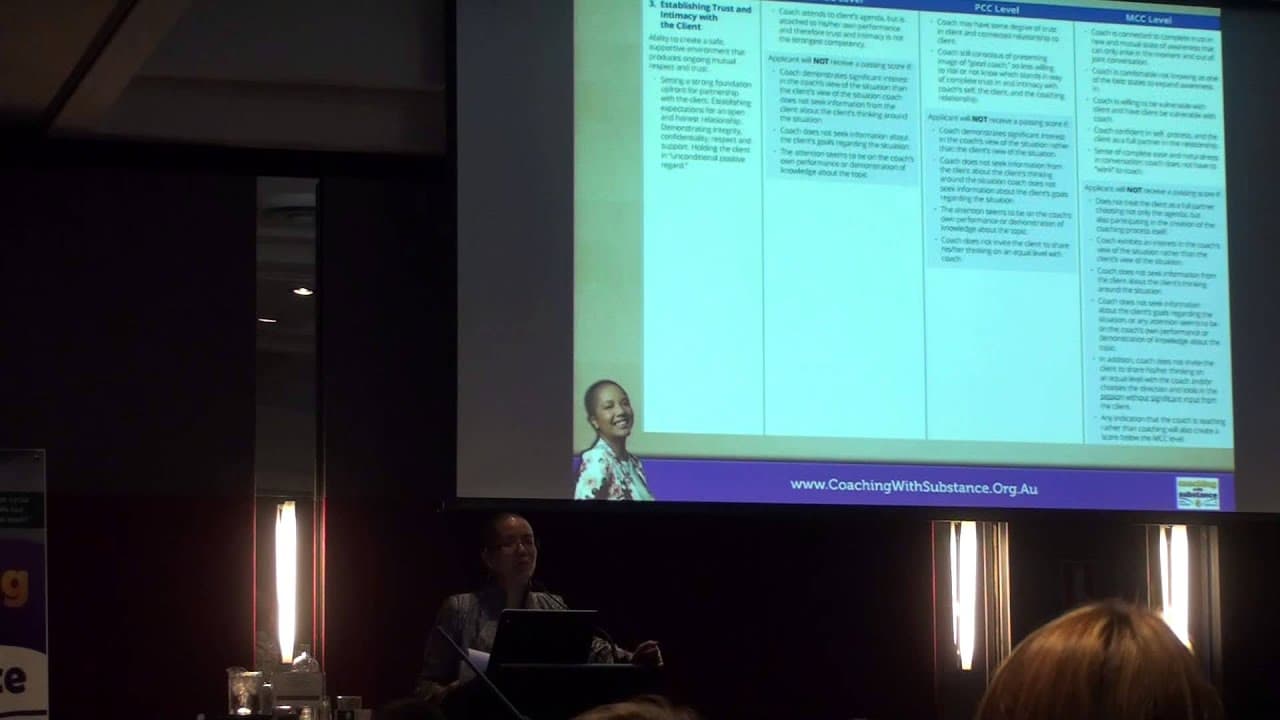
Maria Pau presents Inspirational Goal Setting at the Addiction Conference 2015 (Part 2)
Video from Helping you create permanent transformation.
Generated from the canonical interview transcript and validated against source data by Guests on Air.
How is recovery coaching different from addiction counselling?
Recovery coaching focuses on the client's goals and the actions that lead there, not on diagnosis, medication or past damage. The coach walks beside the client, may share personal experience when it helps, listens closely and asks direct questions. Counselling and treatment still matter, but the coach's job is to keep the client moving towards a productive life in the community.
Addiction workers spend their days with people the system has already labelled. At an addiction conference in 2015, Maria Power, then speaking under the surname Pau, put a different idea to a room of counsellors, case workers and volunteers: recovery coaching. The talk drew on lived experience of addiction, hospital stays and recovery, and on years of training coaches to work with clients.
The case Maria Power made was simple. Counselling, treatment, medication and rehabilitation all have their place, but a recovery coach works on something else: the client's goals, the actions that lead there and the confidence to follow through. The coach does not dwell on the illness. Every session points the client towards the life they want to build once they leave the room.
This article sets out what the talk said about how recovery coaching differs from counselling, why the coach has to model the change first, and how the international coaching competencies shape the work. The aim was not to replace other services. The aim was to give every person working in the addiction field another way to help clients recover.
Key takeaways
- Recovery coaching focuses on a client's goals and actions, leaving medication and diagnosis to doctors and counsellors.
- A coach cannot inspire a client to change while still uninspired or unhealthy in their own life.
- Unlike many therapeutic roles, a recovery coach may share personal experience when it teaches the client something useful.
- Recording sessions on video lets coaches and supervisors check listening, questioning and follow-through against agreed goals.
1. Focus on the wellness, not the sickness
Maria Power described recovery coaching as a focus on the goodness in a person. In the coaching session, medication is a matter for the client and the doctor, and healing work belongs with counsellors and other specialists. The coach asks where the client wants to go and how they will get there, and keeps every conversation pointed at that destination rather than at past damage.
The reason is practical. When clients walk out of a session, the old pressures are already waiting for them: difficult relationships, stress at work and the people who knew them when they were using. A coach who has spent the hour on the illness sends them into that world unprepared. A coach who has spent it on capabilities and next steps gives them something to hold on to.
Maria Power called the approach results driven and action based. The purpose of recovery, in this view, is to bring a person back into the community as someone productive and alive, with growing awareness and confidence. The talk argued that years of concentrating on sickness had not changed outcomes, and that a sustained focus on wellness was the more useful way to work with people in recovery.

2. Why the coach has to live the change first
The first reason for the talk, Maria Power said, was the audience itself. Working with offenders, people affected by abuse and violence, and clients who will not listen is hard. A worker who is worn down cannot lift anyone else. Inspiration has to start with the practitioner, then reach colleagues and organisations, and only then reach the clients the worker is trying to help.
The same logic runs through every area of a client's life. A coach cannot credibly talk about finances while their own finances are in trouble, or talk about health without exercising. Maria Power's point was that people model what they see. A recovery coach should coach from strength, and where a gap exists, the coach should find a coach of their own to close it.
This is also where lived experience matters. Maria Power spoke openly about past addiction, time in hospital and the stigma that came with it, and treated that history as something to own rather than hide. In coaching, a practitioner may share personal experience when it teaches a client a lesson they cannot yet see, something many therapeutic settings do not allow.
3. The coaching competencies that change the conversation
Maria Power walked the room through the core competencies set by the International Coaching Federation, which has published standards for coaching since 1995. The levels of accreditation set how much the coach should talk. At the entry level, the client talks most of the time. At the master level, the coach speaks only around ten percent of the time and spends the rest supporting the client's journey.
Three competencies stood out in the talk. Trust and intimacy with the client must be complete, not partial. Active listening means being so fully in the client's shoes that the coach almost forgets themselves. Powerful questioning means asking direct, evocative questions, even ones that make the coach or the client uncomfortable, so the client can see the truth and push through to the next level.
Maria Power recommended recording coaching sessions on video rather than relying only on case notes. A recording lets a supervisor see whether the coach was really asking questions or simply telling the client what to do. It also holds clients to their word, because the coach can play back what they committed to in an earlier session and ask whether they meant it.