Leadership · Accountability
How leaders build trust with clear expectations and honest conversations
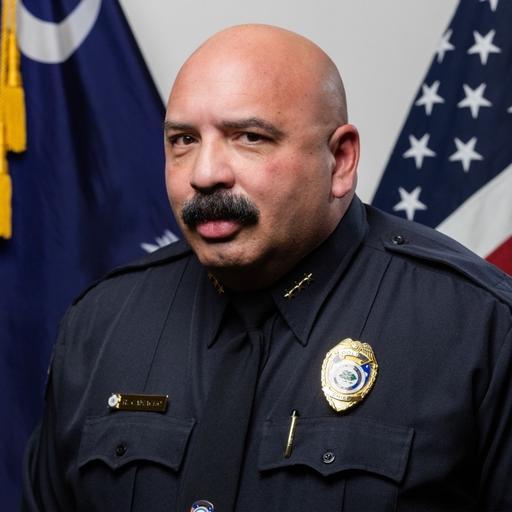
Dr. Ron Camacho explains why clear expectations, respectful challenge and visible leadership are the practical foundations of trust in a high-pressure organisation.
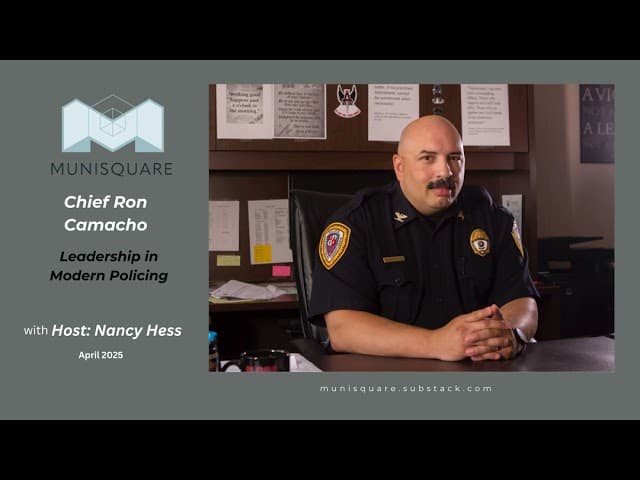
Leading with Trust: Chief Ron Camacho on Developing Officers and Building Community Confidence
Video from MuniSquare, published 10 April 2025.
Guests on Air checked quotes against the canonical transcript and recording, then added editorial synthesis and supporting research.
How can a leader build trust while holding people accountable?
Leaders build trust and accountability together when they make expectations clear, stay close enough to hear what is happening and address problems directly without humiliating people. Dr. Ron Camacho recommends honest conversations with respect, empathy and a clear ending, so people understand both the standard and what happens next.
Trust can sound like a soft leadership aim until a difficult decision has to be made. In a department, service team or growing company, people need to know the standard, whether leaders will apply it fairly and what happens when something goes wrong. Without those answers, accountability can feel like a threat rather than a way to improve the work.
In a MuniSquare interview, Dr. Ron Camacho describes leading the North Charleston Police Department after moving from a smaller agency. He speaks about a workforce of almost 400 people, a fast-growing community and the work of making expectations understood. His starting point is a visible leader who tells people what matters, listens to concerns and follows through.
Camacho does not describe trust as avoiding difficult conversations. He treats it as what makes those conversations useful. People need honest feedback, but they also need dignity and a route forward. That combination matters in any organisation trying to improve performance without making its people defensive or silent.
Key takeaways
- State expectations in plain language before judging whether people have met them.
- Stay close to frontline work and community concerns instead of leading only from reports and meetings.
- Make difficult feedback specific, respectful and clear about the next step.
- Treat officer or employee development as part of service quality, not a separate benefit.
1. Make expectations visible before performance is judged
A leader cannot demand ownership from people left to guess what good work looks like. Camacho says he went to lineups and specialist units after taking the role. He gave them his expectations and explained his mindset. The action is simple, but it replaces rumour with a direct account of the standard, priorities and behaviour he wants to see.
That does not mean prescribing every decision. Camacho connects expectations with self-reflection. The goal is for people to understand the direction well enough to choose better when the leader is not in the room. A team can ask whether its work is aligned with the purpose, rather than wait for correction. Clear expectations create room for judgment; they do not remove it.
The same principle applies beyond policing. A manager launching change can name the decision, the problem it should solve, the constraints that remain and questions people can still influence. Vague language invites competing interpretations. Specific language gives people a fair basis for action and feedback when the work is not yet where it needs to be.
2. Keep enough contact to hear the truth
Camacho says leaders can become separated from officers and community when they stay in an office. He makes a point of being out with officers and accessible in the community. That is not a performance of visibility. It discovers concerns before a dashboard, complaint or crisis forces them into view. Trust grows when people can see that someone with authority is available to listen.
He gives an example from North Charleston’s Hispanic community. Camacho says he heard fear about immigration raids, then explained the department’s municipal role while clarifying that it still worked with federal partners. Trust was not won through broad reassurance. It required listening to a particular fear, saying what the department would and would not do and continuing the relationship through a Latino citizens police academy.
Leaders in other settings can use the same discipline. Do not assume a policy email has settled an anxious question. Ask what people heard, which part feels uncertain and what consequence they fear. Answer within the limits of what is known. Presence does not guarantee agreement, but it makes it harder to mistake silence for confidence and easier to raise a problem while it is manageable.

The accompanying topic examines how an inherited culture shifts through repeated behaviour rather than a revised policy, giving people language to discuss it.
3. Make hard conversations direct, respectful and complete
Camacho is explicit that leadership requires tough conversations. He says a leader who avoids them is not moving the organisation forward. But he rejects the idea that honesty means aggression. A conversation about performance, promotion, conduct or mental health can be direct without becoming a display of power. The purpose is to get to the problem and help the other person understand what they can do next.
That is why respect and empathy matter. They do not dilute accountability; they make the message easier to hear. Camacho describes telling people in advance what he plans to do so there are no surprises. This does not mean giving a pass to harmful behaviour. It separates a clear consequence from a humiliating delivery. People can disagree and still understand the reason, expectation and route back to good standing.
“There needs to be some closure at the end of that conversation.” Camacho’s line is a useful test. A manager should not leave a hard meeting with people unsure what was decided, who owns the next action or when progress will be reviewed. Closure may be an agreed plan, support, a formal consequence or a further conversation. Its value is clarity. Without it, an organisation creates uncertainty later labelled resistance.
Camacho’s forthcoming book, Bringing Ego to the Forefront: The First Step Toward Ego-Free Leadership, is relevant because the interview returns to self-awareness. He describes keeping his own ego in check and learning through therapy to lead with more care. The book is not a substitute for a difficult conversation. It asks a useful question: what in my need to be right could stop me hearing the truth?