Leadership
How Bodybuilding Discipline Turns Into Business Focus
Joe Cramond explains why the structure behind a competition prep, not willpower, is what carries over to founders and leaders.
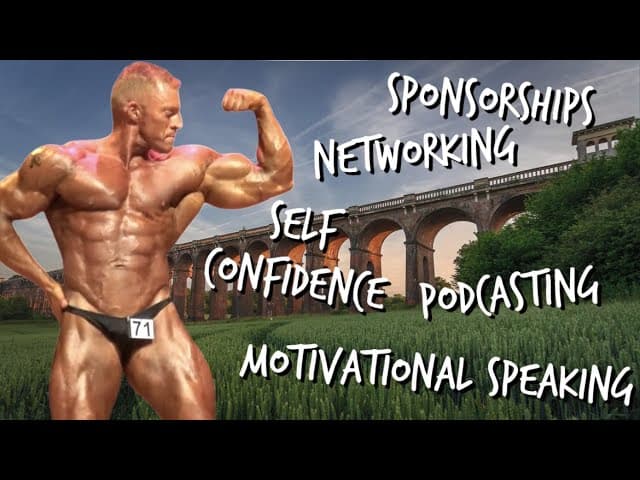
Joe Cramond on The Business of Bodybuilding, Developing Self-Confidence, and Visualization
Video from Skullbellz TV.
Generated from the canonical interview transcript and validated against source data by Guests on Air.
How does bodybuilding discipline help in business?
Bodybuilding discipline helps in business because it is built on structure rather than mood. Joe Cramond describes a fixed routine of planned meals, set training times and measured progress, and says the same habits let founders avoid distraction, set goals inside their tasks and perfect one priority before moving to the next, instead of jumping between ideas.
Joe Cramond came to competitive bodybuilding as a shy, nervous young man from a small village, and went on to take second place at the 2015 British NABBA finals and three consecutive regional titles. In a Skullbellz TV interview he explains why the sport changed far more than his physique, and how its habits now shape the way he advises founders and corporate leaders.
His argument is simple. Discipline is not a personality trait that some people are born with. It is the result of a structured routine: waking at the same time, following a set diet, training at a fixed hour and measuring what you do. Those habits, he says, transfer straight into a business, where most people struggle not from a lack of effort but from too many distractions.
The conversation covers confidence, distraction, handling defeat and the cost of pushing too hard. It also covers the mistakes Joe made when he ran a social media marketing agency and tried to offer everything to everybody. Taken together, it makes a practical case for treating focus and structure as the real engine of performance, in the gym and at work.
Key takeaways
- Discipline comes from a structured routine of set meals, set training times and measured progress, not from willpower alone.
- Bodybuilders who do well in business tend to stay focused because they carry the habits of training into their work.
- A loss is information: ask what the winner did differently, accept criticism and build a specific plan for the next attempt.
- Perfect one thing before moving on, and ask for help early instead of trying to be an all-in-one solution.
1. Structure is what people read as discipline
Joe describes the daily pattern of a competitor plainly: wake up, eat to a structured diet, train at a certain time, and repeat. He says business leaders recognise that pattern even if they have never been to a gym. A chief executive or founder can respect someone with the dedication to keep that routine, because it is the same level of discipline a company needs to grow.
In his view the real benefit is focus. He has met quite a few bodybuilders who became extremely successful in business, and he puts it down to the fact that they do not get distracted. They carry over the habits of lifting weights and measuring what they do, so their work becomes as structured as their training. The sport costs a lot of money, but the skills can earn it back.
Distraction is also his biggest complaint in the gym itself. He sees people scrolling on their phones between sets and losing the intensity that every second of a session needs. His fix is to switch the phone off and treat the workout like a paid job that has to be finished before you leave. The same mindset, he suggests, keeps a working day from drifting.
2. Confidence grows from small, repeated wins
Joe is open that he started out extremely shy and introverted. He grew up in a very small village, struggled to hold a conversation and was so nervous that he could not eat in front of other people. The gym became his escape, and the visible changes in his body slowly changed how he saw himself and how other people treated him.
He calls the progress tiptoe steps. Setting a goal such as a bench press target and forcing yourself to reach it builds the same capacity you need to sit through a family meal without nerves or walk into a meeting with a firm grip and steady eye contact. First impressions matter, he says, and people judge posture and the way you speak before anything else.
Standing on stage in front of a panel of judges was the hardest test of that confidence. Being judged on your physique, your posing and the way you carry yourself puts real pressure on a competitor. Joe's advice to anyone who wants to compete is not to give up after a first show that goes badly, because the experience itself is what moulds a person.
3. Perfect one thing before you chase the next
Asked what separates the top performers in business, Joe picks two words: discipline and dedication. He describes a structured progression ladder, the same kind of plan an athlete follows through a prep, where goals sit inside each task and results are given time to arrive. Many owners, he says, jump from one idea to another and lose the thread.

His own early business taught him that the hard way. Running a social media marketing agency, he tried to be an all-in-one solution and offered everything to everybody. He outsourced work without much experience of managing people and expected others to work exactly as he did. His lesson was to lower his expectations, ask for help sooner and perfect one service before adding another.
The same thinking applies to setbacks. After a defeat on stage, Joe recommends asking the people who won for their opinion, taking constructive criticism without ego and turning it into a specific plan, such as an extra hamstring session each week. He also stopped competing after 2017 because of the toll on his health, a reminder that balance is part of discipline, not the opposite of it.