Leadership
Albert Zbily on why commitment, not interest, turns failure into progress
After 13 failures and a turned-down Lehman Brothers offer, Albert Zbily explains why only commitment decides how far a person reaches their goals.
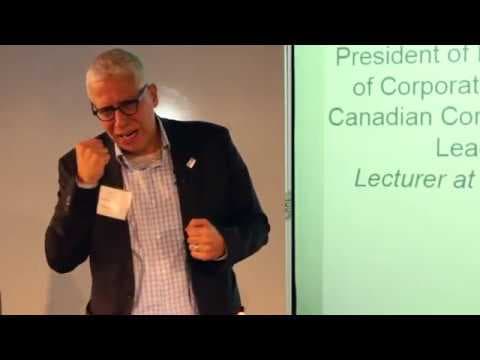
Albert ZBILY: Interested or Committed?
Video from Albert ZBILY.
Generated from the canonical interview transcript and validated against source data by Guests on Air.
What is the difference between being interested in your goals and being committed to them?
Albert Zbily argues that interest and commitment are not the same thing. An interested person goes through life accepting fate when defeat, deception or failure arrives. A committed person refuses to accept those outcomes and keeps moving. After 13 failures, Albert concluded that commitment levels, not interest, decide how far someone reaches their goals.
Albert Zbily grew up in Montreal as the child of African immigrant parents who landed at Pier 21 in Halifax in January 1968, with no winter boots, coats or gloves. Over family dinners about wars, elections and national budgets, Albert's father kept returning to one question that seemed odd at the time: was Albert interested in achieving those goals?
The answer looked obvious. Albert wanted to be a footballer, struggled at school, failed physics and chemistry, and spent a gap year backpacking through Europe before getting stuck in Tel Aviv when war broke out in 1991. Every step was driven by real interest, yet the question kept coming back as each plan stalled or fell apart.
In a talk titled Interested or Committed?, Albert Zbily explains how 13 failures in business, study and personal life finally revealed what that question meant. Interest lets a person accept defeat. Commitment does not. That distinction later carried Albert to an international refereeing career and to building the world governing body of corporate football.
Key takeaways
- Interest lets people accept defeat, deception and failure as fate, while commitment refuses to treat a setback as the end.
- Thirteen failures across business, study and personal life were the route to clarity, not proof of a lack of talent.
- Asking what a dream job demands every day can reveal whether real commitment is there before signing on.
- Small, practical bets, like a ten dollar loan for a street food stall, can show where a real calling lies.
1. A question that sounded strange at the dinner table
Albert Zbily's parents worked hard at many jobs and tried several entrepreneurial ventures, and Albert watched some of them fail. That raised a puzzle. If they were not succeeding every time, did it mean they were not interested? The question Albert's father asked again and again seemed to have an easy answer, because any room full of students would say they were interested in their goals.
School did not make the answer clearer. Albert was not a strong student and preferred reading in the library about world events, history and geography, a habit formed by family dinners spent discussing wars, elections and budgets. Economics and political science classes came easily because the debates were already familiar from home, while the sciences, engineering, medicine and law held no appeal at all.
Football was the real obsession. Albert dreamed of walking onto a pitch while a full stadium shouted that name, and spent every World Cup glued to the screen beside a father who kept asking the same question. Accepting that a playing career was not going to happen became the first lesson in separating what a person enjoys from what that person is prepared to pursue.
2. Thirteen failures and a job offer turned down
The path from there was full of detours. Albert failed physics and chemistry, took a gap year, worked odd jobs across Europe, prepared pizza in Milan and was stranded in Tel Aviv in 1991 when war closed every border. Back in Canada came studies at Concordia, an exchange in Nice and a master's program in international economics at Johns Hopkins University, each built on persistence rather than talent.
Cold calling alumni was the hardest part. Albert describes it as the most difficult thing a person will ever do, because so many calls end in rejection. One call led to a full day of meetings in New York and a job offer from Lehman Brothers at the World Trade Center. Then Albert's mother asked a simple question: what does the person offering the job actually do all day?
The answer was seven in the morning until eleven at night, with weekends included. Albert turned the offer down and took an unpaid internship at the World Bank working on micro lending. In Togo, a widow with six children needed just ten US dollars to start selling homemade sandwiches and fresh juices on a busy corner. She repaid the loan in six months, and Albert had found a calling.
3. Why commitment, not interest, decides the outcome
Looking back, Albert Zbily counts 13 failures in business, academia and personal life. Rather than an unlucky number, 13 became the turning point. Albert realized that being interested in succeeding was not the right approach to reaching goals. Interested people go about their lives accepting fate when they meet defeat, deception or failure. Committed people are simply not willing to accept those outcomes.

That was the lesson Albert's parents had been teaching all along: to succeed, a person has to commit to achieving what they want to reach. Albert could have stopped after two or three failures. Instead, the criticism and put-downs were ignored and the goal stayed in view. Even the old football dream came true in a different form, through a career as a professional referee.
By 2009 Albert was an international referee, taking charge of England against Switzerland in Manchester. At the time of the talk, Albert had combined training as an economist, experience in international development and a love of the game to build the largest corporate soccer league in Canada, and then the International Federation of Corporate Football, active in 56 countries.